Portuguese
  Spanish




Developed By Researchers At Wageningen University And Research Center, The New Material Called Compleximer Combines Impact Resistance Typical Of Plastic With Ease Of Remolding Of Glass, Breaks Historical Rules Of Material Physics And Points To Industrial Applications, Thermal Repairability And Advances Toward Sustainability
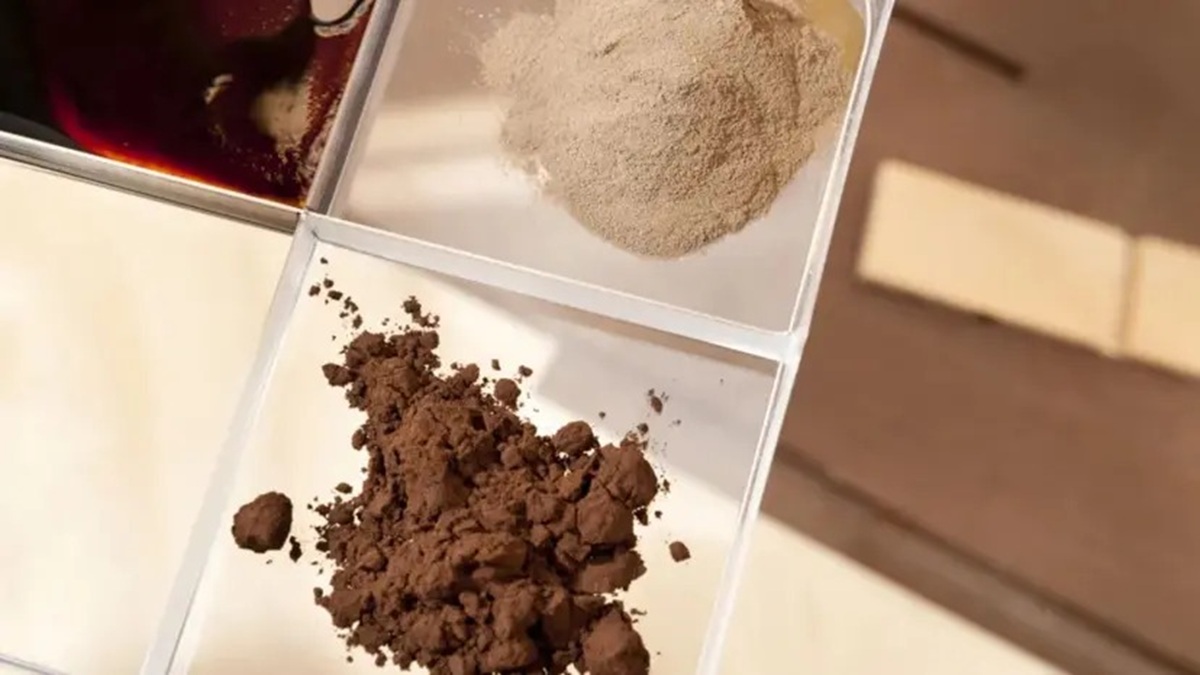
Researchers at Wageningen University and Research Center have created a new material called compleximer, which combines impact resistance typical of plastic with the ease of remolding glass, challenging classical rules of material physics and opening new possibilities for industrial applications.
Historical Rule Of Fragility Is Challenged By New Material
For decades, materials science has adopted a practical rule stating that glassy materials that melt slowly and are easy to process tend to be inevitably more brittle. This principle has guided the development and classification of numerous types of material.
Professor Jasper van der Gucht and his team have demonstrated that this relationship is not absolute. The compleximer developed has a slow enough fusion to allow precise molding, yet maintains high mechanical resistance, being able to bounce upon hitting the ground instead of fragmenting.
-
She spent 73 years breathing inside an iron lung, survived the aftereffects of polio, and became the last woman in the United States dependent on the equipment before dying at 78 years old.

-
Brazilian students created a $1 filter using pine bark, cotton, and 3D-printed parts to clean cassava wastewater, reduce the toxicity of a hazardous waste, and transform contaminated water into biofertilizer.

-
Astronaut from Artemis II steps down after mission to the Moon and decision surprises after a record of 406,771 km, a historic 10-day journey, and an unprecedented achievement for Canada.

-
A fossil kept for years in a small museum in Montreal concealed 450-million-year-old soft tissue, a discovery that has only happened once before in history.


This discovery introduces a material that breaks the traditional association between ease of thermal processing and structural brittleness, repositioning fundamental concepts of applied physics to materials.
Molecular Structure Based On Physical Forces And Not Chemicals
The main innovation of the material lies in its molecular structure. Unlike conventional plastics, which rely on permanent chemical cross-links to bond long chains, compleximers are held together by physical attraction forces.
In this system, half of the molecular chains carry a positive charge and the other half a negative charge. The opposite charges attract like magnets, maintaining material cohesion without the formation of direct chemical bonds between the chains.
As these forces act over greater distances than traditional chemical bonds, greater internal spacing is created. This arrangement provides the material with a “molecular breathing space,” responsible for its unusual mechanical and thermal properties.
Physical Properties Allow Impact Absorption And Remolding
The additional space between the chains allows the material to be crushed, molded, and blown at high temperatures while simultaneously maintaining a structure capable of absorbing significant impacts. This combination was considered unlikely within classical models of materials science.
The discovery surprised researchers when compared with ionic liquids and other charged materials. The results indicate that electrically charged substances may exhibit behaviors still little explored by contemporary physics.
“What excites me most at this stage is to show that charged materials can behave fundamentally differently than we expected,” said Van der Gucht when commenting on the results obtained with the new material.
Self-Regeneration Capacity Expands Practical Applications
The practical implications of the material are relevant for consumer goods and everyday use. As the chains are joined by reversible physical forces, the compleximer has an intrinsic capacity for self-regeneration.
In case of cracks in coverings or garden furniture made with the material, repairs can be made with local heating, such as using a hairdryer, followed by mechanical pressure. The heat allows the attractive forces to re-establish the original structure.
This behavior reduces the need for complete part replacements and extends the lifespan of products made with the new material.
Perspectives For Sustainable Versions Of The Material
Although the current version of compleximer uses fossil-derived raw materials, the team at Wageningen University is already working on more sustainable alternatives. Senior researcher Wouter Post emphasizes that the study paves the way for plastics that are easier to repair and potentially biodegradable.
According to Post, most applied research focuses on recycling, while this work points toward materials that can rapidly decompose biologically or be reused through simple repairs.
Van der Gucht stated that the development of biologically-based versions of the material is a priority in the coming years, aiming to align scientific advancement with the global transition to sustainable materials and reduce dependence on fossil resources.