Portuguese
  Spanish


MBRF and HPDC concluded the creation of Sadia Halal, a R$ 10.3 billion company for the production and distribution of halal-certified Brazilian chicken in the Middle East with factories in Saudi Arabia and the Emirates, distribution in Qatar, Kuwait, and Oman, and procedures for listing on the Tadawul stock exchange.
Brazilian chicken has just gained a billion-dollar structure to conquer one of the fastest-growing markets on the planet. MBRF, headquartered and with significant operations in Itajaí (SC), concluded with HPDC the creation of Sadia Halal, a company valued at approximately US$ 2.07 billion (R$ 10.3 billion) dedicated exclusively to the production and distribution of Brazilian chicken and other proteins certified according to Islamic standards for the Middle East and North Africa (MENA) market. The operation brings together industrial and logistical assets that include factories and distribution centers in Saudi Arabia and the United Arab Emirates, in addition to distribution operations in Qatar, Kuwait, and Oman, a structure that makes Sadia Halal emerge as a company with a presence in five countries even before completing its first day of operation.
The corporate structure positions MBRF as the absolute controller of the new Brazilian chicken company for the halal market. MBRF holds a 90% stake in Sadia Halal, while HPDC retains the remaining 10%, a partnership that combines the Brazilian multinational’s expertise in proteins with the Saudi company’s local knowledge of the Islamic market. HPDC has already made an initial investment of US$ 24.3 million (approximately R$ 121 million) and foresees an additional contribution of US$ 73.1 million (R$ 364 million) by the end of 2026, capital that will be directed to expand the productive and logistical capacity that supports the distribution of halal-certified Brazilian chicken in the region.
What is Sadia Halal and why is Brazilian chicken at the center of the operation

Sadia Halal is neither a subsidiary nor a secondary brand: it is an independent company designed to be a global reference in halal proteins. The new structure incorporates factories that process Brazilian chicken and other proteins, strategically positioned distribution centers to supply markets that together represent a significant portion of global halal consumption, and direct exports of proteins and processed products to the entire MENA region. “The new company is born as a global multi-protein reference in one of the markets that most drive the growth of the food industry worldwide,” says Fabio Mariano, CEO of Sadia Halal and Halal Vice President of MBRF.
-
Brazilian Startup Turns Coffee Grounds into Plant-Based Leather, Cutting Water Use by Over 50 Times for High-Impact Sustainable Fashion

-
Eco Invest Auction Aims to Unlock $10 Billion in Investments, Focusing on Green Fertilizers, Critical Minerals, Batteries, and AI for Clean Industry in Brazil

-
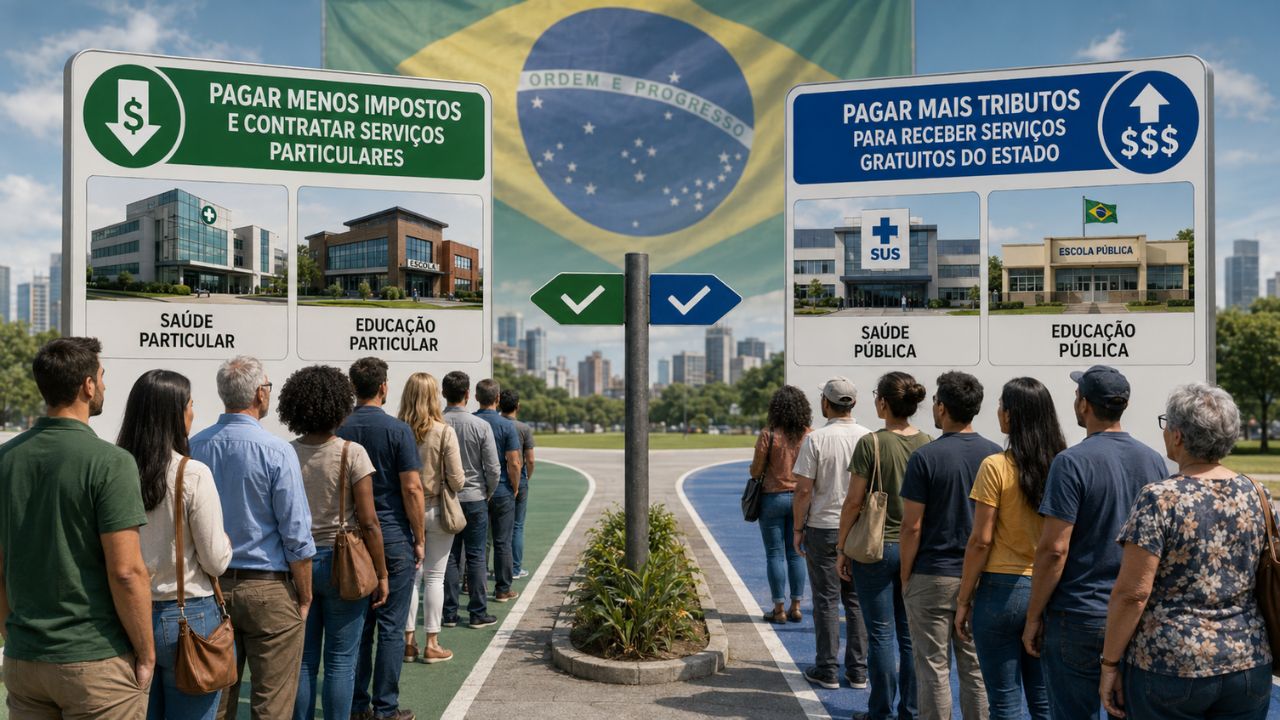
Half of Brazilians Prefer Lower Taxes with Private Health and Education, While 44% Opt for Higher Taxes for State-Provided Services, Datafolha Survey Reveals

-
Brazil’s Most Expensive Toll Rises to R$ 40.60 on Route from São Paulo to the Coast, Nearly Matching Bus Fare to Santos



The choice of Brazilian chicken as the central product of the operation reflects a competitive advantage that Brazil has built over decades. The country is one of the largest global exporters of poultry protein, and the production chain, from the soybeans that feed the birds to the processed chicken that reaches the consumer’s table in the Middle East, is one of the most efficient on the planet, an efficiency that allows Brazilian chicken to compete in price and quality with local producers and other exporting countries. Sadia Halal captures this advantage by integrating Brazilian production with local distribution infrastructure that brings the product closer to the final consumer.
Why the R$ 10 trillion halal market attracts Brazilian chicken
The numbers supporting MBRF’s bet on Brazilian chicken for the halal market are on a scale that few sectors of the global economy offer. The halal market moves over US$ 2 trillion per year (approximately R$ 9.96 trillion), with the animal protein segment among the fastest-growing, and estimates indicate that halal food consumption could exceed US$ 1.5 trillion by 2027 (R$ 7.47 trillion). The global Muslim population already surpasses 1.9 billion people and shows a growth rate above the world average, a demographic dynamic that ensures sustained expansion of demand for Brazilian chicken and other certified proteins.
The demand for halal products extends beyond the borders of Muslim-majority countries. Significant Muslim communities in Europe, Asia, and the Americas also consume certified foods, and a growing number of non-Muslim consumers associate halal certification with high standards of quality, hygiene, and responsible production practices. For Brazilian chicken, this expansion of the consumer profile means a potential market that goes beyond the MENA region and that Sadia Halal can explore as it consolidates its operation and expands distribution to territories where halal certification functions as a seal of trust regardless of religious motivation.
What the possible IPO on Tadawul means for Sadia Halal
Sadia Halal has already initiated procedures for a possible listing on Tadawul, Saudi Arabia’s main stock exchange, a move that signals an ambition to transform the Brazilian chicken company into an asset traded in the financial heart of the Middle East. The IPO would allow the company to raise additional funds to expand operations, attract Saudi and regional investors seeking exposure to the food sector, and provide liquidity for HPDC’s stake, which has signaled its intention to increase its share to at least 20%, potentially reaching 40% before the IPO. The listing on Tadawul would position Sadia Halal as one of the few Brazilian chicken companies listed on a Middle Eastern stock exchange, a visibility no Brazilian food brand has achieved in this market until now.
For MBRF, Sadia Halal’s IPO is a mechanism that validates the investment and can multiply the value of the assets contributed. “This moment is a milestone in our long-term commitment to Saudi Arabia and the region. In partnership with HPDC, we are building a company based on quality, scale, and trust,” declared Marquinhos Molina, Chairman of Sadia Halal and CEO of MBRF in Saudi Arabia. The creation of a company born with R$ 10.3 billion in assets and targeting the Saudi stock exchange is a bet that Brazilian chicken has a permanent place in the Middle Eastern diet.
What the creation of Sadia Halal means for Itajaí and Brazil
MBRF’s headquarters in Itajaí (SC) connects the billion-dollar movement in the Middle East to the Santa Catarina coast. Brazilian chicken exports that supply Sadia Halal pass through Santa Catarina’s port and industrial complex, a chain that generates jobs in slaughterhouses, transport companies, packaging companies, and port terminals that support the logistics of sending protein from Southern Brazil to the Saudi Arabian desert. The creation of Sadia Halal reinforces Brazil’s position as a strategic food supplier to the Islamic world and demonstrates that Brazilian chicken competes in markets where quality and certification requirements are more rigorous than in any other segment.
Fahad bin Suliman Alnuhait, CEO of HPDC, summarizes the position Sadia Halal holds at its inception: “This is a company exceptionally well-positioned to unlock new opportunities and expand its operations in multiple markets,” an assessment that confirms the view that certified halal Brazilian chicken is a product with growing demand and a value chain that Brazil masters like few other countries in the world. Sadia Halal is a bet that this demand will be met by a company that combines Brazilian scale with local presence in the fastest-growing market in the global food industry.
And you, did you know that Brazilian chicken supplies the Middle East on this scale? Do you think the halal market is the future of Brazilian protein? Leave your opinion in the comments.