






 Portuguese
  Spanish
  3 min of reading
  0 comments


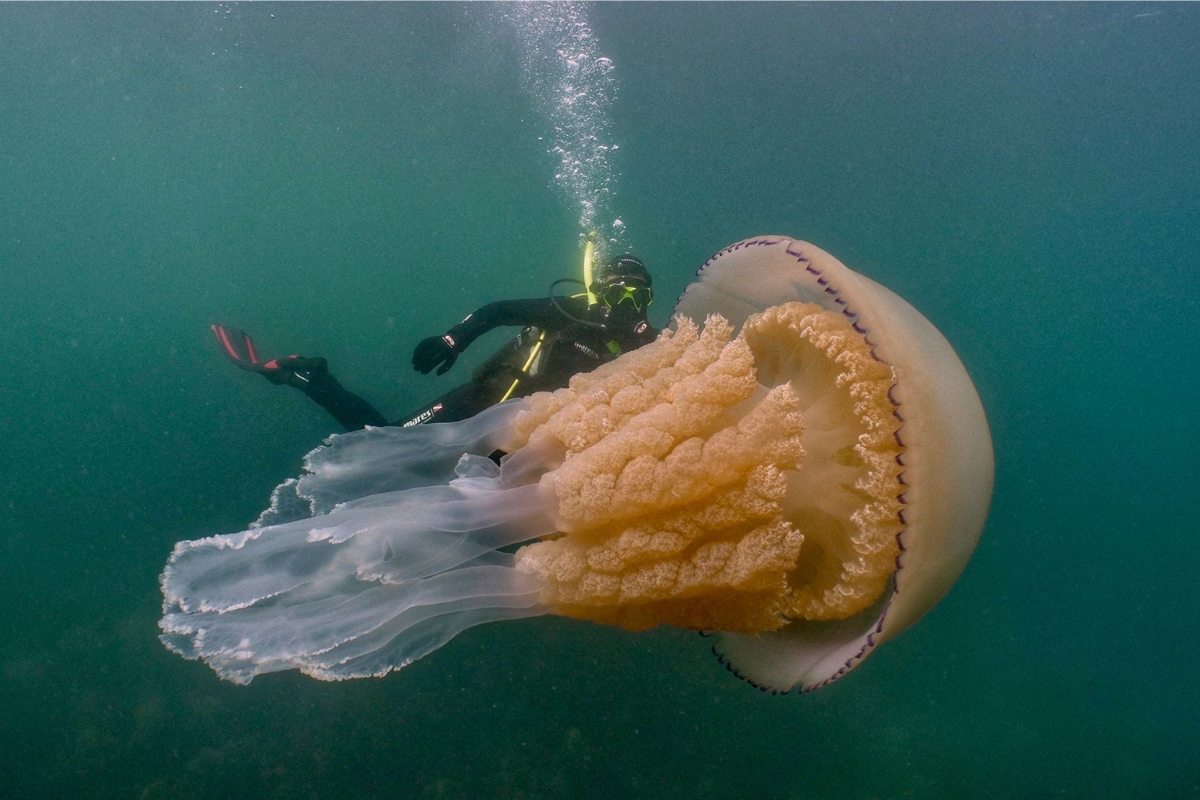
Giant Of The Cold Waters, The Species Draws Attention For Its Size And The Risk Of Burns, In Addition To Reinforcing How The Ocean Still Holds Extreme Surprises
The lion’s mane jellyfish has become a global reference for a record that impresses even those who already know the extremes of the ocean.
The largest documented specimen had a 2.28 meters diameter in the bell and tentacles measuring 36.5 meters in length, a scale that places the animal among the largest gelatinous creatures ever observed.
Besides the visual impact, the size helps to understand why encounters with this jellyfish require caution, especially in cold water regions where it is most common.
-
5,500-year-old DNA found in Stone Age bones reveals that the plague was already haunting prehistoric communities long before the medieval Black Death.

-
Bacteria hidden in the freezing waters of Antarctica intrigues scientists by producing a rare compound that targets melanoma cells without affecting healthy tissues.
-
The “Chinese invasion” has arrived: BYD already dominates almost 45% of the electric buses registered in Brazil in May 2026, while 80% of the entire electric fleet in the country is concentrated in São Paulo with 1,300 vehicles.

-
From toy to track machine: Koenigsegg Sadair’s Spear made with over 327,000 Lego pieces reaches 111 km/h and surpasses the former Bugatti Chiron record.



What Happened And Why It Drew Attention
The best-known record of the lion’s mane jellyfish occurred in 1865, off the coast of Massachusetts, in the United States.
The combination of 2.28 meters in the bell with 36.5 meters in the tentacles turned the case into a landmark for measurements of marine animals.
The Guinness World Records has solidified this record as the largest of its kind, keeping the species at the center of curiosities about life in the oceans.

Why This Jellyfish Looks So Big
The species Cyanea capillata gets its common name because of the group of tentacles that resembles a mane that is voluminous and undulating.
This structure increases the contact area with small prey, such as fish and other marine organisms, and creates the impression of an even larger body when the jellyfish is in the water.
The size can vary significantly, but some individuals reach dimensions beyond the norm, reinforcing its reputation as a giant of the sea.
Where It Lives And Why It Appears In Cold Waters
The lion’s mane jellyfish is more frequently found in the North Atlantic, Arctic Ocean, and North Pacific.
These areas, marked by lower temperatures, favor the presence of the species and increase the chances of larger specimens emerging.
Even so, encounters with truly giant individuals are rare, because observation in open water does not always allow for accurate measurement.


What Changes Practically For People Frequenting The Sea
Contact with the tentacles can cause pain, irritation, and stronger reactions in sensitive individuals, making caution essential in regions where the species occurs.
The greater risk appears when the jellyfish is close to shore or when tentacles remain in the water even after the animal has moved.
In case of a sting, the most important thing is to treat the situation carefully and avoid direct handling, as the stinging cells may remain active.
What May Happen From Now On
The lion’s mane jellyfish remains a reminder that the ocean is still little observed compared to its actual size.
New records of huge animals may arise, but confirmation tends to depend on rare conditions of encounter, measurement, and documentation.
Meanwhile, the case of 1865 continues to be the primary reference when it comes to the largest jellyfish in the world.
The lion’s mane jellyfish gained global prominence for bringing together difficult-to-imagine numbers, such as 2.28 meters of bell and 36.5 meters of tentacles.
In addition to drawing attention due to curiosity, the topic reinforces a practical point: in cold water areas, knowing the species helps to avoid contact and better handle potential incidents.






-

1 person reacted to this.