Portuguese
  Spanish


The Historic S.S. United States Ship Will Be Scuttled in November 2025 in Florida to Become the World’s Largest Artificial Coral Reef and Boost Scuba Tourism.
The S.S. United States, one of the largest and most iconic ships ever built, will be scuttled to the seabed off the coast of Okaloosa County, Florida, in November 2025. The operation is being led by Tim Mullane, a Navy veteran and wreck expert, who is preparing the ship to become the largest artificial coral reef in the world.
Captain Mullane: The Man Behind the Planned Wreck of the S.S. United States Ship
The decision to submerge the ship aims to stimulate underwater tourism and preserve marine life, transforming the old ocean liner into an ecological habitat.
To that end, Mullane and his team of 30 are undertaking a rigorous decontamination and cleaning process of the vessel, which has already been used by celebrities such as John F. Kennedy and Elizabeth Taylor.
-
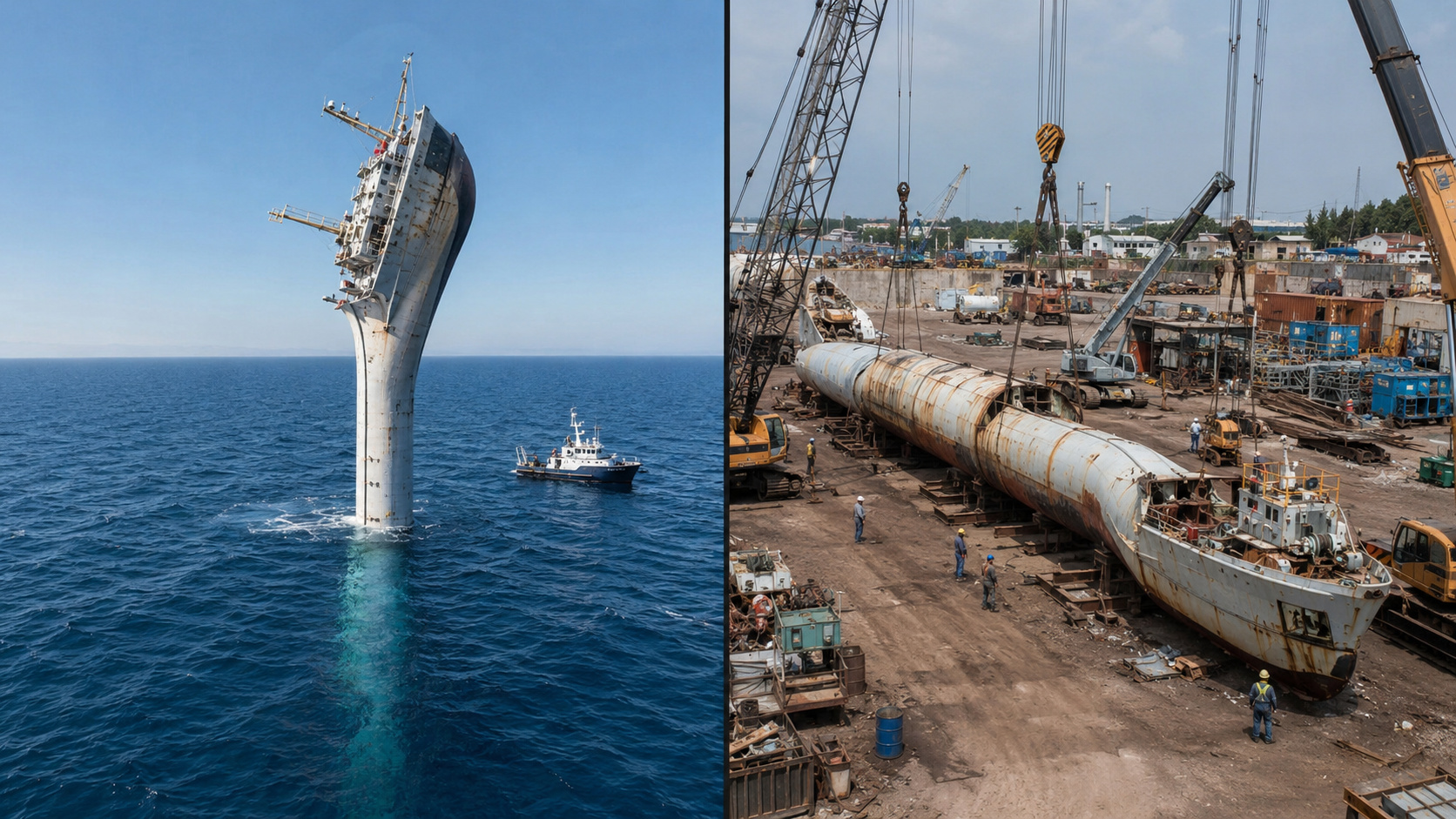
The FLIP: A 108-Meter Ocean Laboratory That Stood Vertically for 60 Years, Dismantled in 2023

-
North Korean Fiasco: Launch of the Largest Warship Ends in Sinking

-
While giant ships still burn heavy fuel and the maritime sector races against climate targets, Maersk and Vale are starting to bet on ethanol as a new route to reduce emissions at sea.

-
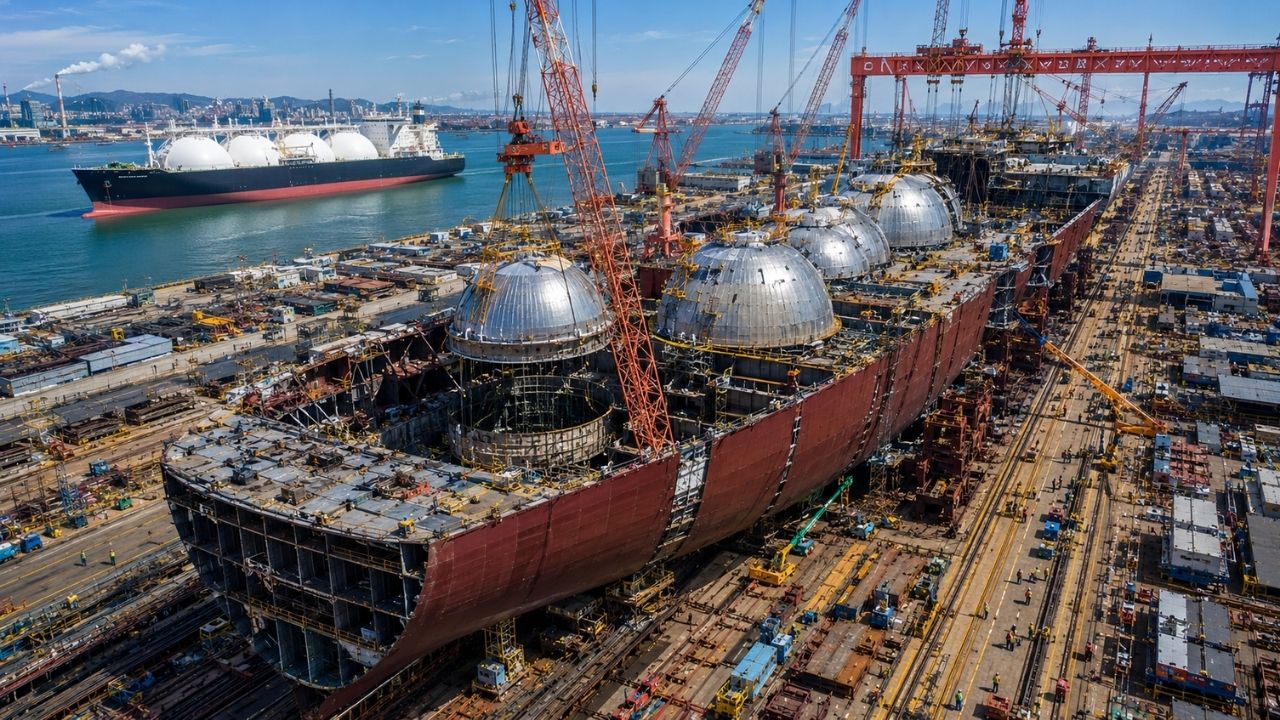
China begins construction of the world’s largest LNG ship, a 344-meter giant capable of supplying 4.7 million homes for a month, carrying 271,000 m³ of gas, and placing QatarEnergy in the largest naval order ever recorded in world history.


Tim Mullane, known as the “professional scuttler,” dedicates his career to turning old ships into coral reefs.
At 54, the former serviceman runs Coleen Marine, a company specializing in controlled shipwrecks for environmental purposes.
“We are the ship’s funeral directors, taking it to its final resting place,” says Mullane. According to him, the work involves months of preparation to ensure no toxic material reaches marine life when the wreck occurs.
Since April, the S.S. United States has been docked in Mobile Bay, Alabama, where it is undergoing extensive cleaning.
The fuel tanks are being washed with high-pressure jets, old paint is being removed, and hazardous materials are being discarded.
The team will also drill strategic holes in the hull of the ship, based on simulations made by engineers, to ensure the ship sinks upright, safely and in control.
“There is no project bigger than this — and there never will be,” emphasizes Coleen O’Malley, co-founder of the company.
Ships as Reefs
The use of sunken ships to create artificial coral reefs is not new. The practice began in the United States in the 1980s and 1990s, particularly with decommissioned military ships from World War II.
Okaloosa County, for example, paid US$ 1 million for the vessel to bolster its eco-tourism strategy.
“More artificial reefs mean more divers, and more divers mean more revenue for the city,” explains Mullane.
Risks and Challenges of Controlled Wrecking
Even with detailed planning, sinking a ship of this size carries risks.
If the water is released incorrectly, the ship may tip over or sink prematurely. That nearly happened with the Spiegel Grove in 2002.
To avoid mistakes, Mullane’s team uses digital models that simulate the ship’s behavior during the sinking.
The goal is that, once punctured, the ship will take less than 45 minutes to sink and reach a depth of 54 meters in the ocean.
Despite the ecological and tourist objectives, Mullane admits there is an emotional side to this type of mission. “Losing them is very depressing,” he says of the ships he sinks.
The S.S. United States, with its rich history and grand architecture, will be the most significant project of Mullane’s career. “It’s simply a beautiful ship,” concludes the captain, who will be on board until the last second before departing on the tugboat that will accompany the wreck.
With information from the National Geographic Brazil website.