






 Portuguese
  Spanish





The North Section of the Mário Covas Ring Road Advances with Complex Works, Billion-Dollar Investments, and Promise of Direct Impact on Urban Mobility and Logistics of Greater São Paulo, Marking One of the Largest Infrastructures in the Country.
The North Section of the Mário Covas Ring Road, the last segment needed to complete the ring road of Greater São Paulo, has entered a decisive phase of construction and is expected to deliver the first part by 2025.
This project, budgeted at R$ 3.4 billion, plans the construction of 107 viaducts and bridges and seven double tunnels, and aims to remove up to 84,000 vehicles per day from the Marginal Tietê, easing one of the main traffic corridors in the city of São Paulo.
Project Structure and Function
The Ring Road project was designed to interconnect the 12 main highways that reach the Metropolitan Region and reduce the through traffic that currently overloads the urban road system.
-
Brazilian Homebuyers Still Fall for Illegal “Drawer Contracts,” Risking Foreclosure and Long Legal Battles Without Deeds.

-
World’s Largest Pencil Factory, Producing 2 Billion Annually, Operates in a Brazilian University Town with Its Own Sustainable Forest

-
World’s Largest Banknote Printer is a British Private Company Producing Currency for Over 69 Nations
-
Europe’s Largest Hydrogen Truck Fleet Begins Operation with 125 Vehicles Emitting Only Water Vapor




The North Section, with 44 kilometers in length, connects the Western and Eastern sectors of the ring, passing through São Paulo, Guarulhos, and Arujá.
This route provides direct access to the Presidente Dutra and Fernão Dias highways, in addition to ensuring quick access to the Guarulhos International Airport.
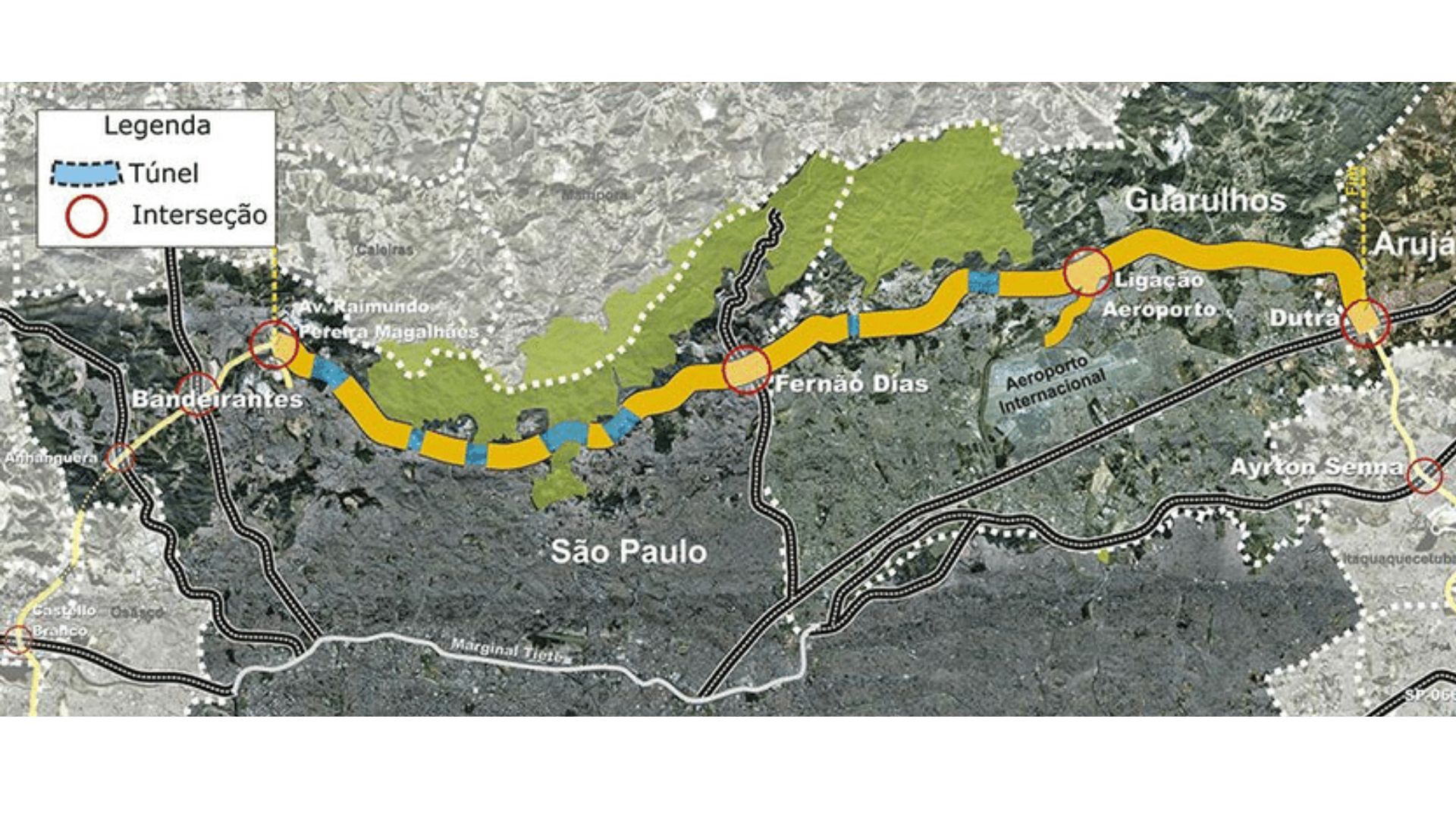
According to the Department of Highways (DER-SP), the layout configuration required complex engineering solutions to cross mountain areas and densely populated urban zones, which explains the need for dozens of viaducts and tunnels in the project.
Investment and Concession
The concession contract signed in March 2023 stipulates that the concessionaire Via Appia (Via SP Serra) will invest R$ 2 billion in resuming construction and an additional R$ 324 million in auxiliary projects.
The state government, in turn, will contribute approximately R$ 1.07 billion, a reduced amount after a discount of 23.1%.
According to a report from the BNDES Agency, part of the investment is also financed through a loan of R$ 1.35 billion from the state development bank.
The concession is valid for 31 years, during which time the concessionaire will be responsible for the completion, maintenance, and operation of the section.
Construction Progress
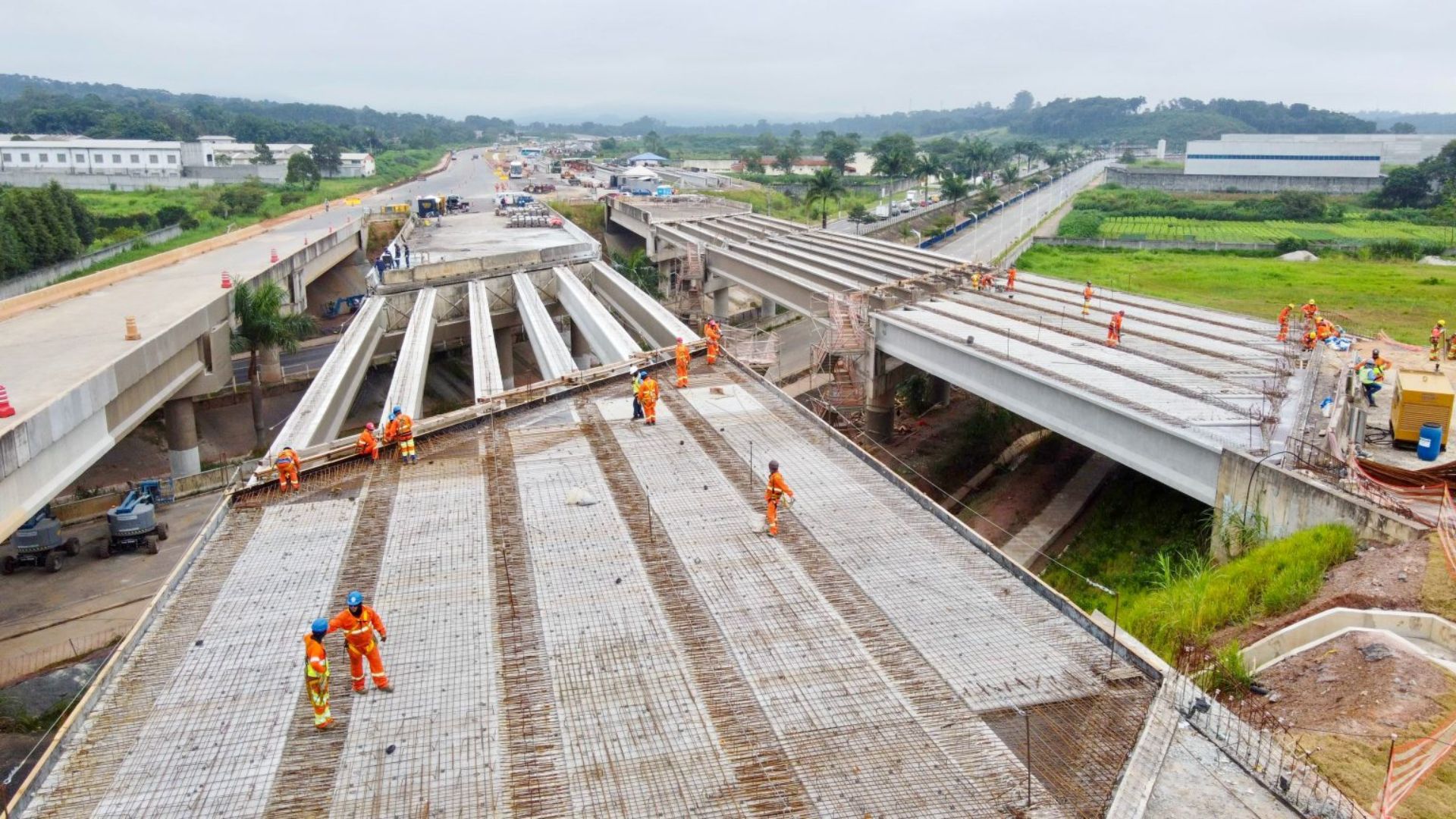
After years of stoppages and legal hurdles, construction was resumed on April 25, 2024.
According to a recent publication from the site BE News, the project reached 51% of total execution in June of this year, notably the segment between the Dutra and Fernão Dias highways, which already recorded 76% progress and is expected to be completed in the second half of this year.
The remaining segment, between the Fernão Dias and Avenida Raimundo Pereira de Magalhães, has approximately 39% of the fronts completed and is expected to be finished in 2026.
Currently, around 5,000 workers are mobilized at the construction site, a number that is expected to generate up to 10,000 direct and indirect jobs during the construction cycle.
Expected Benefits
With the completion of the North Section, experts estimate a reduction of 84,000 vehicles per day on the Marginal Tietê, consisting of 30,000 trucks and 54,000 cars that currently use the urban route.
According to data presented by Artesp, the detour is expected to result in significant time savings: from 45 to 27 minutes on the route between Dutra and Castello Branco and approximately 26 minutes on the Dutra–Bandeirantes stretch.


Technical Challenges
The execution of the project involves 107 special works of art — 63 viaducts and 44 bridges — and seven double tunnels of approximately 1 km each, totaling almost 7 km of underground passages.
According to a report from Revista O Empreiteiro, the main challenges are related to the geology of the Serra da Cantareira, where the layout requires retainage, excavation, and drainage solutions to avoid risks of landslides and infiltration.
In addition, technical audits from the Institute of Technological Research (IPT) have already identified construction flaws inherited from the stoppage period.
Among them are misalignments in viaducts and infiltrations in tunnels, which are now part of the correction scope for the concessionaire before the final delivery.
Expectations for 2025 and 2026
The partial delivery of Section 1, between Dutra and Fernão Dias, is confirmed for the second half of 2025. Section 2, which extends to Avenida Raimundo Pereira de Magalhães, is expected to be delivered by September 2026.
Once completed, the North Ring Road will complete the 177 km of São Paulo’s ring road, consolidating as one of the largest road infrastructure projects in Latin America.
With this project, São Paulo hopes to relieve urban traffic, reduce travel time, and improve the logistics of goods distribution in the Southeast. But given the history of delays, the question remains: this time, will the deadline really be met?





O local do trajeto dessa “obra” (sic),“Cinturão Verde da Cidade de São Paulo”, tombado pela UNESCO, após oito anos de luta, foi desrespeitado de maneira “criminosa” pelo ocupante do cargo atual da vice-presidência da república deste país. Ao ser advertido por ambientalistas “bateu o pé” e exigiu que o trajeto fosse executado alí, fazendo da fauna, flora, aquíferos e habitantes da região a vítima de empreiteiras contratadas em lícitações espúrias e corruptas (vide o caso DERSA).
Ele beneficiou parentes que compraram terras na região do trajeto no sentido de obter indenizações milionárias por parte da DERSA (hoje extinta por crime de corrupção em larga escala). Por isso ele “esperneou” quando o aconselharam a mudar o trajeto da obra.
Existem dezenas de denúncias junto ao MP do estado contra esse crime ambiental. Dezenas de aquíferos foram destruídos e depois pedem para economizar água. Cínicos,!!! Inclusive denúncias contra as licitações feitas no governo anterior sendo que o governo atual não suspendeu esses contratos fraudulentos!
Porque nunca fizeram uma entrada para a cidade de Ribeirão Pires que também dessa folgaria a índio Tibiriçá
Quem críticas as rodovias pedagiadas, aqui no Sul e Sudeste,deveriam morar: Acre, Amazonas, Para, Roraima, Rondônia, lá não tem pedágios nas rodovias, aliás no Norte e Nordeste nem rodovias tem, algumas cidades, só podem transitar na época de seca, no inverno é impossível e no verão muita poeira