






 Portuguese
  Spanish


How the German brand made the interior of São Paulo the world capital of pencils and became the first in the sector to plant its own forests to avoid relying on native wood
Perhaps the pencil you used in school was born in the interior of São Paulo, and not in Germany. The largest pencil factory in the world is located in São Carlos, in the heart of São Paulo, and from there millions and millions of units are shipped annually to dozens of countries. Few Brazilians know that the country leads, by far, such a universal market. According to Dinheiro Rural, the brand is the largest pencil manufacturer in the world and produces more than two billion units per year.
The factory belongs to the German Faber-Castell, one of the oldest industrial companies on the planet, and has become the global production center of the company. To sustain this gigantic volume without devastating forests, it did something pioneering: planted its own pine forests in Minas Gerais, ensuring renewable wood for each unit. According to Faber-Castell, it is the first brand to have its own forest for the production of EcoLápis.
Why the interior of São Paulo houses the largest pencil factory in the world
The choice of São Carlos was not by chance. The city, known for its universities and technological hub, received the brand’s Brazilian operation in the first half of the 20th century, and the unit grew to become the largest of the group in the world in wooden pencils. Today it manufactures more than a thousand different items.
-
World’s Largest Banknote Printer is a British Private Company Producing Currency for Over 69 Nations

-
Europe’s Largest Hydrogen Truck Fleet Begins Operation with 125 Vehicles Emitting Only Water Vapor

-
Around 60% of the World’s Christmas Decorations Come from Factories Near Yiwu, China’s Largest Wholesale Market with 75,000 Shops
-
Small Brazilian City to Host World’s Largest Biodiesel Plant with Production Boosting from 900 Million to 1.62 Billion Liters Annually, Propelling Family Group to Global Leadership


The size of the operation has made Brazil a world reference in the sector, something rare for an industrial consumer product. According to Faber-Castell, the production unit is located in the interior of São Paulo, and the pencil production there supports an annual volume of 2 billion EcoLápis made from planted wood. While many people associate the country only with agricultural commodities, the pencil industry shows another possible facet.
Billions of pencils per year that travel to more than 70 countries
The number is impressive due to its scale. Up to 2 billion pencils are produced per year, enough to give several to every school-aged child on the planet. The Brazilian operation not only supplies the domestic market: the brand’s institutional page states that the products are exported to more than 70 countries, bringing the national item to schools and offices on every continent.
This means that a huge portion of the pencils used worldwide originates from Brazilian wood and labor. An item worth a few cents has become a successful industrial export case, hidden behind the simple image of the yellow pencil. Production on such a large scale requires top-level logistics, forest engineering, and automation, which is why this pencil giant was able to establish itself here.
The oldest company in operation that mastered the pencil
Behind the Brazilian factory lies a history of more than two and a half centuries. The company was founded in 1761, in Germany, by the carpenter Kaspar Faber, and remains in the hands of the same family for eight generations, placing it among the oldest industrial companies still in operation in the world. Dinheiro Rural even notes that the brand has already surpassed two centuries of existence.
Over time, the company transformed a mundane object into a symbol of quality and even standardized the hexagonal shape that prevents the pencil from rolling off the table. Surviving wars, crises, and technological revolutions for over 260 years by selling pencils is, in itself, almost unbelievable. And it was in Brazil that this tradition found its largest industrial scale.
Forests the size of thousands of football fields
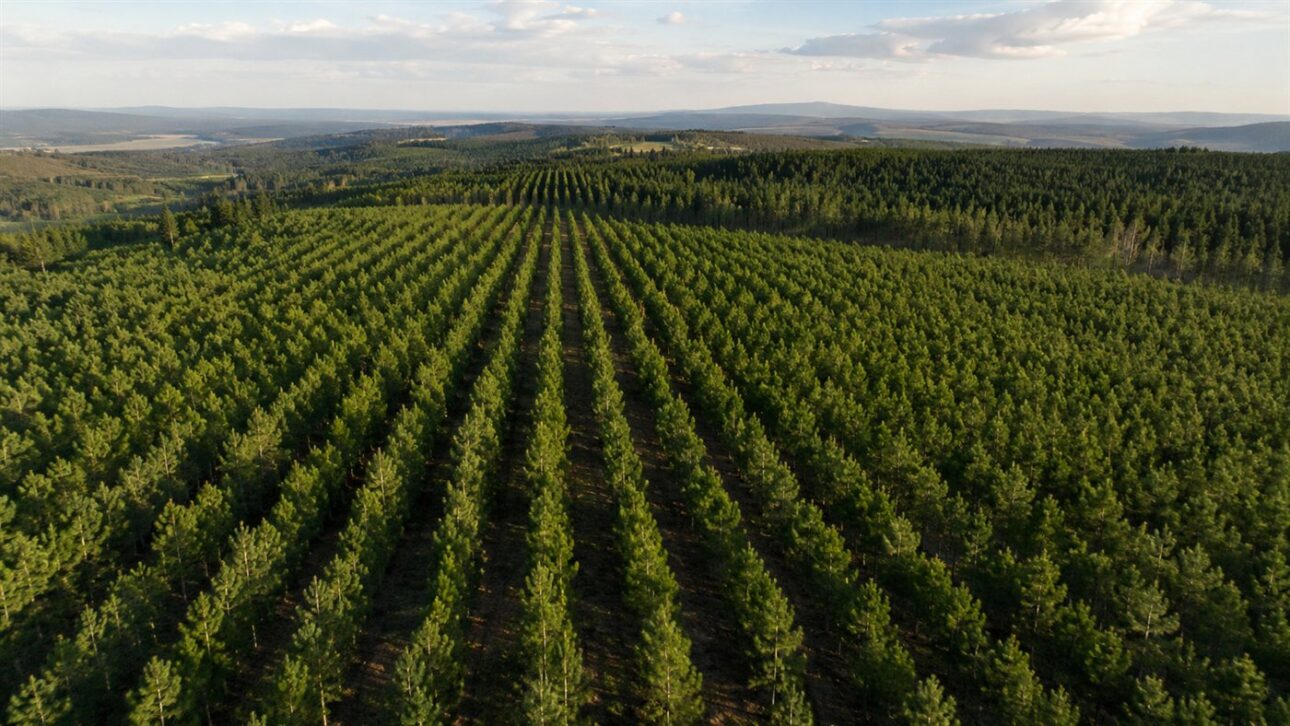
The most surprising detail might be environmental. To avoid consuming wood from native forests, the brand maintains its own planted forests in Prata, in the interior of Minas Gerais. According to Faber-Castell, this forest is approximately the size of 9,000 football fields and is home to more than 600 species of fauna and flora.
In other words, the same operation that cuts trees to make pencils also continuously plants the trees it will cut, in a renewable cycle. Each pencil is born from a tree that was planted precisely to become a pencil, and not from deforested land. The company claims to maintain 4.5 million planted trees, and these planted forests also serve as wildlife shelters and help capture carbon from the atmosphere.
The pioneer that planted its own wood for the Brazilian pencil
The brand’s sustainability is not a recent marketing trend. The company was the first to plant its own trees for pencil manufacturing, occupying with pine areas that were previously degraded pastures in the Triângulo Mineiro. According to Dinheiro Rural, these reforestation areas reach 9.6 thousand hectares in the region of Prata, in Minas Gerais.
That decision, made long before the world talked about carbon credits, turned into a competitive advantage decades later. While competitors relied on wood purchased from third parties, the Brazilian operation secured its own raw material. It’s the kind of long-term bet that helps explain why the São Paulo unit became so dominant.
From pine to graphite: how a pencil is born
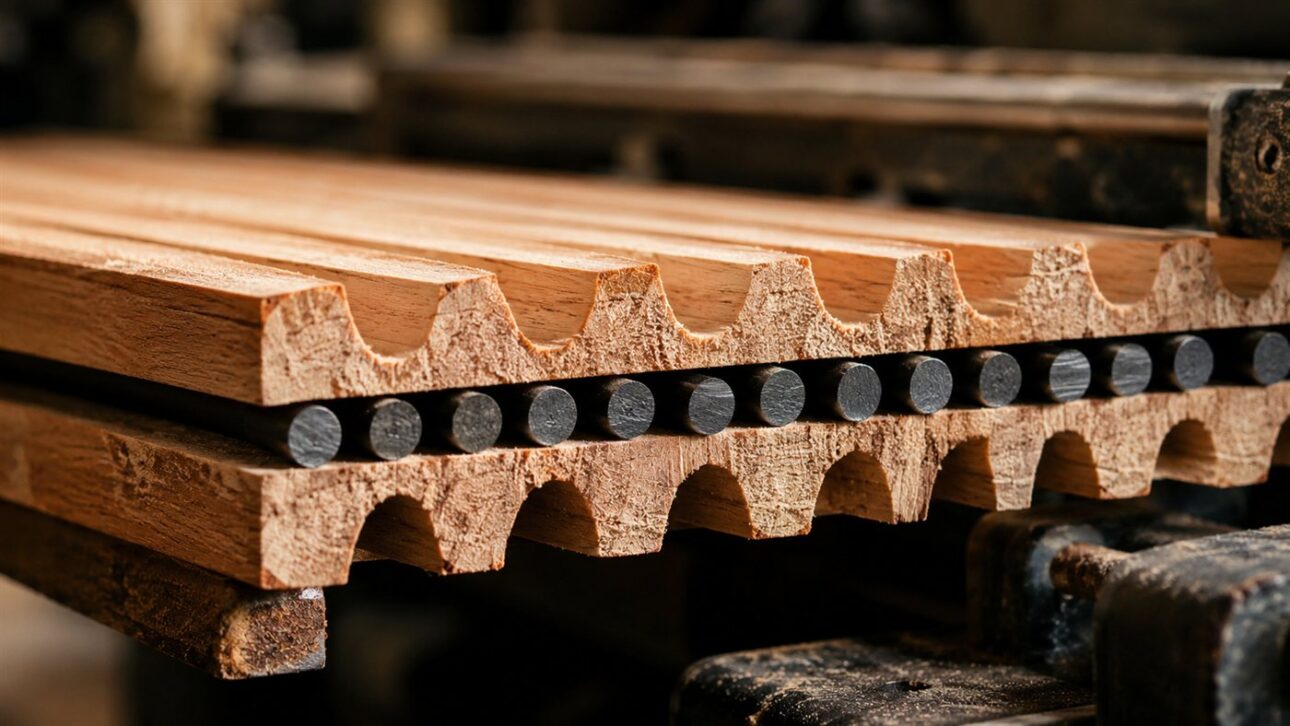
Making a pencil is more complex than it seems. The pine wood is cut into thin boards, called slats, which receive grooves where the lead goes. The graphite is actually a mixture of graphite powder with clay, pressed and fired in kilns to achieve the right hardness.
Two slats are glued with the lead in the middle, like a sandwich, and then cut, sanded, painted, and varnished. A single pencil goes through dozens of steps before reaching the case, in a process that combines precision carpentry, chemistry, and industrial painting. Multiplied by billions of units per year, this small-scale engineering becomes a spectacle of scale.
An industrial hub hidden in a university city
The impact on the city is enormous. The factory is one of the largest employers in the region and drives an entire chain of suppliers, transportation, and services. In a city famous for science and technology, the old pencil shares space with cutting-edge laboratories as one of the biggest local economic symbols.
This coexistence shows that traditional industry and innovation can go hand in hand. The same city that trains engineers and researchers is the world capital of an object that has practically not changed shape in centuries. It is a reminder that value is not only in what is new, but in what is done with excellence and scale.
Why the Brazilian pencil is a rare case of global leadership
In the end, the story of the São Carlos factory dismantles a national complex. Brazil, so often seen only as an exporter of raw materials, hosts the industrial operation that leads the world in a finished product, present in the backpacks of billions of students.
And it does this by planting its own forests, exporting to dozens of countries, and keeping alive a tradition of more than two centuries. Next time you hold a pencil, it’s worth turning the piece to look for the origin. Did you imagine that the largest manufacturer of such a common object was right here, in the interior of São Paulo?


