The city of Yiwu, in China, hosts the largest wholesale hub on the planet, from where trinkets, toys, and most of the Christmas decorations that adorn homes on all continents come
There is a city in China where Christmas never ends and almost everything small and cheap in the world originates. The largest wholesale market in the world is located in Yiwu, a city in Zhejiang province, and it is so large that it challenges the imagination of those who arrive for the first time. From there come keychains, toys, umbrellas, jewelry, and a multitude of knick-knacks that supply stores all over the planet.
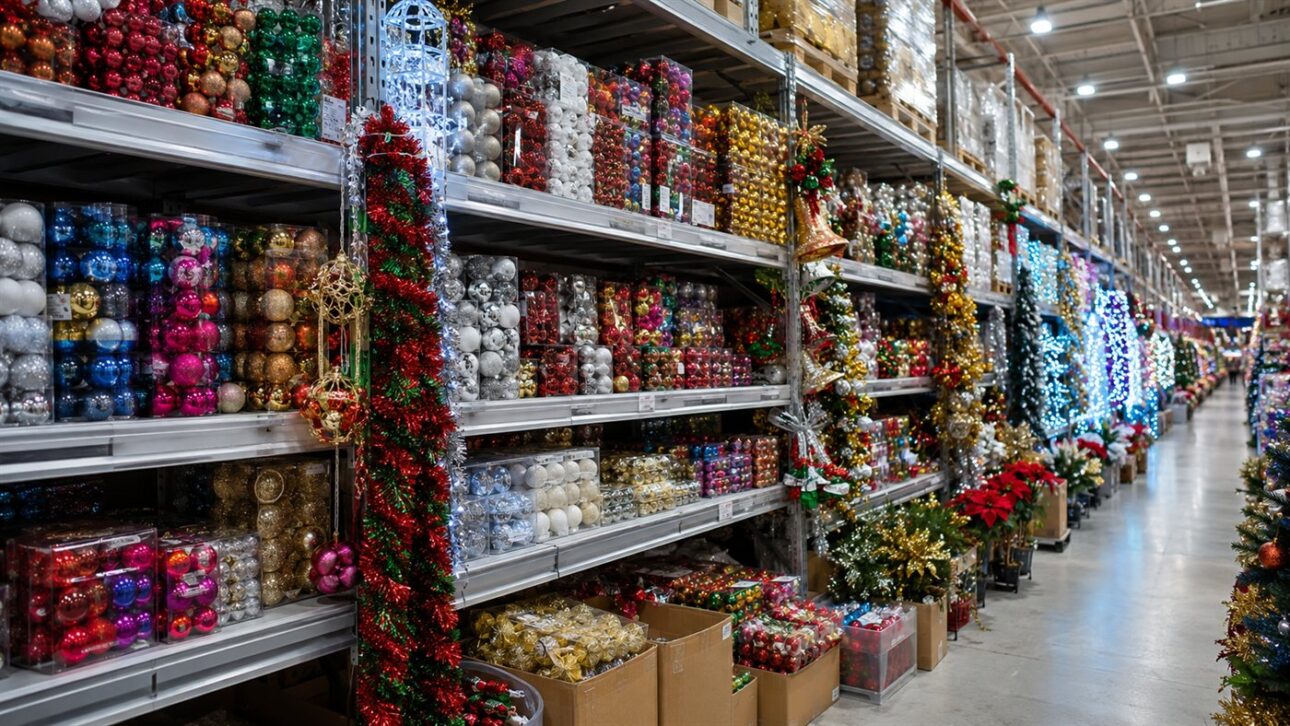
The most famous number is Christmas-related. According to Al Jazeera, about 60% of all Christmas decorations in the world come from factories around Yiwu, from colorful balls to twinkling lights and plastic Santas. That is why the city earned the nickname “Christmas village“, even in a country where the date is hardly celebrated.
How Yiwu became the largest wholesale market in the world
The rise of this city is a story of volume and specialization. Instead of manufacturing an expensive product, the city focused on concentrating in one place the sale of thousands of types of cheap products, attracting buyers from all over the world who want to buy a lot and pay little. Those who need to stock a variety store find everything there at once.
-
Small Brazilian City to Host World’s Largest Biodiesel Plant with Production Boosting from 900 Million to 1.62 Billion Liters Annually, Propelling Family Group to Global Leadership

-
UK Teachers to Receive 6.6% Pay Rise Over Two Years, With Schools Covering Part of the Costs

-
Abu Dhabi Acquires Brazil’s Largest Soybean Export Terminals for $835 Million, Gaining Control Over Key Ports in Santos and Itaqui

-
Europe Introduces €3 Fee Per Category on Shein, Temu, and AliExpress Purchases, Potentially Impacting Low-Cost Shopping from July 2026


This model transformed the city into a magnet for global trade. Shopping there is like entering an infinite physical catalog of everything small and useful, and this convenience is unbeatable. The giant wholesaler does not sell sophistication, it sells scale and variety, exactly what the popular retail sector around the planet seeks to fill the shelves.
75 thousand stores and an endless maze
The physical scale of the place is hard to believe. According to Xinhua, the city’s commodities market gathers about 75,000 shops in an area of more than 6.4 million square meters, with over 1.8 million products sold to 210 countries and regions. It’s practically a city within a city, dedicated solely to selling.
Visiting each of these shops spending only a few minutes at each would take months of uninterrupted walking. No one can see everything: buyers need days just to walk through the corridors of the categories that interest them. The complex is organized by sectors, with entire areas dedicated to toys, others to jewelry, others to home goods, in an attempt to bring some order to the gigantic labyrinth that is the Yiwu market.
The city that manufactures the world’s Christmas
The case of Christmas ornaments is the most striking. Thousands of factories in the region produce year-round the items that will only be used in December on the other side of the planet. While families in Europe and the Americas set up the tree, few imagine that almost all those decorations were born in the same Chinese city.
Reports that visited the factories show workers making artificial snow and painting Santas all year round, in an environment that mixes the festive atmosphere with the harshness of the production line. The ultimate symbol of Western Christmas is, in practice, a Chinese industrial product, a contrast that says a lot about how the global economy works behind the scenes. The year-end ornaments have become just another of the thousands of categories in the market.
Knick-knacks that supply the planet
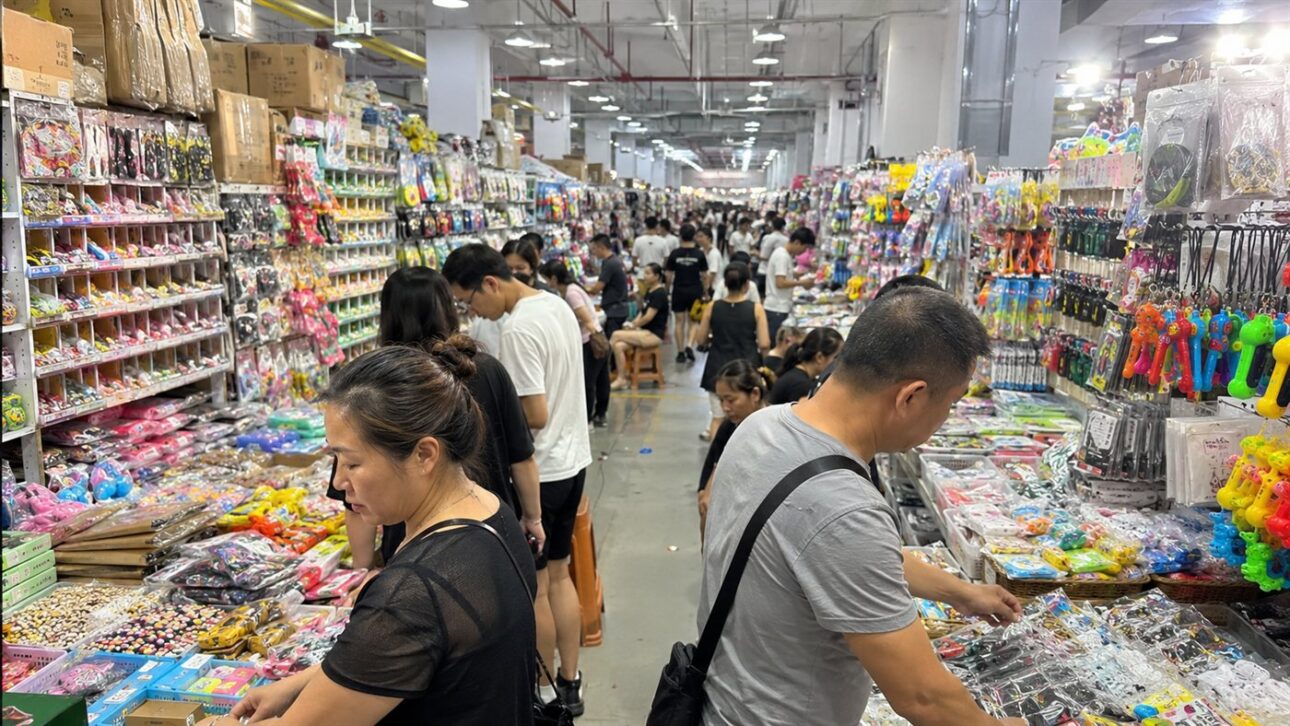
Besides Christmas, practically any cheap trinket you buy may have passed through there. Souvenir keychains, party favors, cell phone accessories, jewelry, stationery items, plastic toys, and low-cost household goods make up the bulk of what is sold there.
It is precisely the Chinese products that no one associates with a specific origin, bought on impulse and discarded without thought. It is the realm of the object worth a few cents, multiplied by billions of units per year, and this mountain of small items drives a huge economy. The strength of the place lies precisely in mastering what seems too insignificant to make money.
From street fair to global powerhouse
The origin of the market is humble and recent. According to Al Jazeera, the city’s trade has grown explosively in recent decades, following China’s economic opening, and has become the largest wholesale center for small commodities on the planet.
In just a few decades, an improvised fair turned into a key piece of global trade. The speed of this transformation is a portrait of China’s own industrial rise, which took the trade of simple things and brought it to an unprecedented scale. The city went from being a point on the map to becoming a key piece of supply chains worldwide.
How a Penny Pen Becomes a Billion-Dollar Business
The economic secret of the place lies in the mathematics of volume. Each product yields a tiny margin, sometimes a fraction of a cent, but multiplied by astronomical quantities, it turns into gigantic revenue. It is the opposite of luxury: earning little on each piece but selling an ocean of pieces.
This model only works with an extremely efficient production chain nearby, with integrated factories, suppliers, and transportation. Selling cheaply on a global scale requires logistics as sharp as any cutting-edge industry, and the city has built this over forty years. Behind the simple trinket is a sophisticated and relentless commercial mechanism.
The Foreign Buyers Living in Yiwu
A curious effect of the market is the international community it has attracted. Thousands of foreign traders, many from the Middle East, Africa, and Latin America, have moved to the city to buy in large quantities and export to their countries. The city has gained restaurants, hotels, and neighborhoods catering to this audience.
These buyers act as bridges between the Chinese factory and the popular trade in their regions. A good part of what is sold by street vendors and variety stores worldwide was chosen, box by box, by someone walking through the market corridors. It is a concrete globalization, made of flesh-and-blood people negotiating prices, not just anonymous containers.
Why Almost Everything Cheap You Buy Passes Through There
In the end, the story of this city reveals the backstage of popular consumption worldwide. That party favor, the Christmas tree ornament, the travel keychain, all may have originated in the same Chinese city that almost no one can pronounce. It is a silent power over the daily lives of billions of people.
It is also a portrait of how the global economy concentrates the production of simple things in surprising points on the map. Next time you buy a cheap trinket, it’s worth imagining the journey it made. Did you have any idea that so many things in your house could have a single origin so far away?