Portuguese
  Spanish


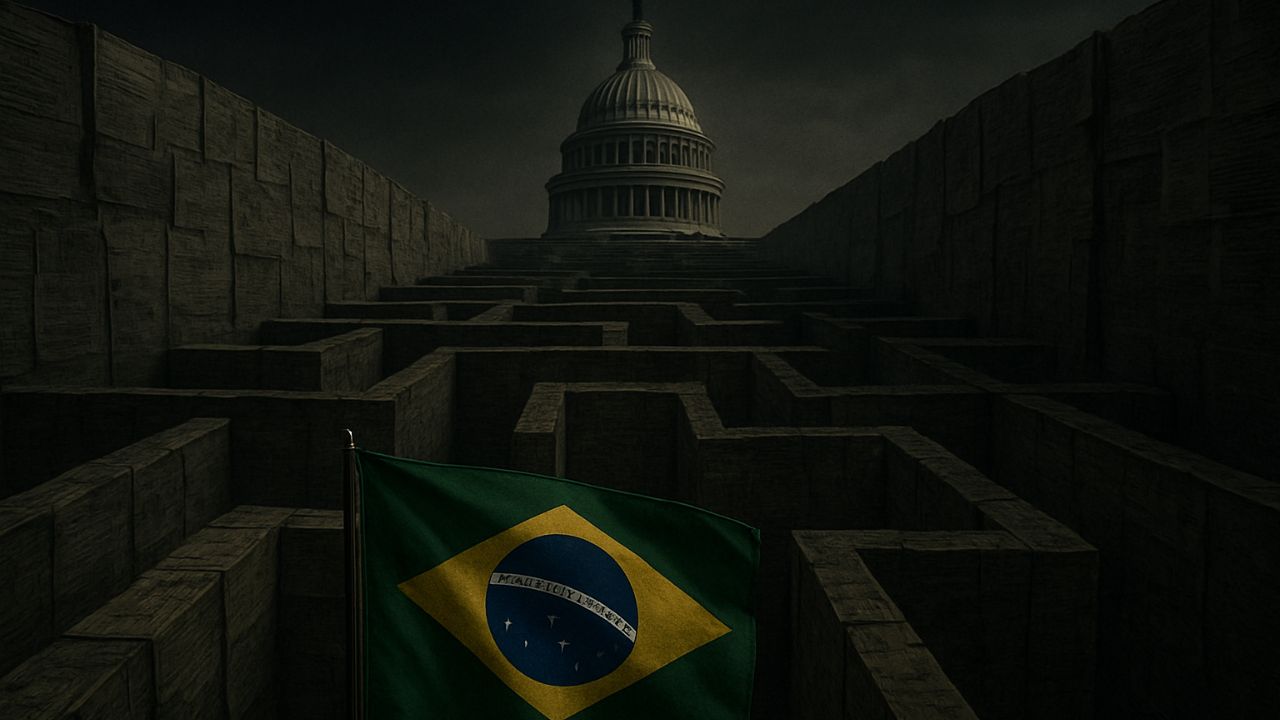


Business Leaders’ Mission Arrives in Washington to Challenge Tariffs Reaching 50%, Even After U.S. Court Rules Part of Trump’s Tariffs Illegal. Understand the Strategy.
A decision from the U.S. Court of Appeals deemed most of Donald Trump’s tariffs illegal, but why does this not change the plans of the Brazilian delegation? A group of organizations and business leaders is set to travel this Sunday, 31, to Washington for a crucial hearing, seeking to overturn what they call an “illegal tariff boom”.
Understand Why the Court Ruling Has Limited Impact
The Brazilian mission’s trip to the U.S. is proceeding at full strength. For José Velloso, president of the Brazilian Machinery and Equipment Industry Association (Abimaq) and a member of the delegation, the recent U.S. court ruling neither helps nor harms Brazil at this moment. According to Velloso, the reason is that it came from a lower court and the process has a long way to go. “Now President Trump has the right to appeal to the U.S. Supreme Court, and that could take one to one and a half years“, he stated.
The Brazilian Mission and the Strategy in Washington
The Brazilian strategy focuses on a different front. Lawyers hired in the U.S. are tasked with challenging the application of Section 301 against Brazil. This provision gave a veneer of legality for the U.S. to investigate Brazilian trade, focusing on ethanol, corruption, Pix, and patents.
-
Major Company Shuts Down 70-Year-Old Factory in Brazil, Relocating Production and Impacting Over 100 Families

-
Toyota Shuts Down Brazilian Plant After Producing Over 1 Million Vehicles, Plans Special Destination for Final Corolla Produced Following $2.1 Billion Investment and Expansion.
-
Shoe Factories Close, Leaving 528 Workers Jobless in Sudden Turn of Events Affecting Hundreds of Families After Decades of Operation.
-
Chinese Automaker Plans Second Mega Factory in Brazil with $2 Billion Investment to Produce Electric and Hybrid Cars in Strategic Location.


What is the “Illegal Tariff Boom” and the Limits of Presidential Power
Section 301 only allows the U.S. president to impose tariffs of up to 15%. To go beyond that, the government would need to prove that the target country is engaging in unfair trade. However, Trump set tariffs that, in the case of some Brazilian sectors, reached 50%.
Outlook of the Trade Battle Against the Tariffs
It is precisely this “illegal tariff boom” that the Brazilian delegation will contest in the hearing at the Office of the United States Trade Representative (USTR). The expectation, however, is for a long battle. “I think these tariffs will stay at this level until the trial finishes, it’ll take time”, concluded Velloso.