






 Portuguese
  Spanish




Even With The Ongoing Energy Transition, Oil Should Maintain Strategic Relevance And Register Demand Growth Until The Next Decade, According To Evaluation By Consultant Armando Cavanha.
The ongoing energy transition does not indicate an immediate break with fossil fuels. On the contrary, the process has consolidated as a phase of coexistence among different energy sources. In this context, oil remains one of the central pillars of the global economy. This is the assessment of oil and gas consultant and professor at PUC-Rio, Armando Cavanha, interviewed in the special series Perspectives 2026.
According to the expert, the energy debate needs to consider the reality of global productive and logistical systems. Even though renewable sources are advancing, oil still has no commercially viable substitute for various industrial applications. Furthermore, strategic decisions related to the commodity remain solid on an international scale.
According to Cavanha, the energy transition should be understood as a process of addition, not immediate substitution. “The truth is that the speed of the transition will depend less on declared targets and more on the combination of relative costs, technological speed, and geopolitical stability.”
-
Petrobras to Double Natural Gas Supply in Northeastern Brazil with New Investment

-
Petrobras Approves $1.2 Billion Refinery in Brazil to Produce Aviation Fuel and Diesel from Plants
-
Petrobras Secures $2.2 Billion Contract to Build and Operate Four Support Vessels for Brazil’s Offshore Oil Fields
-
Oil production grows in Rio, but reserve replacement raises a warning sign



Demand For Oil May Grow Even With Expansion Of Renewables
Although solar and wind sources are rapidly expanding their installed capacity, oil remains essential for the global supply chain. Currently, worldwide consumption is around 100 million barrels per day. However, the expectation presented by the consultant points to a significant increase.
The projection indicates that the world may demand between 110 and 115 million barrels of oil daily in the next decade. This growth would be associated with the lack of viable alternatives for sectors such as petrochemicals, heavy transport, and international logistics.
Oil, according to the interviewee, is responsible for about 6,000 petrochemical products. Additionally, it supports critical operations involving airplanes, ships, trucks, and military equipment. In this scenario, there are no signs of a large-scale commercial substitution capable of significantly reducing its participation in the short and medium term.
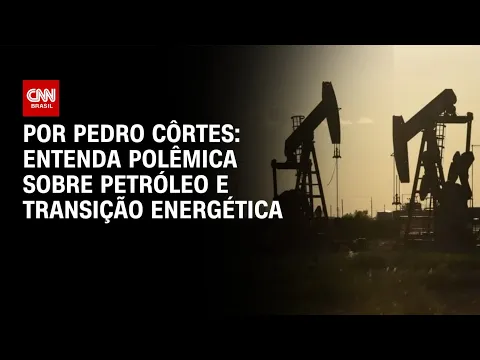

Meanwhile, renewable energies focused on electricity generation continue to advance. However, these sources present technical challenges. The intermittency of solar and wind requires complex battery storage systems or the use of backup sources like natural gas.
University Takes On A Strategic Role In The Energy Transition
Amid the transformations in the energy sector, Armando Cavanha highlights the decisive role of universities and research centers. According to him, these institutions are responsible for interpreting scenarios, probabilities, and outcomes, translating uncertainties into concrete proposals for public policies, technologies, and human capital formation.
In this sense, PUC-Rio is cited as an example of integrated action. The university acts as a convergence space between science, industry, and the state. Thus, it contributes to the construction of solutions that go beyond rhetoric or trends.
In 2025, the institution recorded the maturation of initiatives aligned with the reality of the energy transition. Projects focused on green hydrogen, carbon capture and storage, electrocatalysis, and smart grids progressed in parallel with research on regulation, financing, and social impacts.
The Energy Institute and the ECOA Institute are mentioned as national references in this process. Both act dynamically, researching and testing responses to the challenges posed by the transformation of the energy sector.
Business Environment Still Faces Structural Barriers In The Oil Sector
When analyzing the business environment in Brazil, Cavanha acknowledges institutional advances. There are government initiatives aiming to bring industry, research centers, and universities closer. However, according to him, these mechanisms are still marked by excessive bureaucracy and strong regulatory interference.
Another point highlighted is Brazil’s position in the global technological innovation landscape. The country does not host the matrices or the main research centers of major technology service companies in the oil sector. Companies like SLB, CGG, Halliburton, and FMC maintain decision-making centers in hubs like Houston, Paris, and Aberdeen.
On the other hand, Brazil stands out in deepwater exploration. The use of FPSOs and flexible lines places the country in a position of technical leadership in this segment. Still, the consultant advocates for a structural change based on stronger universities and a less regulated environment.
According to him, this combination could attract investments and stimulate the internalization of strategic knowledge, strengthening the oil sector in the long term.
Perspectives For 2026 Point To Cautious Optimism In The Oil Market
When projecting the scenario for 2026, Armando Cavanha takes a cautiously optimistic stance. For him, strengthening the bridge between knowledge and decision-making is essential for improving the performance of the Brazilian economy and the energy sector.
Investing in education and research, as he emphasizes, represents both an economic and energy policy. “The university must continue to be the space that relativizes trends, translates uncertainties into planning, and generates lasting technical consensus.”
Despite this, challenges persist. Regulatory unpredictability and the disconnection between discourse and practice still affect the environment for innovation and investment. According to the expert, the country needs long-term state policies, regardless of ideologies, that offer predictability to the market.
In Cavanha’s view, the energy transition should be understood as a transition of knowledge. In this process, the university acts as a silent engine, connecting probability, technology, and purpose. In Brazil, this engine relies on institutional stability, intelligent regulation, and greater protagonism of science in relation to politics.


