






 Portuguese
  Spanish
  6 min of reading
  0 comments


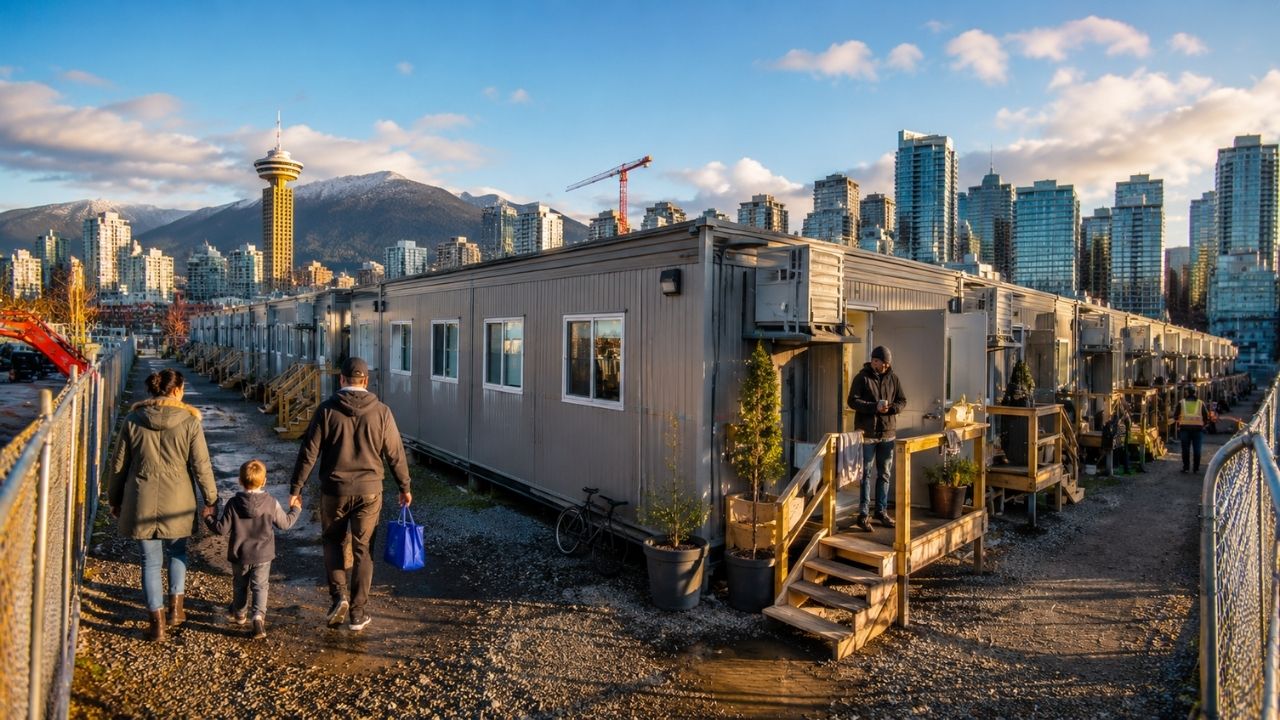
Created in partnership between the province of British Columbia and Vancouver, the temporary modular homes totaled 606 supportive housing units, with 29.7 m² units, monthly rent of C$ 375, permanent services, meals, health support, and management of non-profit organizations for people experiencing homelessness in the city.
The temporary modular homes in Vancouver, Canada, were delivered as a rapid response to the housing crisis and the increase in homelessness in the city. The initiative involved the province of British Columbia, the city of Vancouver, BC Housing, and non-profit organizations responsible for managing the housing.
According to BC Housing, the housing authority of British Columbia, the milestone was announced on March 3, 2019, with the opening of Nora Hendrix Place, the last complex of the phase that brought 606 supportive housing units to the city. The project was born after a commitment made in 2017 and aimed to offer compact, heated units with 24-hour support and social rent for vulnerable residents.
Project created 606 homes in emergency response
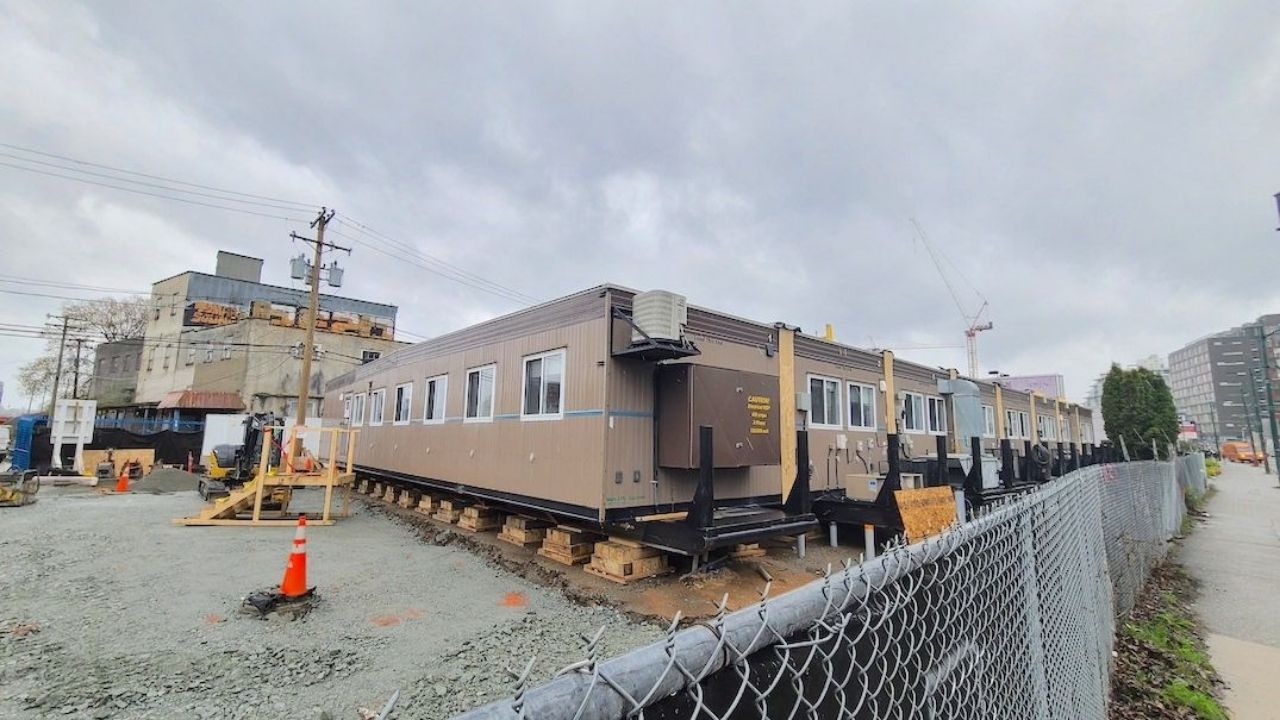
Vancouver faced, and still faces, a housing crisis marked by the increase in the homeless population. In this scenario, modular homes emerged as a faster implementation solution than traditional permanent housing models.
-
Say Goodbye to Warped Wooden Decks: Composite Flooring Made from Recycled Plastic and Sawdust Offers a Low-Maintenance Outdoor Solution

-
Forget the mansions: the Casa de Mainha, a low-cost renovation in the Agreste of Pernambuco with natural ventilation, won the world’s largest architecture award with over 120,000 votes.

-
Couple trades four-bedroom house in Canada for a retired school bus costing less than $7.5k bought on Facebook, dismantles the vehicle down to the screws, and transforms the yellow scrap into a luxury home on wheels, with a bedroom, bathroom, kitchen, and handmade skylight.

-
Tired of seeing residents sleeping on the streets, a U.S. city approved a village with 55 micro-houses, rent starting at $300, and an 1880 school transformed into a community center to accommodate people without requiring a minimum income.



According to BC Housing, all 10 temporary modular housing complexes planned in this phase were inaugurated, totaling 606 supportive housing units for people with the greatest housing needs. The logic was to provide immediate relief to those who might continue sleeping on the streets or in shelters.
The strategy was part of the Building BC: Rapid Response to Homelessness program, aimed at creating supportive housing. In practice, the model was not limited to handing over a key; it combined housing, social support, food, health, and daily assistance.
This point is essential to understand the project. The units were called temporary due to their construction method and the use of available land, but the proposal for many residents was to create real stability, with an address, routine, and nearby services.
Compact units have kitchen, bathroom, and rent of C$ 375
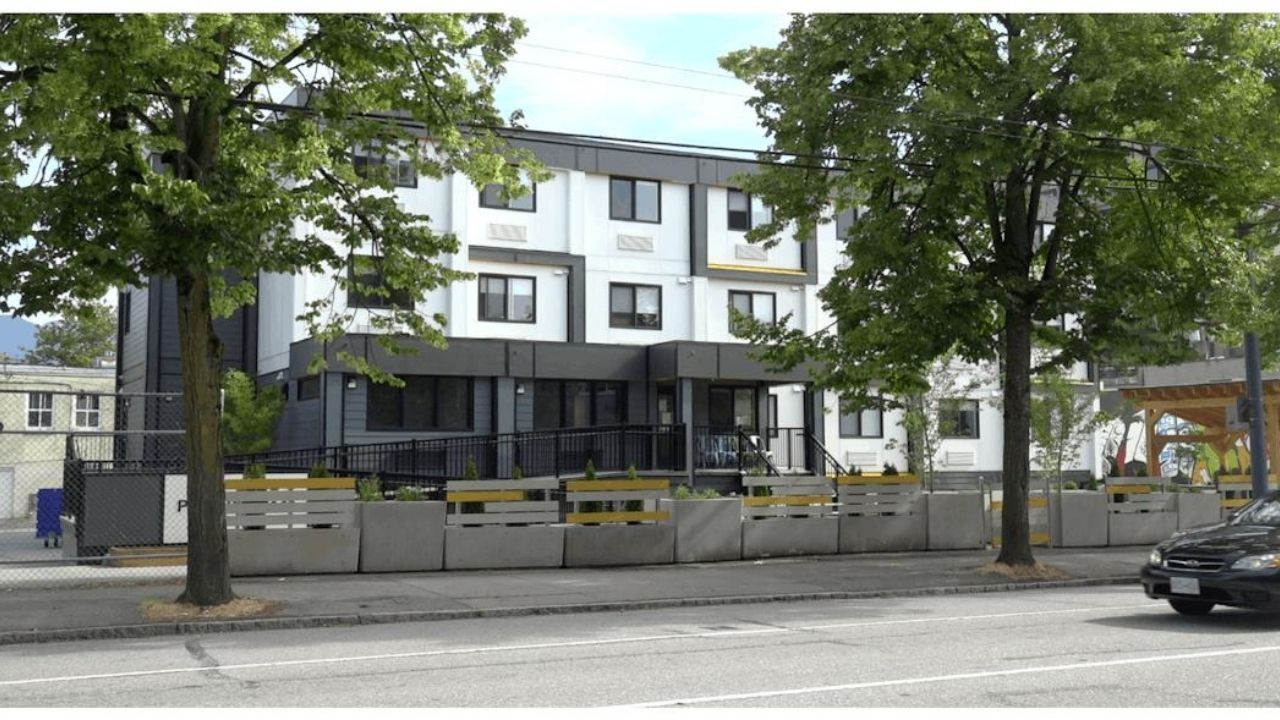
The Nora Hendrix Place, located at 258 Union Street, added 52 new units to the city’s modular housing network. Each unit is 29.7 m², equivalent to 320 square feet, and includes its own bathroom and kitchen.
Six of these units were designed for wheelchair accessibility. The construction was carried out by Horizon North, a British Columbia manufacturer, while the management of assisted housing was assigned to PHS Community Services Society, a non-profit organization with experience in housing and community services.
The monthly rent reported to residents was C$ 375, an amount corresponding to the housing allowance from the social assistance provided by the province. This detail is important because it shows that the project was designed for people with very limited income, not for the conventional real estate market.
Thus, the modular homes functioned as a bridge between the emergency of the streets and housing with basic conditions of autonomy. Having a bathroom and kitchen within the unit reduces dependence on collective structures and helps rebuild a more stable routine.
24-hour support is a central part of the proposal
Unlike a common residential complex, the temporary modular housing buildings in Vancouver were planned with 24-hour support and permanent work teams. The goal was to serve young people, the elderly, people with disabilities, and residents who are homeless or at risk of losing housing.
The support mentioned includes meals, health and wellness services, life skills training, job guidance, social and recreational programs, as well as connection with community resources. In this model, housing appears alongside a support network.
There is also support for bureaucratic and practical tasks, such as accessing income assistance, pension benefits, disability benefits, identification documents, bank accounts, and laundry services. These are points that may seem simple but can hinder the lives of those who have spent a long time without a fixed address.
This structure reinforces 24-hour support as an assisted axis of the project. The physical unit is just one part of the response; the rest depends on continuous care, specialized management, and integration with the surrounding community.
Nora Hendrix Place also carries community memory
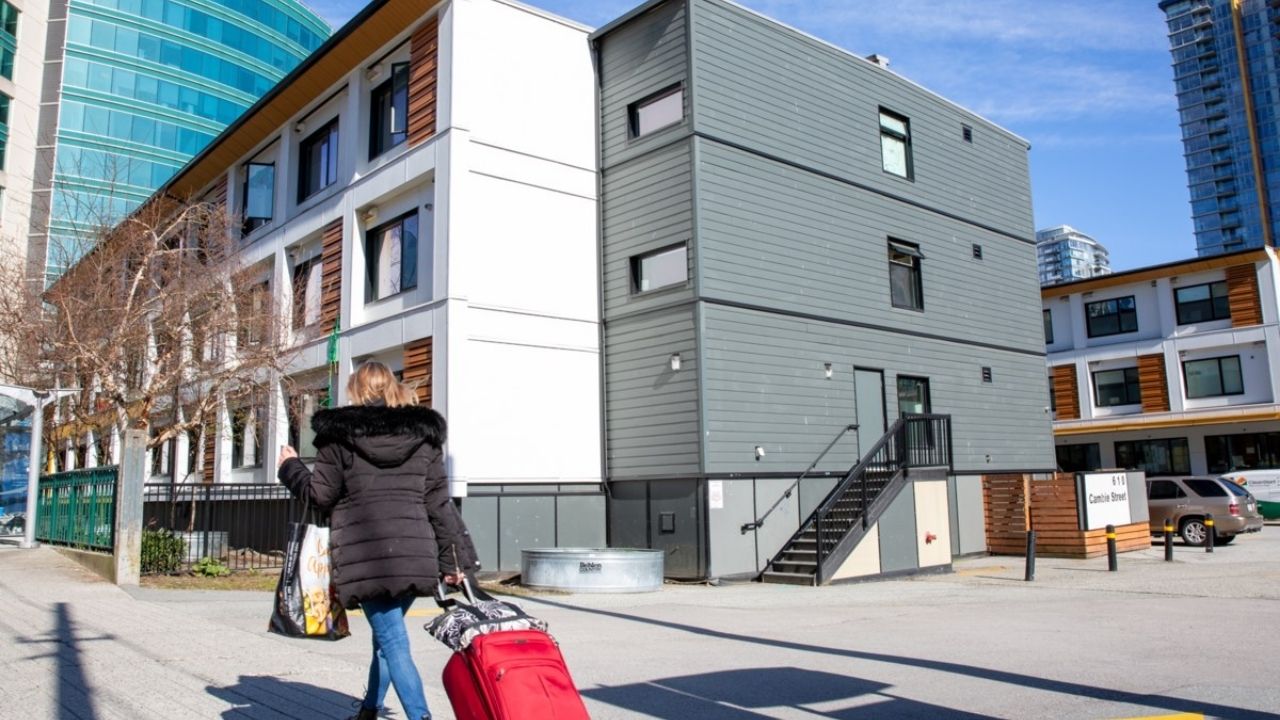
The Nora Hendrix Place was named in honor of an important figure in the local black community. The location, in the Hogan’s Alley neighborhood, is also symbolic, as the region holds a history linked to the former black community of Strathcona.
The Hogan’s Alley Society participated in the initiative in partnership with the PHS, with the intention of supporting the success of the project and aligning housing with the recognition of an urban history marked by displacement and inequalities. The project, therefore, was not just about construction, but also about repair and belonging.
According to BC Housing, the Nora Hendrix Place prioritizes black and indigenous homeless residents. This priority is linked to the social context of Vancouver and the attempt to respond to groups affected by persistent economic and social exclusion.
The city, the province, the PHS, and the Hogan’s Alley Society also worked to ensure that the temporary modular homes reflected a long-term vision for the location, connected to the Northeast False Creek plan and the historical presence of the black community in the region.
Rapid construction became an urban differential
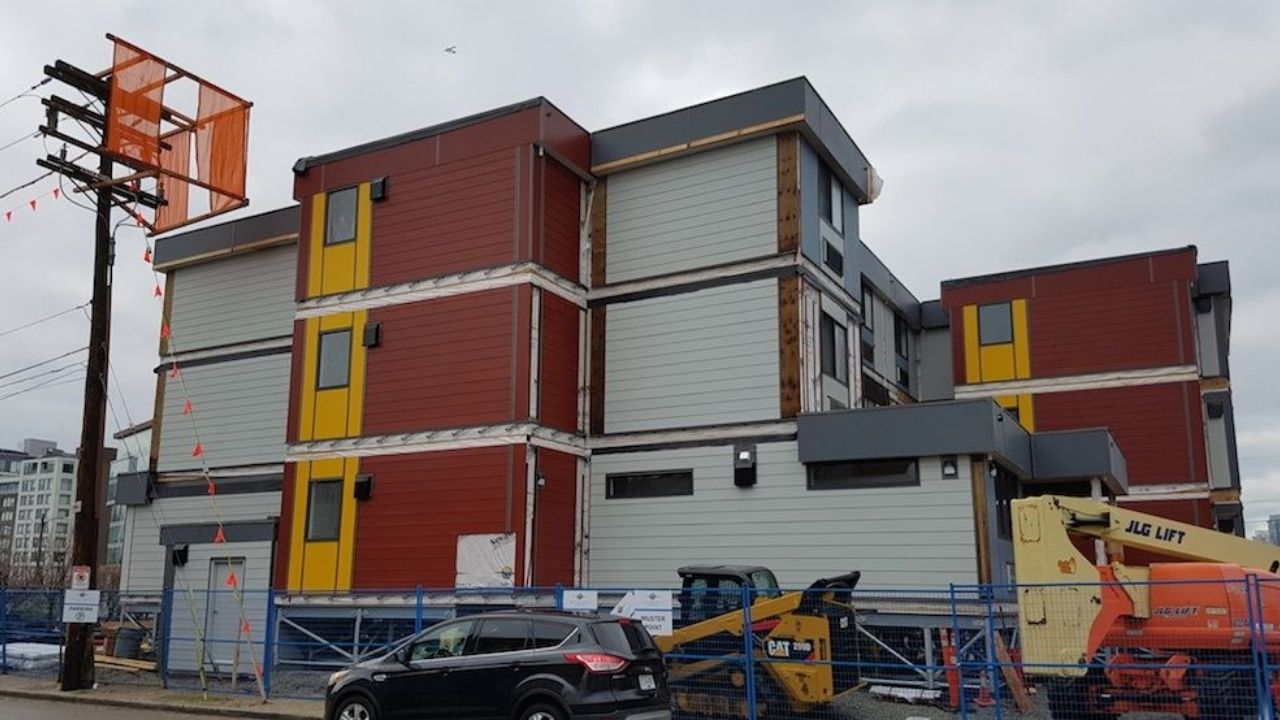
One of the advantages highlighted by the city of Vancouver is the speed of modular construction. According to the municipal page on temporary modular housing, this type of housing can be built in about three months on vacant or underutilized land.
This speed helps explain why the model was used as an emergency response. In cities where the cost of land, bureaucracy, and the housing crisis exacerbate the lack of affordable housing, building faster can mean fewer people exposed to the cold, insecurity, and instability of the streets.
The city also points out that the units can be relocated and reconfigured to adapt to different sites. Moreover, the buildings offer communal spaces and connections with the neighborhood, which helps prevent the housing from being just an isolated structure.
In Vancouver’s case, the impact was measured in surveys cited by the city itself. Six months after the opening of many of these buildings, 80% of residents reported an improvement in overall well-being, 82% had positive interactions with neighbors, and 94% remained housed.
Housing crisis remains a major challenge


Even with the delivery of 606 homes, Vancouver has not resolved the entire housing crisis. The city itself reports that the 2025 Homeless Census recorded 2,715 people without housing. This shows that modular homes helped but did not eliminate the problem.
The difference lies in the role of the project: it was designed as a quick response, not as a sole solution. To work on a larger scale, it needs to go hand in hand with permanent housing, affordable rent, social rent, tenant protection, health services, and long-term public policies.
Even so, the experience draws attention because it shows how a city can use available land, modular construction, and social management to create supported housing in less time. The model does not replace deep urban planning, but it can mitigate harm while definitive solutions are not yet available.
In the public debate, the most important question may not be whether modular homes are perfect, but whether it is acceptable to wait years for larger projects while people remain without shelter. Vancouver opted for an intermediate response, with limits, costs, and concrete results.
Rapid housing can be a beginning, not an endpoint
The Vancouver case shows that modular homes can function as a practical tool against the housing crisis when accompanied by 24-hour support, specialized management, social rent, and community integration.
At the same time, the city’s latest numbers make it clear that the challenge continues. Modular housing alone does not solve the lack of affordable homes, but it can prevent the wait for permanent solutions from leaving more people on the streets. Do you think Brazilian cities should test similar models, with social rent and continuous support, or would this only be a partial response to a much larger problem? Leave your opinion in the comments.


Be the first to react!