






 Portuguese
  Spanish
  5 min of reading
  0 comments


Petorca became a symbol of the water crisis in Chile after the avocado expansion, with dry rivers, water trucks, and water disputes.
The global consumption boom of avocado transformed Petorca, in the Chilean region of Valparaíso, into one of the most cited cases in the debate about the water crisis, export agriculture, and access to water. In a report published by the Goethe-Institut in the Humboldt magazine, the province appears as the Chilean epicenter of this tension, amid the advance of Hass avocado plantations and the worsening of a drought that has lasted more than a decade. A scientific study published in the journal Water adds that the Petorca basin crisis has become an emblematic case of inequality in water access, with social, productive, and ecological impacts.
The central point of the story is that the crisis cannot be explained by a single factor. The scientific article points to the combination of the megadrought and a water management model criticized for widening territorial inequalities, while the National Institute of Human Rights of Chile concluded that the human right to access water was under threat, with rural populations supplied by water trucks and doubts about the quality of water for consumption.
Petorca became the most well-known portrait of the water crisis linked to avocado in Chile
According to the Humboldt report, Petorca accounts for more than half of the national avocado production and has been under extreme drought for more than a decade. Where there was once a river, the text states, today there are only stones and dust. The same report highlights that the global popularization of the fruit increased pressure on a region already marked by water scarcity.
-
Capixaba farmer created in 14 years the first registered ginger cultivar in Brazil, with a productivity of 145 tons per hectare, more than double the state average, and is already receiving orders from South Africa and Peru.

-
In Virginia, a family of small-scale farmers refused to swap the countryside for the city and transformed their milk production into award-winning artisanal cheese from Mantiqueira de Minas.
-
The alligator that was once illegal game has become a business in the Pantanal: Caimasul, the largest alligator slaughterhouse in the world, slaughters nearly 100,000 per year and exports alligator leather and alligator meat.
-
At 17, Andressa swapped the city for life in the countryside with her father on a farm in Minas Gerais, where they take care of 15,000 fish in aquaculture, cows, and other animals.


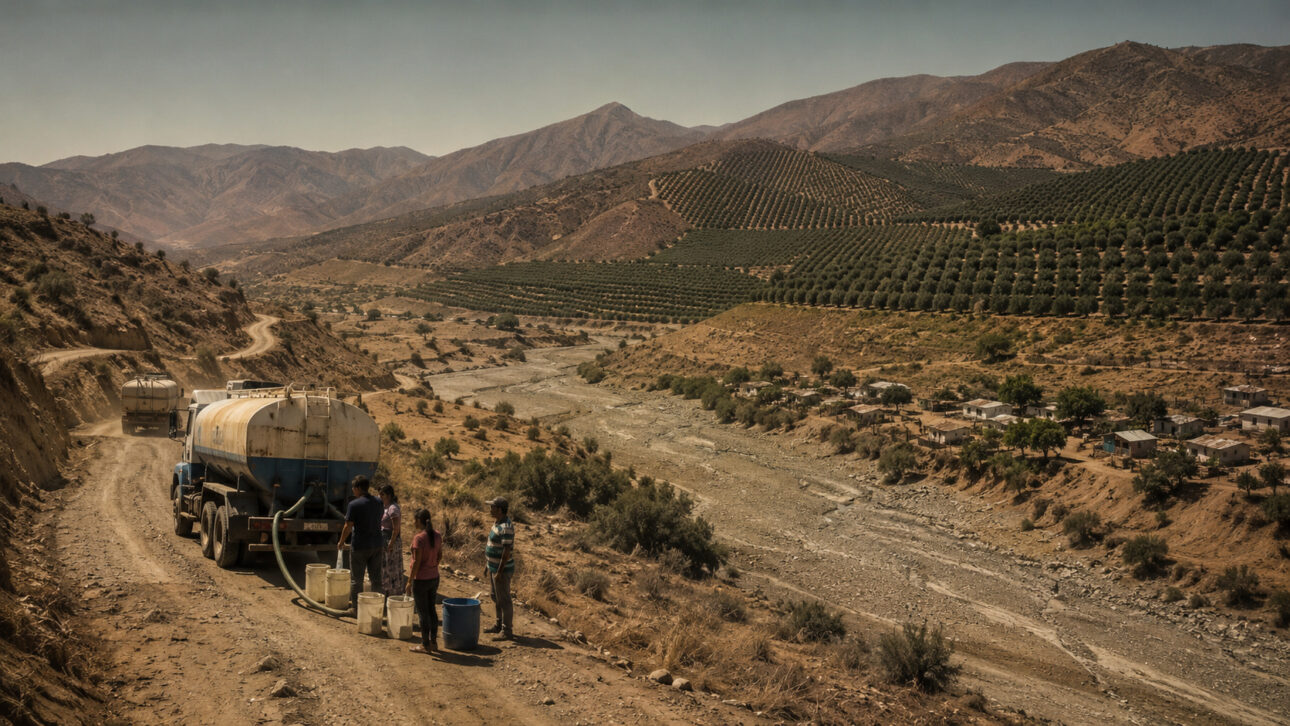
The study published in Water reinforces this structural dimension. The researchers record that the flow of the Petorca river has suffered a widespread reduction in recent decades, reaching zero in some sections and leaving the riverbed dry for years.
The work also informs that the basin was declared a restriction area in 1997 and a prohibition area in 2018, because extraction levels exceeded the sustainable long-term supply.
This picture transformed the province into an international symbol of a conflict that goes beyond agriculture. In Petorca, the commercial success of avocados has become associated with a broader discussion about water security, inequality in access to resources, and the sustainability of agricultural production in areas subjected to prolonged drought.
Dry rivers and water trucks changed the routine of communities and small farmers
The most visible face of the crisis appears in human supply. The Goethe-Institut reports that the local population and small farmers suffer from a lack of drinking water and that the State needs to provide water by trucks, in a volume limited per person and with quality questioned by residents and experts interviewed in the report.


The report from the INDH goes in the same direction. The agency concluded that rural populations were being supplied by water trucks and recommended that the State prioritize human consumption over the productive function of water. The document also records that there were doubts about the quality of the water distributed for consumption and points to a persistent scenario of social tension around the use and control of water resources.
The study from Water adds data that helps to gauge the severity of the problem: the Petorca municipality registered more than 2,000 people dependent on supply by water trucks, equivalent to 20% of the basin’s population, worsening in the summer.
According to the authors, the crisis has already produced difficulties in water access, a drop in agricultural productivity, and significant ecological damage.
Water became a dispute between exportation, private rights, and regulatory failures
The case of Petorca gained attention because it exposed not only the drought but also the functioning of the Chilean water management system.
The Goethe report states that, under the 1981 Water Code, individuals and companies were able to obtain private rights to use water permanently, at no cost, within a model where the market began to regulate the distribution of the resource.
The scientific article published in Water details this criticism. According to the authors, the Chilean system operates with a market for water use rights, granted by the State to private users in perpetuity and free of charge, with limited public mechanisms for regulation and supervision. The work highlights that, in Petorca, this model was widely questioned for generating territorial inequalities and for failures in the oversight of extractions.

The numbers help explain the scale of the dispute. Between 2008 and 2018, the General Directorate of Water received 241 formal complaints for illegal water use in Petorca, according to the study. The same article also states that the INDH mentioned about 447 cases of illegal extraction between 2010 and 2014 and cites that, despite the depletion of the basin, 1,362 water rights had been granted in the province, mostly underground.
The water cost of avocados has become a central piece of a debate that cannot be explained simply
The expansion of avocados has become a significant focus of criticism because it requires a high volume of water. The Humboldt report states, based on the Water Footprint Network, that the production of 1 kilogram of avocado requires an average of 1,000 liters of water.
In the same text, political scientist Aldo Madariaga from Diego Portales University states that the territory was reorganized to serve export agriculture and that small farmers lost the ability to maintain crops, animals, and means of survival.
At the same time, the studies consulted make it clear that attributing the crisis solely to avocados would oversimplify the problem. The Water article states that the megadrought period was the driest ever recorded in the Petorca basin in the last 700 years and argues that the current scarcity results from a combination of extreme climatic conditions and unsustainable water use rates.
In another section, the authors calculate that the granted water rights came to represent up to 18% of the average annual rainfall in parts of the basin, which exacerbates the deficit imposed by the drought.
It is precisely this combination that has turned Petorca into a globally cited case. The region has come to represent the point where the global avocado boom, the Chilean megadrought, and a heavily criticized water management model explosively converged.
The result was a landscape marked by dry riverbeds, emergency supply that became routine, and a permanent dispute between agricultural production, the human right to water, and the survival of rural communities.






Be the first to react!