Portuguese
  Spanish


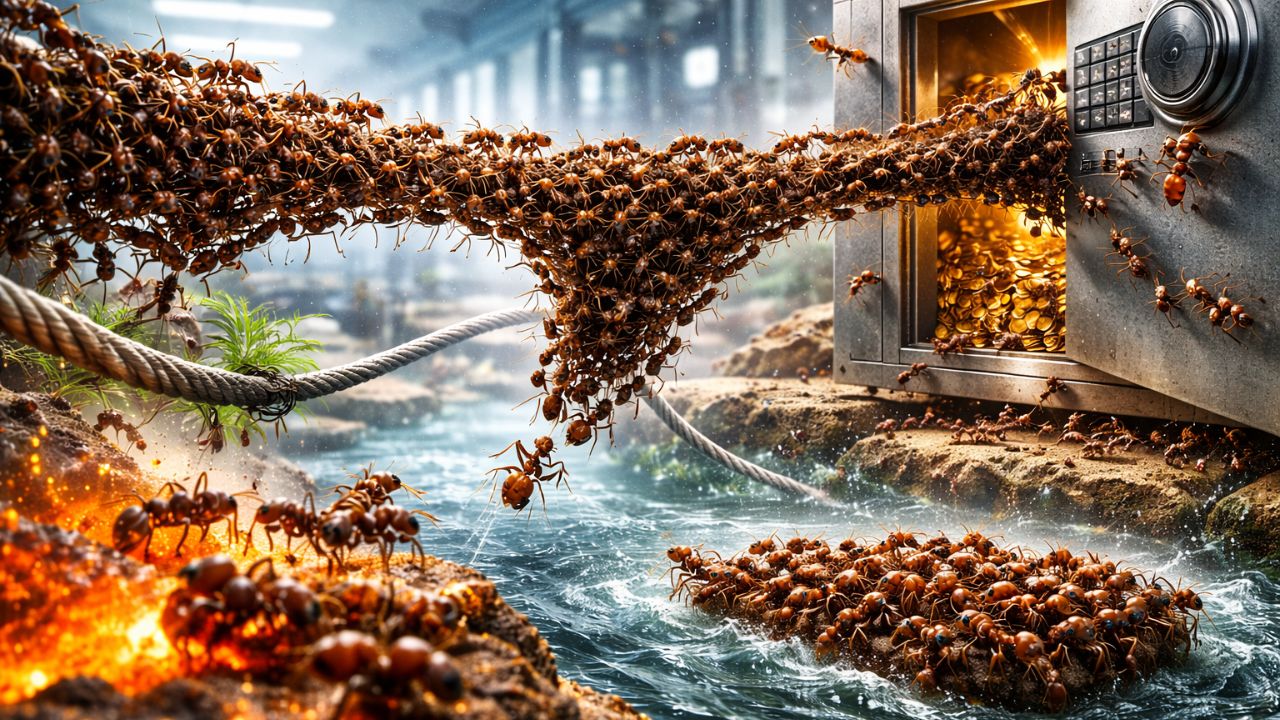

In an Experiment Registered in 2025, One Thousand Ants Face Extreme Challenges in Controlled Sequence, with Sand Obstacles, Suspended Cable, Paper Safe, and Sticky Floor, Revealing Collective Strategies and Individual Decisions That Ensure Food Even Under the Risk of Falling, Captivity, and Difficult Crossing.
A Closed Lab Experiment Placed One Thousand Ants Facing Extreme Challenges in a Test Circuit Designed to Observe How Far the Colony Would Go to Obtain Food. The Dynamics Were Staggered, with Increasing Difficulty and Different Rewards, Ranging from Dead Insects to Strawberries and Seeds.
The Stages Were Recorded as a Sequence of Practical Tests: First a “2D Ant Nest” in Sand, Then a Suspended Cable Over a Slippery Pit, Next a Sealed Paper Safe, and Finally, a Path Covered by Super-Sticky Tapes Simulating Lava. The Focus Was Simple: Food. The Result Was Surprising.
How the Circuit Began with One Thousand Ants Facing Extreme Challenges
The Starting Point Was to Gather About 1,000 Ants from an Old Ant Nest and Place Them in a Prepared Environment to Stimulate Uncommon Behaviors.
-
How to Prevent Brown Recluse Spider Bites: Common Hiding Spots and Free Tips to Reduce Risks

-
Natto: The Unusual Japanese Superfood Gaining Popularity on Social Media and Driving Record Exports
-
Brazilian Mayor Goes Undercover as Homeless for 24 Hours to Assess Public Services

-
15-Year-Old Entrepreneur Malu Lira Publishes 20 Children’s Books on Financial Education, Earns $500,000, and Expands Her Project to the Amazon Rainforest




The Aim Was to See If, Facing Artificial Obstacles, They Would Form Living Structures, Such as Bridges and Boats Made of Bodies, or Improvised Solutions to Cross Difficult Surfaces.
To Keep the Stimulus Constant, the Creator Varied the “Baits” Throughout the Process. Dead Insects, Strawberries, and Seeds Were Introduced, Along with Adjustments to the Scenario to Intensify the Challenge When the Colony Got Stuck or Sought Escape Routes.
Test 1: Sand, 2D Ant Nest, and the Race to the Buried Food
In the First Test, the Ants Were Placed in a Container with Sand, Transformed into a 2D Ant Nest. The Reward Was Hidden at the Bottom: Large Dead Insects Buried, Requiring Real Excavation to Reach the Food.
In a Few Minutes, Part of the Group Started Digging Tunnels, While Other Ants Tested the Walls Trying to Escape.
The Record Describes That in About Eight Hours, the Environment Already Looked Like a Labyrinth, with Galleries Reaching the Buried Food.
One Thousand Ants Face Extreme Challenges and Still Managed to Organize Work and Exploration Simultaneously.
Test 2: The Suspended Cable Over the Slippery Pit
The Second Test Raised the Stakes: a Suspended Wire Over a Pit Coated with Fluon, Described as an Extremely Slippery Material. The Rule Was Cruel: If the Ant Fell, It Could Not Climb Back Up. The Goal Was to Transport An Insect Leg from One Side to the Other.
At First, There Were Retreats and Falls at the Edges. To Encourage the Crossing, the Creator Thickened the Rope with More Wires and Applied Insect Jelly to Intensify the Food’s Smell.
The Turning Point Came When A Single Ant Picked Up a Smaller Leg, Carried It Alone, and Crossed the Entire Cable. Upon Arriving with the Food, the Colony Received the Reward.
One Thousand Ants Face Extreme Challenges, but a Single Individual’s Action Was Sufficient to “Turn the Game Around.”
Test 3: The Paper Safe with Seeds and the Unlikely Invasion

In the Third Obstacle, the Creator Set Up a Paper Safe with a Functional Door, Filled It with Seeds, and Sealed It with Hot Glue to Make Opening It More Difficult. At First, the Ants Used the Safe as a Ramp to Attempt Escape from the Enclosure, Without Focusing on the Contents.
The Dynamics Changed When the Safe Was Soaked with Sugary Water, Both to Make It More Attractive and to Soften the Paper.
The Ants Started to Lick the Sweetened Surface, and at One Point, a Small Hole Appeared in the Material.
One Ant Went In Alone and Was Found Inside the Safe, in the Midst of the “Jackpot” of Seeds. One Thousand Ants Face Extreme Challenges and, When the Opportunity Arises, Exploration Kicks In.
Final Test: “The Floor is Lava” with Super-Sticky Tape
In the Last Test, the Path to Pieces of Strawberry Was Covered with Super-Sticky Red Tapes, Simulating Lava.
The Ants Had Materials Available Such as Ropes, Soil, and Wood Chips, Which Could Serve as Support to Cross.
While Part of the Group Tried to Push Soil Onto the Tape, Forming a Sort of Bridge, Another Ant Managed to Almost Cross the Adhesive Surface on Its Own and Make It to the Other Side, Ensuring the Success of the Stage.
The Final Reading of the Experiment Is Straightforward: One Thousand Ants Face Extreme Challenges and Alternate Collective Solutions with Decisive Individual Decisions, Even with Tiny Brains.
What the Experiment Suggests About Adaptation and Strategy
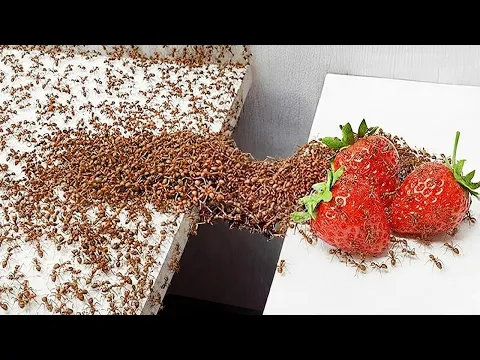

Without Romanticizing, the Record Shows a Consistent Pattern: Faced with New Obstacles, the Ants Test, Retreat, Persist, and Adjust Routes.
Some Actions Are Clearly Group-Based, Such as Digging and Trying to “Cover” the Path; Others Depend on Individuals Who Risk First and Open a Path for the Rest.
The Highlight Is Not “Intelligence” in the Human Sense, but Practical Adaptation Under Pressure, Guided by Smell, Reward, and Trial and Error.
In a Controlled Environment, This Type of Test Makes Visible What Often Goes Unnoticed in Everyday Life.
In Your Opinion, One Thousand Ants Face Extreme Challenges Due to Pure “Instinct” or Is There a Form of Learning Throughout the Stages of the Experiment?