






 Portuguese
  Spanish


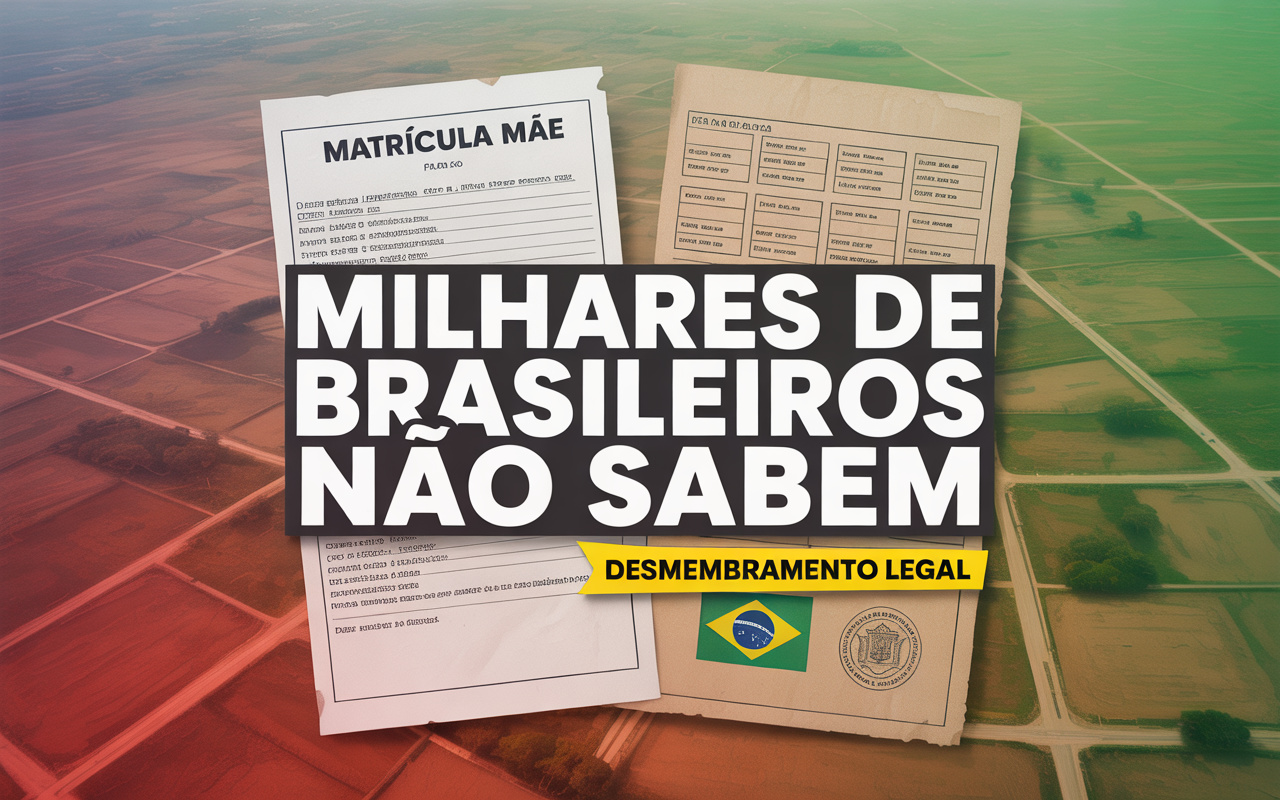
Mother Title and Subdivision Explain How to Divide a Large Land into Legal Plots with Its Own Titles, According to Law 6.766/79 and Property Registration.
In many Brazilian cities, especially in metropolitan areas and older urban expansion areas, it is common to find informal subdivisions created between the 1960s and 1990s. In practice, a property owner sold “pieces” of a large plot to different buyers, usually through private contracts or receipts, but without individualizing each fraction in the Property Registry.
The result is a frequent scenario: several buyers living, building, and paying property tax on a lot that, legally, does not exist as an autonomous unit, because everything is under a single title, the so-called mother title.
Although it seems like a no-win situation, what few people know is that this situation has real legal and urban solutions: the subdivision, as provided for in Brazilian legislation, is precisely the process that allows the creation of individual titles for each plot, making them registrable, financeable, transferable, and inheritable.
-
Seniors Over 60 Can Travel for Free Across Brazil: Elderly Statute Ensures Two Free Bus Seats and 50% Discount When Full for Low-Income Passengers

-
Detran RJ starts requiring a toxicological test for those obtaining their first driver’s license in the car and motorcycle category starting June 29; see who will be affected.

-
Florida takes TikTok to court and accuses the Chinese giant ByteDance of ignoring the law that bars minors under 14, while parents and authorities demand more protection for children on social networks.
-
Chamber approves constitutional amendment reducing the age of criminal responsibility from 18 to 16 years; what now?



What Is the Mother Title and Why Does It Exist
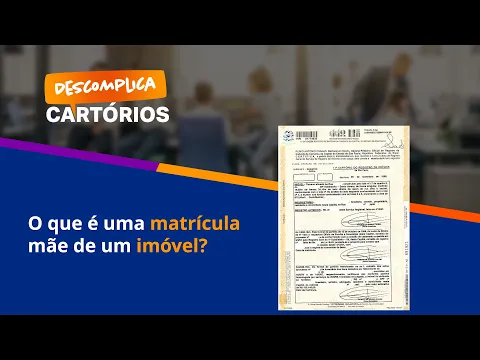

In the Property Registry, the title is the “identity card” of the property. It contains origins, boundaries, area, owner, and transfer acts. The mother title is a unique title that represents a large area still not administratively subdivided in the registry, even though, in practice, it is already subdivided on the ground.
This imbalance between the physical world and the legal world arises from various situations:
- old subdivisions without municipal approval
- inheritances informally divided among family members
- private contracts for fractions of farms and country houses
- sale of “half a part” or “a piece” without registration
- rural areas transformed into urban ones without registration adjustment
The consequence is that the mother title comes to encompass various possessory rights, but no individual title is created for each buyer.
When the Lot Exists in Practice, but Does Not Exist in Law
This informality creates a silent problem: the buyer believes they own the lot, but do not have a registrable title, therefore:
- cannot obtain bank financing
- cannot formally sell with a deed
- cannot ensure organized inheritance
- cannot register a construction
- cannot approve utility connections in some municipalities
- is vulnerable to litigations and inventories of the original owner
That is why resolving the mother title is not just bureaucracy — it is a property regularization that unlocks credit, asset transmission, and legal security.
How Subdivision Transforms One Title into Several
The subdivision is the urban and registral procedure that divides a larger area into smaller parcels, creating new individual titles.
This process is based on Federal Law 6.766/1979, known as the Urban Land Parceling Law, which regulates subdivisions and subdivisions in Brazil.
The process requires two coordinated steps:
Municipal Approval
The city hall analyzes whether the area can be subdivided, checking setbacks, minimum dimensions, access, infrastructure, and compliance with the master plan.
Registration Act
After approval, the Property Registry opens a title for each lot, and the mother title registers the act of subdivision.
This sequence connects urban planning (City Hall) with real estate legality (Registry Office) — without one, the other cannot proceed.
When Subdivision Is Required and When It Is Not
The legislation distinguishes between subdivision and subdivision:
- Subdivision requires the opening of roads and infrastructure works.
- Subdivision utilizes existing public roads and does not alter the road system.
That is why many old areas fall under subdivision, which is less complex and more accessible to small property owners.
There are also situations where the subdivision may be waived, such as:
- municipal rules that allow for “remembramento” and “simple subdivision” between already approved lots
- special zones of social interest (ZEIS)
- collective regularizations via REURB (Urban Land Regularization)
The REURB, created by Law 13.465/2017, has become one of the main tools to resolve entire neighborhoods that emerged from mother titles without individualization.
The Role of REURB in Solving Old Mother Titles
Many city halls prefer REURB because it regularizes not only the registration but also:
- urban infrastructure
- road layout
- fiscal registration
- saniation
- energy
- official addressing
At the end of the REURB, each resident receives an individual title, which the Registry converts into its own title, something unthinkable decades ago without heavy litigation.
In old areas, this solution prevents isolated conflicts lot by lot and treats the neighborhood as a consolidated urban body.
When the Mother Title Collides with Rural vs. Urban
Another little-discussed problem is the rural property that became an urban neighborhood over time.
This happens when:
- the city’s expansion reaches old farms
- zoning changes
- informal condominiums and subdivisions emerge
In this case, before the subdivision, it may be necessary to de-affect rural land, with adjustments to the INCRA registry and migration to the municipal urban registry.
Without this, the Registry may block the procedure due to purpose incompatibility.
Why All This Matters to the Lot Owner
Resolving the mother title has direct and very concrete impacts:
- the property becomes more valuable
- can be financed
- can be sold formally
- can be shared in inheritance
- can be used as collateral in transactions
- can receive construction registration
- stops being at risk in litigations
From an economic perspective, the conversion of informal lots into individual titles transforms possession into full ownership, with liquidity and legal security.
The Mother Title Is Not the End of the Line, but the Beginning of Regularization
As long as there are mother titles hiding dozens of possessions, the Brazilian real estate market will continue to face structural informality. But current legislation offers a clear technical path: Law 6.766/79 + REURB + Property Registration Norms.
The question that every buyer should ask is not “Is the lot mine?”, but rather “Does the lot exist in the title?”. Because, in the Brazilian legal world, it is the title that defines the property, not the other way around.





-

1 person reacted to this.