






 Portuguese
  Spanish
  4 min of reading
  0 comments


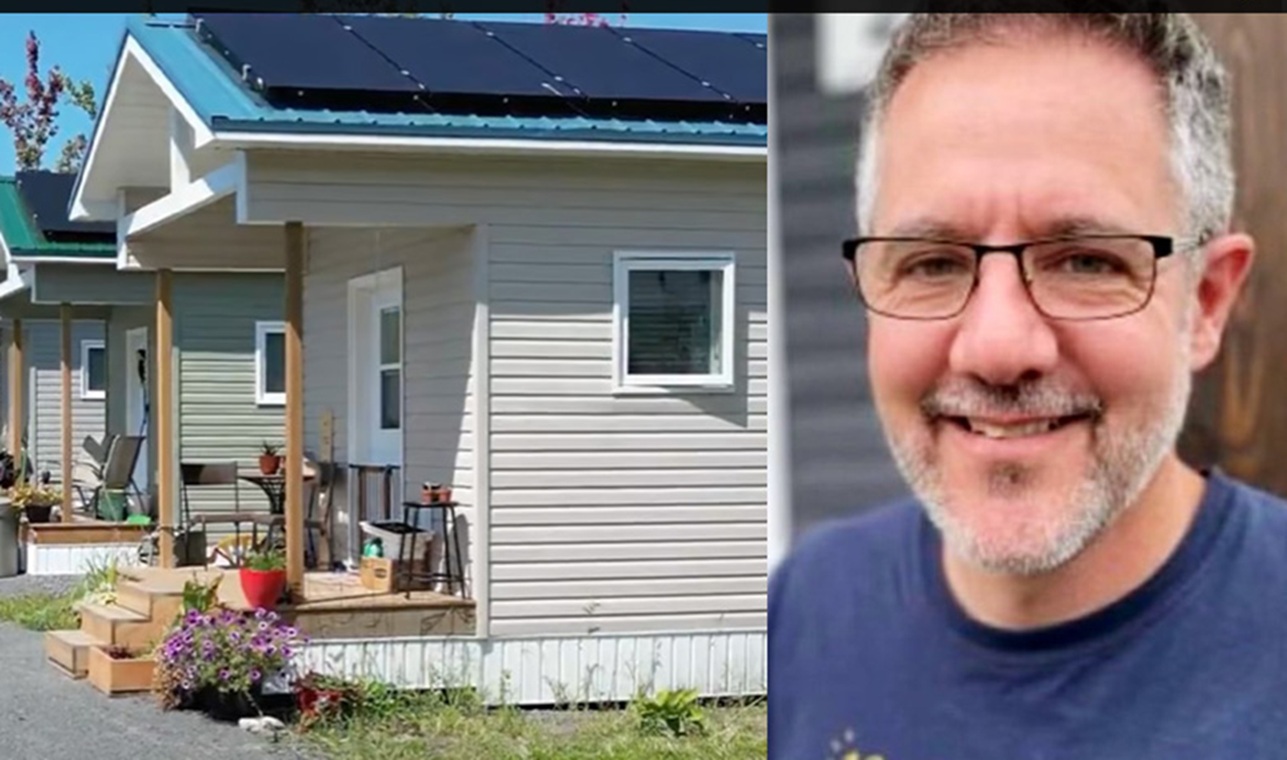
After Selling His Technology Company, Marcel LeBrun Invested Millions to Create a Village with 99 Sustainable Homes for Homeless People
In Canada, a technology entrepreneur decided to invest millions of dollars in an unusual social project: a village with small houses for homeless people.
The person behind the idea is Marcel LeBrun, former CEO and co-founder of the company Radian6, who after selling the business to Salesforce in 2011, completely changed direction.
From Technology Executive to Practical Philanthropist
Marcel LeBrun transformed part of his personal fortune into concrete action against the housing crisis in Canada.
-
Science still cannot explain how an autistic person flies over a city for a few minutes and then draws every window from memory, without making a single mistake on any street.

-
A man spent less than the cost of a coxinha and a juice at the supermarket, requested a CPF on the receipt out of habit, and woke up months later to news that most people wait a lifetime for: R$ 50,000 deposited into his account without needing to do anything else.
-
Brazilian couple visits all 196 UN-recognized countries before the age of 32 and enters RankBrasil

-
Brazilian who left Recife says he visited every country in the world in 543 days and sets off for a new trip around the planet


After years in the corporate world, he decided to use his resources to build 99 small homes for homeless individuals in Fredericton, New Brunswick.
According to him, success did not come solely from individual effort. “I won the parent lottery, the education lottery, the country lottery,” he told Macleans magazine.
For him, much of his achievement was received, not earned.
Before starting the construction of the village, LeBrun traveled to different countries — the United States, Canada, and Ghana — to observe what worked in combating homelessness.
The model that caught his attention the most was that of tiny house communities, which provide dignified housing and autonomy to residents.
Compact Houses, but Complete
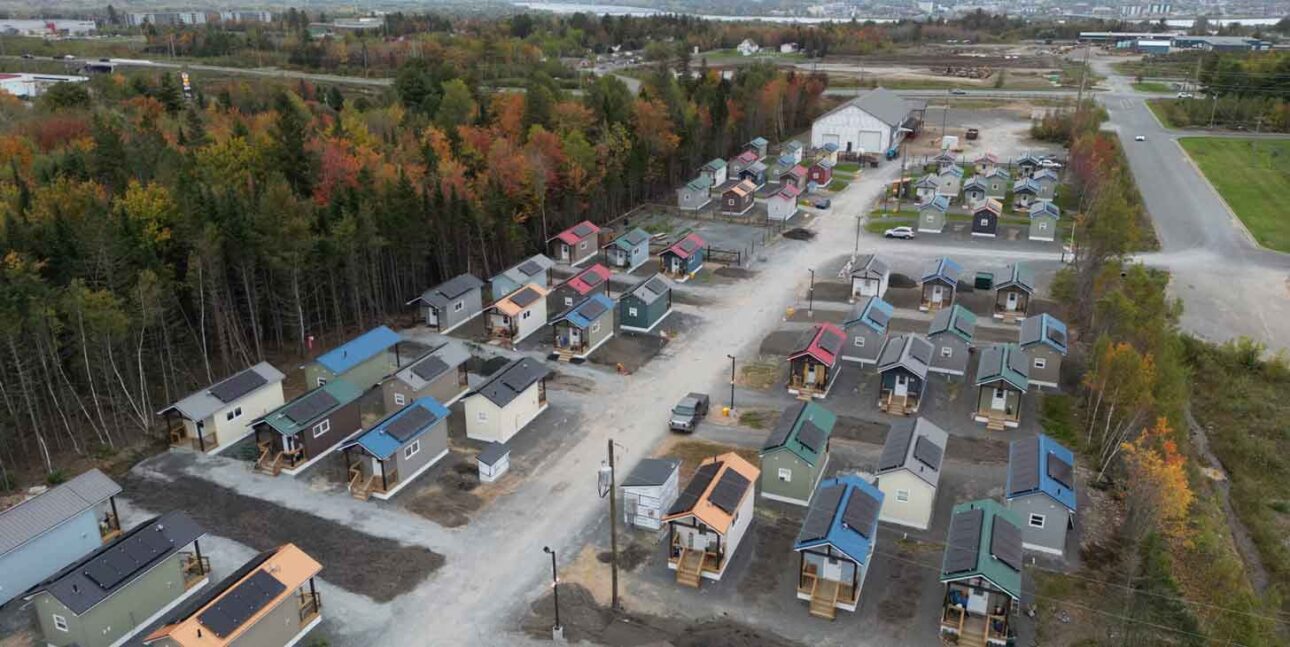
The project was named 12 Neighbours and began with the construction of 12 houses, whose stories were shared by LeBrun.
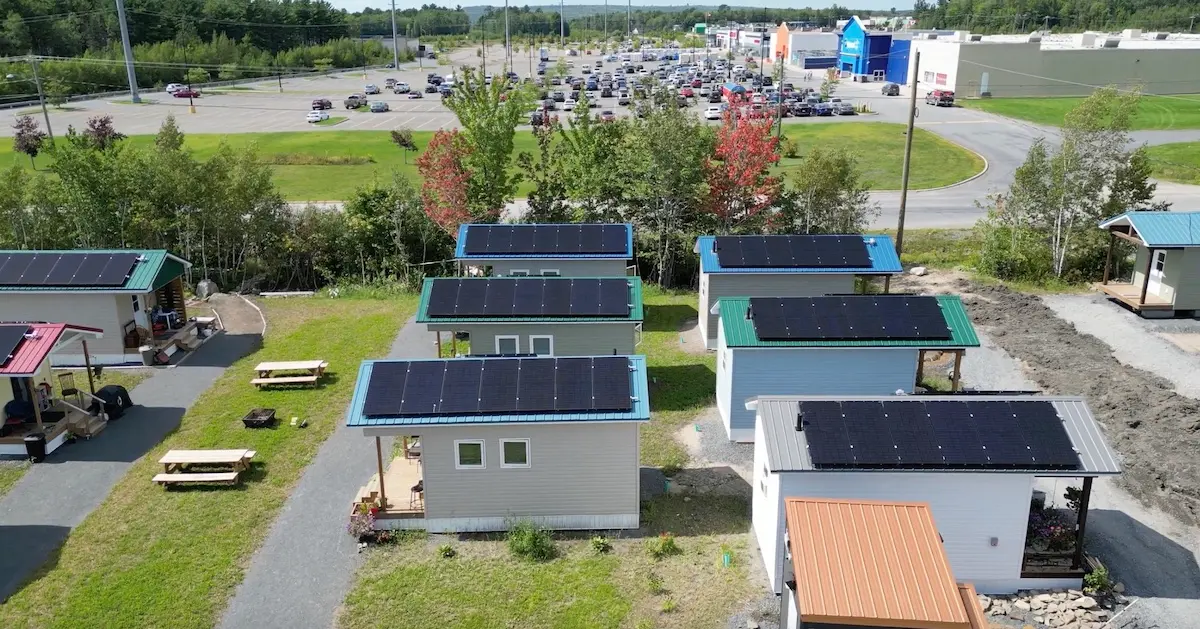
Today, the number has exceeded 100. Each house is about 22 square meters and includes a living/bedroom, full kitchen, three-piece bathroom, porch, and solar panels on the roof.
The units were built on a 26-acre plot on the north bank of the Saint John River, where a logging area used to operate.
The location was also strategically chosen: close to a bus line, shops, and natural trails. The space has become a new neighborhood in Fredericton, surrounded by nature and accessible to the urban center.
More than Housing: A Vibrant Community
In addition to the houses, LeBrun and his partners built a social business center. On-site, there is a café, retail stores, workshops, community gardens, and space for small businesses led by the residents themselves.
The center was inaugurated shortly after the last house was completed.
For LeBrun, the problem of social assistance lies in the traditional model. “Many of our systems provide support when someone shows their deficiencies. Then, as they move toward success, support disappears,” he stated in an interview with the University of New Brunswick alumni magazine.
He proposes an opposite vision, inspired by the business world: investments that grow alongside progress. The goal is to provide continuous support, even when residents begin to thrive.
Affordable Rent and Guaranteed Dignity
The rent for the houses is calculated at 30% of the tenant’s income, which generally means an amount under US$ 200 per month.
This already includes utility bills, such as electricity, water, and internet. The idea is to ensure stable and affordable housing without burdening the beneficiaries.
LeBrun funded most of the project with his own money. Local businesses and religious organizations also contributed.
A religious group, for example, donated a 740-square-meter space that was transformed into a workshop for making the houses. The site employs workers at fair wages.
Moving Testimonials from Residents
The community already welcomes people between 18 and 70 years old.
Many live alone. Sobriety is not required, but counseling services for substance use are available on-site.
Marla Bruce, one of the first residents, spoke about the change in her life. “A year ago, I was homeless. Now I have a home. I have peace.
There is a strong sense of community here. Marcel has a heart and a passion for what he does,” she told the alumni magazine.
Education and Work Are Also Part of It
The organization 12 Neighbours also offers personal development programs. Residents can finish high school, seek new job opportunities, or work on internal projects.
Some work in the community’s pop-up café. Others work in the print shop that produces materials for the organization itself.
The proposal is not just to provide a roof, but also to offer paths for personal and professional growth. All of this happens within the community itself, where resources are shared and talents are valued.
Present and Committed Leadership
Marcel LeBrun remains involved in the day-to-day life of the village. He frequently appears on-site and continues to invest time and money in the project. “Building a community and being in a community is inherently rewarding,” he told Green Matters website.
In his words, involvement goes beyond financial charity. “The word ‘philanthropy’ is often interpreted as someone who donates money. But the Greek roots of the words ‘philos’ and ‘anthropos’ mean loving humans. What I’ve discovered is that spending money is easy; spending yourself is hard,” LeBrun reflected. “The 12 Neighbours project is the best way for me to spend myself.”





Be the first to react!