






 Portuguese
  Spanish
 3 min of reading
  0 comments


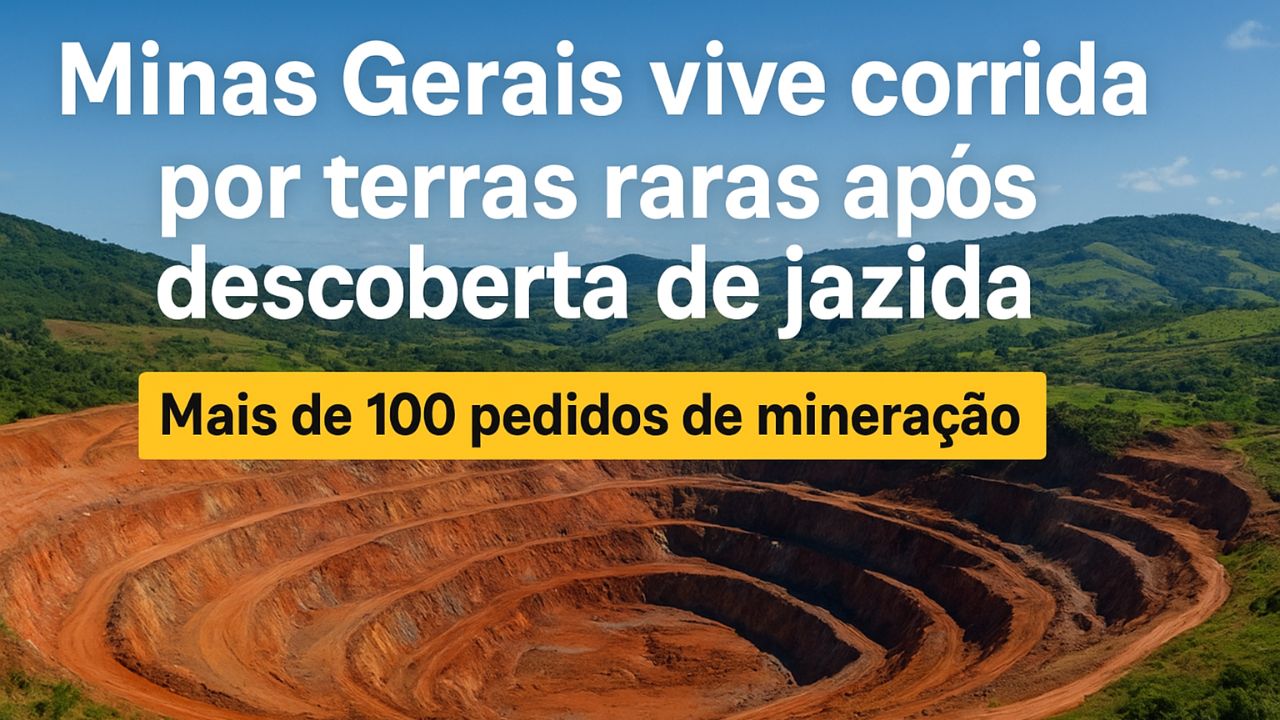
Minas Gerais Is Facing a Rush for Rare Earths After the Discovery of a Large Deposit in Poços de Caldas. Understand the Strategic Importance.
One of the largest deposits of rare earths in the world has been identified in the crater of an extinct volcano in Poços de Caldas, in southern Minas Gerais, and has already transformed the mining landscape in the state. Since Australian companies showed interest in the region, the National Mining Agency (ANM) has registered more than 100 mining requests for exploration, representing about one-third of all authorizations granted in the state between 2023 and 2024.
The reserve may supply up to 20% of the global demand for these strategic minerals, used in cutting-edge technologies and in the energy sector, attracting attention not only from mining companies but also from foreign governments.
Recently, the United States expressed interest in striking deals to secure Brazilian supply.
-
China could reduce iron ore imports from 80% to 50% of consumption by 2030, while its share in global steel production falls from 52% to 46%, in a shift that could reshape the global market, says CMRG.

-
Brazil is sitting on one of the largest lithium reserves in the world, in the Jequitinhonha Valley, but national mining has almost become an appendage of China: 97% of the metal’s export goes to a single country, which also dominates refining.
-
Iron ore falls to 762 yuan in China as real estate sales decline and steel production hits lowest level since 2018
-
Brazil has minerals, clean energy, and a waiting market, but it could miss a billion-dollar opportunity if it doesn’t speed up the race for green minerals, while the steel industry seeks to reduce emissions.


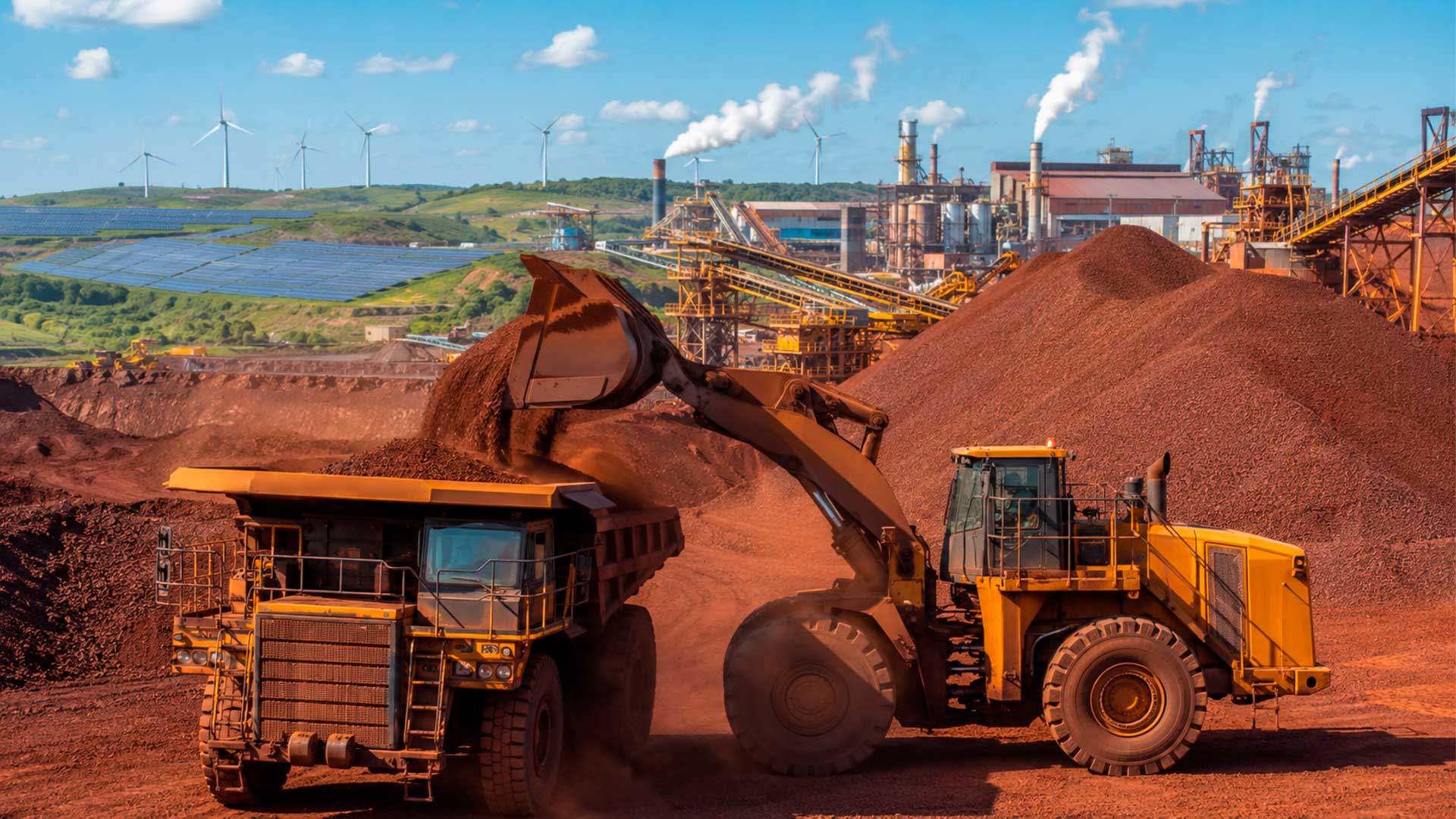
What Makes the Rare Earth Deposit Unique?
Located in a crater of approximately 800 km², the deposit spans areas of Andradas, Caldas (MG), and Águas da Prata (SP).
The clay-rich soil with rare earth ions facilitates extraction, as the minerals are close to the surface—a rare characteristic that has led experts to classify the site as a “unicorn” in mining.
Moreover, geological studies indicate that the lava from the ancient volcano may have spread minerals to nearby cities such as Cabo Verde, Muzambinho, Botelhos, Campestre, and Caconde, enhancing the exploration potential.
How Does the Mineral Research Process Work?
Before mining, it is necessary to obtain authorization for research, which can last up to three years. The applicant must meet technical requirements, pay fees, and submit periodic reports.
However, only a small portion of these authorizations turn into actual extraction, as many requests are abandoned or serve only to increase the commercial value of mineral rights.
Specialized companies often investigate promising areas and then sell the rights to mining firms with investment capacity, a common practice in the market.
Expansion of the Rare Earth Rush in Minas Gerais
The interest in rare earths is not limited to Poços de Caldas. RCO Mining, for example, has authorizations for research in over 100 areas spread across Minas Gerais, Goiás, and Bahia.
The company announced the discovery of a deposit in Turvolândia (MG), 40 km from the main crater, with only 20% of the area already analyzed and promising results to attract foreign capital.
Mining Companies Enter the Dispute
In southern Minas, local companies are also mobilizing. Anova, traditional in the iron sector in Cabo Verde, has requested several authorizations in the region and plans to install a pilot plant to begin the exploration of rare earths, even with international competition.
Despite the large volume of mining requests, experts warn of the risk of speculation, a common phenomenon in previous cycles of gold, iron, and lithium, when many licensed areas ended up without productive use.
Still, the discovery of the deposit in Poços de Caldas positions Minas Gerais as a key player in the global supply of rare earths, a resource increasingly strategic in commercial and technological disputes.







Be the first to react!