Portuguese
  Spanish


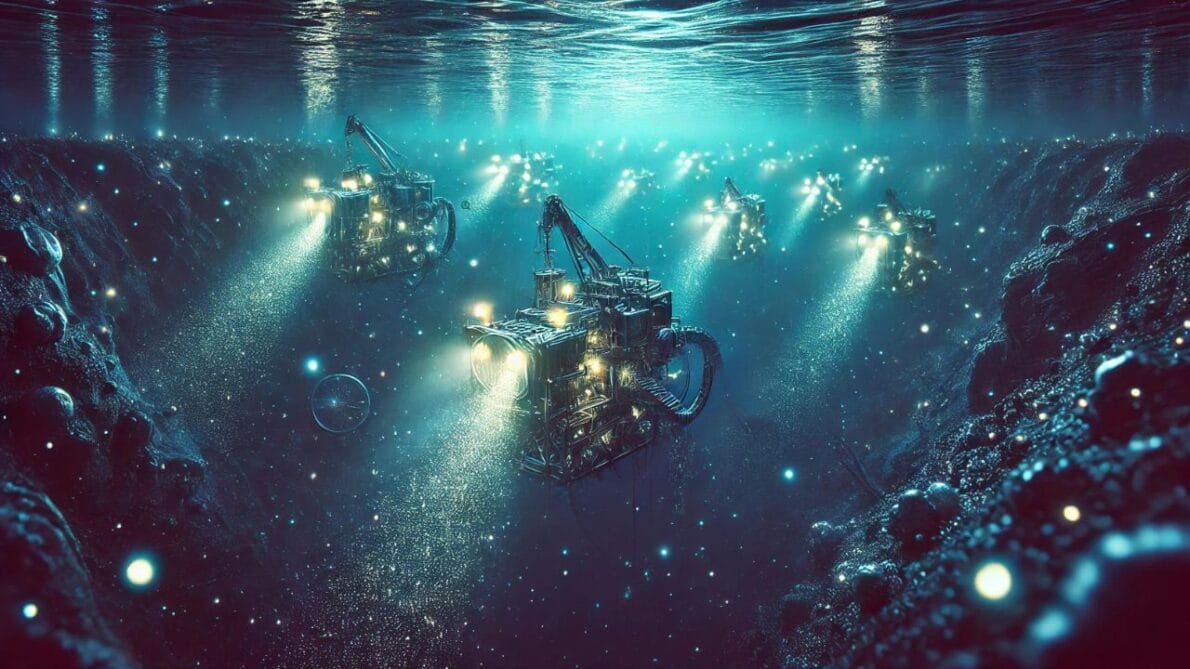

The Uncertain Future Of Deep-Sea Mining, Do The Three Trillion In Metals At The Bottom Of The Sea Justify The Environmental Risk?
Imagine, there are trillions of dollars in rare and precious metals deep in the ocean, more than any mine on land. Recently, the idea of exploring this wealth through deep-sea mining has been gaining traction, especially after the discovery of polymetallic nodules in the Clarion-Clipperton Zone. These nodules contain metals like lithium and cobalt, essential for electric car batteries. But is it possible to extract this wealth without harming the environment?
The story begins back in 1872, when the HMS Challenger set sail from the United Kingdom on an expedition that changed our understanding of the oceans. Among various discoveries, scientists found polymetallic nodules rich in manganese, iron, nickel, copper, and cobalt, along with traces of lithium. These metals are vital for modern technology, especially for battery production and electric vehicles.
Clarion-Clipperton Zone


The Clarion-Clipperton Zone, an area in the Pacific Ocean, is particularly rich in these nodules. It is estimated to contain up to three times more cobalt and nickel than all land reserves combined. This makes deep-sea mining an extremely profitable prospect. But therein lies the problem: no one really knows what the environmental impacts of this activity would be.
-
U.S. Invests $75 Million in Projects to Extract Rare Earths, Gallium, Germanium, and Aluminum from Coal Waste

-
Eni Acquires 25% Stake in Chilean Lithium Project, Plans to Invest Up to $225 Million in Eco-Friendly Extraction Method
-
Mexico’s Giant Crystal Cave: A Deadly 58°C Underground Palace with 11-Meter Crystals Formed Over Nearly a Million Years

-
China Dominates Over 90% of Rare Earth Refining, Prompting Global Concerns: Canada and Japan Launch Billion-Dollar Plan to Reduce Dependency and Safeguard Batteries, Semiconductors, and Defense


Deep-Sea Mining Without Considering Environmental Impact Is Pure Irresponsibility
Let’s be honest, talking about deep-sea mining without considering environmental impact is pure irresponsibility. To this day, we know very little about the ocean floor. The idea of disturbing ecosystems that we barely understand is concerning. And the potential damage is substantial.
One of the main risks is the creation of sediment clouds, which can spread for miles and affect marine organisms far from the mined area. Additionally, the removal of nodules can destroy essential habitats for many species. It is almost certain that interfering with these ecosystems could have unpredictable and potentially catastrophic consequences.
International Seabed Authority (ISA)
Ocean exploration is regulated by the International Seabed Authority (ISA), which is supposed to ensure that activities benefit all humanity. But in practice, things are much more complicated. Despite there being 31 active exploration contracts worldwide, deep-sea mining has not yet started on a large scale. And perhaps that’s for the best.
According To Experts, The Answer Is A Resounding “No”
Is it really worth investing in deep-sea mining? According to experts, the answer is a resounding “no.” Instead of destroying unique ecosystems, we should focus on recycling materials we already have. Up to 95% of the components in a battery can be recycled, including lithium and cobalt. Investing in recycling technologies and prolonging the lifespan of electronic products is a much more sensible and sustainable alternative.
Amazing Wealth At The Bottom Of The Sea That Could Drive The Technology Revolution
The truth is we are facing a dilemma. On one hand, we have an amazing wealth at the bottom of the sea that could drive a technology revolution. On the other, the environmental risks are enormous and poorly understood. Before embarking on this new underwater gold rush, we need to seriously consider the consequences. The solution may not be to explore more, but to better utilize what we already have.
In the meantime, deep-sea mining remains a tempting but dangerous promise. And we, as humanity, must decide whether to repeat the mistakes of the past or learn to value and protect our planet. After all, is it worth sacrificing the unknown for the known? And what do you think?