Portuguese
  Spanish


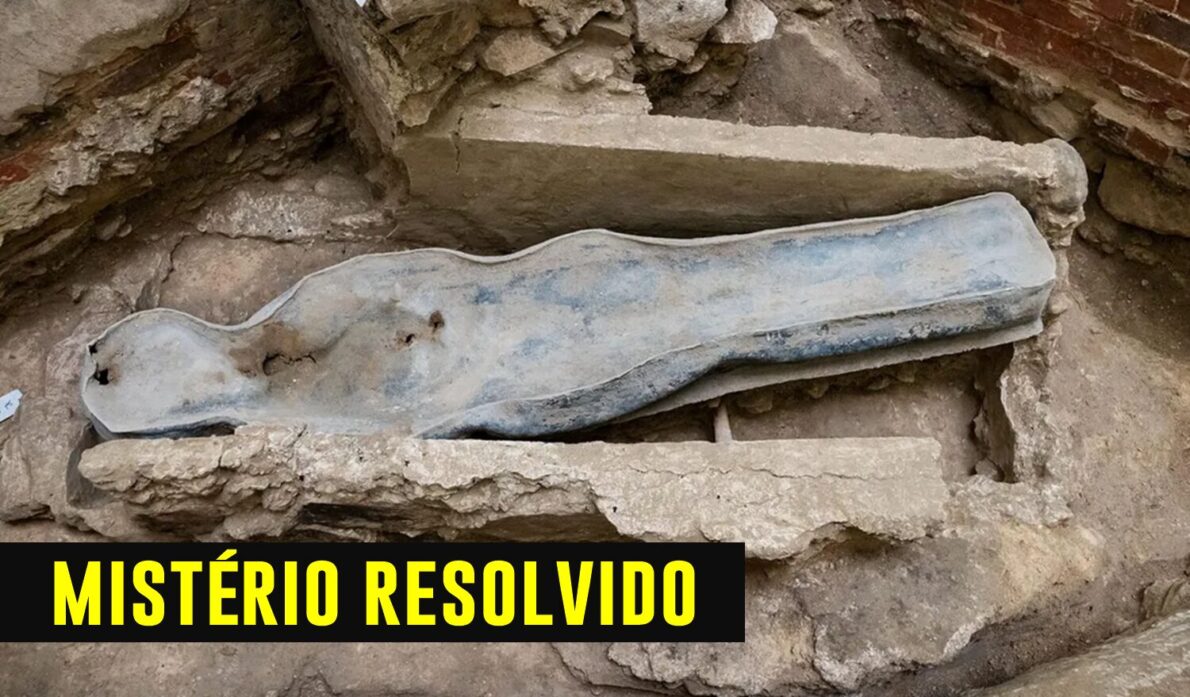

Archeologists Believe They Have Finally Resolved The Mystery Behind An Ancient Lead Coffin Found Beneath Notre-Dame Cathedral. Discover What This Discovery Reveals About The Hidden Past Of The Site!
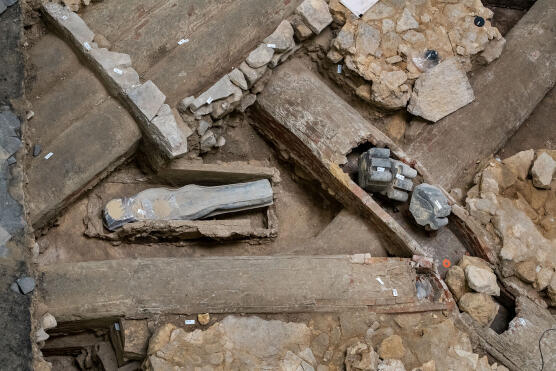
In 2022, archeologists made an impressive discovery during excavations at Notre-Dame Cathedral: two lead coffins hidden beneath the church’s nave. Lead is a material known for preserving bodies by preventing decomposition, and historically, it was reserved for the elite.
The first major revelation came in December 2022, when an inscription on one of the coffins allowed the identification of its occupant as Antoine de la Porte, a priest who passed away in 1710 at the age of 83.
This discovery was important, but the second coffin continued to intrigue the archeologists. The body was that of a man in his 30s, whom the researchers nicknamed “the Knight” due to a bone deformity suggesting that he spent a lot of time riding.
-
Lawyer Turned Entrepreneur Earns $60,000 Annually Selling Brazilian Cheese Bread: Athena Rodrigues Started with $400 and Founded Dona Zelda, Bringing a Taste of Minas Gerais to São Paulo’s Heart

-
China’s “Green Wall” Initiative Reclaims Over 2,000 km² of the Gobi Desert Annually, Transforming Sand into Forests, Solar Plants, and Zero-Carbon Highways

-
Brazilian State Sets Example by Investing Over $11 Billion in 2,000 Miles of Highways, Transforming Roads into Corridors Linked to Ports Handling 28.87 Million Tons of Cargo

-
The Fragrant Plant That Thrives in Partial Shade and Enhances Your Home’s Entrance with a Daily Garden Scent


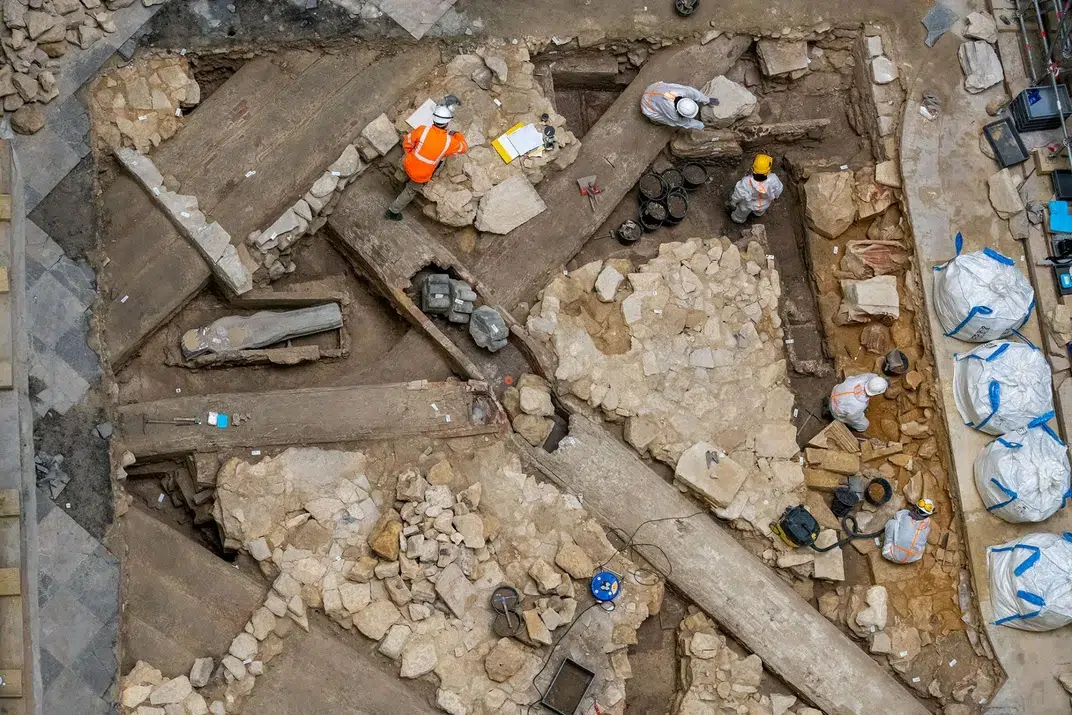
After nearly two years of detailed research, experts believe that the Knight may be the famous French Renaissance poet Joachim du Bellay, who died in 1560.
Du Bellay was known for his skills as a rider, in addition to having faced serious health issues, such as tuberculosis, which limited his activities. Eric Crubézy, an anthropologist at the University of Toulouse III, mentioned that the poet managed to ride from Paris to Rome, an impressive journey, especially considering his fragile physical condition.
The skeleton found beneath Notre-Dame showed signs of chronic meningitis caused by bone tuberculosis, a condition that aligns with reports of du Bellay’s health. Additionally, the poet’s family had close connections to the royal court and the pope, making it plausible that he would have been buried in Notre-Dame.
Evidence And Doubts About The Identity Of Du Bellay
Although there are many clues linking the skeleton to the poet, not all experts are completely convinced. An isotopic analysis of the Knight’s teeth indicated that he grew up in the regions of Paris or Lyon, while du Bellay was born in Anjou.
This could be a contradiction, but Crubézy argues that du Bellay spent much of his childhood under the care of his uncle, Jean du Bellay, Bishop of Paris, which could explain this discrepancy.
Dominique Garcia, president of the French National Institute for Preventive Archaeological Research (INRAP), believes that the evidence is sufficiently convincing to associate the Knight with du Bellay. He points out that based on the age and health conditions of the skeleton, the identification presents remarkable statistical solidity.
However, he also notes that a definitive confirmation could only be made with DNA testing, something that has not yet been conducted.
In addition to the discovery of the coffins, the excavations at Notre-Dame after the 2019 fire also revealed over 1,000 fragments of the cathedral’s cross screen, a medieval architectural element that separated the choir from the nave.
Some of these fragments still show traces of colored paint, which will allow for a detailed restoration of the original structure. The reopening of the cathedral is scheduled for December 8, 2024, more than five years after the fire that destroyed part of its structure.
Thus, while Notre-Dame prepares to reopen its doors, these archaeological discoveries continue to shed light on the rich history of this iconic monument and the individuals who left their mark on the cathedral over the centuries.