Portuguese
  Spanish


The Area Inventiva documentary covers the Three-North Shelter Forest Program, the green belt around the Taklamakan, and the solar plants in the desert, showing how China slowed desertification and began to reclaim land where there was once only sand
Seeing one of the world’s largest deserts retreat instead of advance is the kind of turnaround that impresses even experts. According to the channel Area Inventiva, in a documentary published in December 2024, China is building a true green wall in the north of the country and since the late 1970s has been planting forests on a colossal scale to contain the desert and reverse desertification.
The numbers of the program are staggering. The green wall of the Three-North Shelter Forest Program has already planted more than 500,000 km² of forests, the largest green area created by humans, and has helped to slow down the Gobi Desert, which was advancing almost 10,000 km² per year in the 1980s and now retreats about 2,000 km² per year, as Area Inventiva shows. It’s not just scenery: the change absorbs carbon and transforms the lives of entire communities.
The Three-North Program and the 500,000 km² of Forest
The plan was inspired by the Great Wall. According to Area Inventiva, since the late 1970s, China has been implementing the Three-North Shelter Forest Program, a green barrier designed to halt the desert’s advance and revitalize degraded areas, now the largest man-made forest on the planet and the backbone of China’s green wall.
-
Brazilian State Sets Example by Investing Over $11 Billion in 2,000 Miles of Highways, Transforming Roads into Corridors Linked to Ports Handling 28.87 Million Tons of Cargo

-
The Fragrant Plant That Thrives in Partial Shade and Enhances Your Home’s Entrance with a Daily Garden Scent

-
Latin America’s Deepest Subway Station Opens in Brazil, Featuring London-Inspired Trains and a Tunnel Under the Tietê River
-
4,000-Year-Old Stone Towers Discovered Across Sardinia, Puzzling Archaeologists About This Mysterious Civilization


Popular mobilization is part of the secret. An example is a resident who, with her husband, dedicated four decades to planting amidst the sand and revitalized 300 km², inspiring local communities to join the effort, a central piece of a program aiming to transform another 350,000 km² by 2050, as Area Inventiva reports. Science contributes with techniques to make trees grow in arid soil and monitor the climate to ensure the forest in the long term.
From 10,000 km² of Advance to 2,000 of Retreat per Year

The reversal of the trend is the strongest data. According to Area Inventiva, the Gobi, the sixth largest desert on the planet, swallowed nearly 10,000 km² per year in the 1980s, and recent data shows that desertification has not only slowed but part of the desert has begun to retreat, with an annual reduction of about 2,000 km².
This retreat has a chain effect. By holding back the sand, the green wall returns space to flora and fauna, with previously threatened species returning to recovered areas, and opens new income opportunities for farmers through sustainable cultivation and agroforestry, as recorded by Area Inventiva. It is proof that containing desertification goes far beyond visual impact, affecting biodiversity and the economy at the same time.
The green belt around the Taklamakan and the saxaul
The other giant of sand received its own encirclement. According to Area Inventiva, the Taklamakan Desert, with moving dunes up to 300 meters high and nicknamed the sea of death, gained a green belt of over 3,000 km around it, built over four decades with the work of more than 600,000 people.
The trees were handpicked for the extreme conditions. Resilient species like the desert poplar, red willow, and saxaul were planted for their ability to withstand aridity, and the saxaul also provides medicinal resources and improves the soil, transforming the desolate landscape into green areas that already show signs of a milder climate and possible agriculture, as detailed by Area Inventiva. This green wall around the Taklamakan is one of the largest reforestation projects in recent history.
Sand that turns into solar energy and zero-carbon highway

The desert also became a hub for clean energy. According to Area Inventiva, in the Dunhuang desert, a solar thermal plant with 12,000 mirrors uses molten salt to store heat and generate energy day and night, with a capacity of 390 million kWh per year, while in the Kubuqi desert, 196,000 solar panels form the largest photovoltaic installation in the region, shaped like a galloping horse.
The environmental impact accompanies the aesthetics. The Kubuqi plant has already saved 760,000 tons of coal and avoided almost 2 million tons of carbon dioxide, and solar energy also helps in reforestation, with high-pressure jets for rapid planting currently covering about a third of that desert with vegetation, as the Area Inventiva channel on YouTube points out. Solar energy in the desert thus becomes an ally of the green wall. There is even a zero-carbon highway cutting through the Taklamakan, with irrigation wells and solar plants that have replaced diesel.
The 700 km railway and the 10,000 who clean the tracks
Crossing the sea of sand required war engineering. According to Area Inventiva, a railway line of about 700 km was built where almost no land route would be viable, with 180 bridges and over a thousand tunnels, operating freight since 2009 and passengers the following year.
Keeping the tracks clear is a daily battle. Sandstorms cover the tracks and dunes move incessantly, which has mobilized about 10,000 people to remove tons of sand from the tracks with shovels under extreme heat, in addition to sand barriers, nets, and tree planting along the route to hold the dunes, as Area Inventiva describes. The railway integrates isolated regions and transports coal essential for the local economy.
The honest counterpoint: the sand that drains Lake Poyang
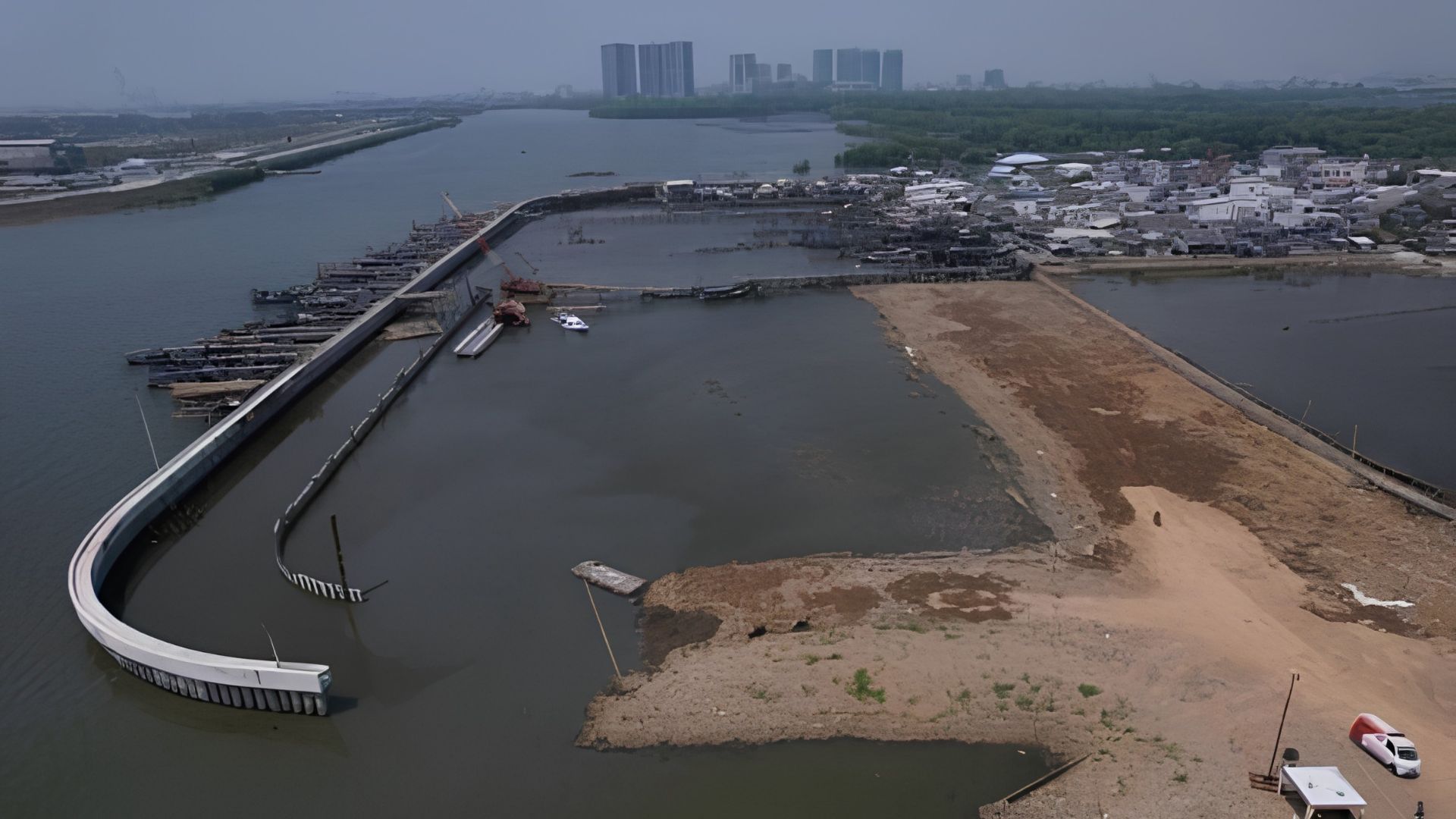
Not all of China’s relationship with sand is virtuous. According to Area Inventiva, while the desert is being reforested, construction removes sand in colossal quantities from rivers and lakes, and Lake Poyang, the country’s largest freshwater reservoir, has had its level lowered by continuous extraction, harming biodiversity and fishermen’s income.
The paradox is revealing. The desert sand has grains unsuitable for construction, so the industry continues to take sand from rivers and lakes instead of using desert sand or recycled material, and mining in Poyang has even compromised the lake’s role in containing the Yangtze River floods, as Area Inventiva ponders. It is a reminder that reversing desertification on one side does not erase the environmental cost of development on the other.
What China’s battle teaches Brazil

The topic has an address in Brazil as well. The country deals with sandification in the southwest of Rio Grande do Sul, with degradation hotspots in the northeastern semi-arid region, and with the advance of desertification in areas of the caatinga, problems that demand exactly the type of reforestation and soil management that the Chinese green wall applies.
The Chinese lesson serves as a mirror and a warning. The experience shows that containing desertification with mass planting, choosing resistant species, and mobilizing communities is possible, but also that sacrificing rivers and lakes for construction sand causes damage that is difficult to reverse, a balance that Brazil faces in the caatinga and the sandy areas of Rio Grande do Sul, a consolidated environmental context. From the Gobi to the semi-arid, the equation is the same: recovering degraded land is a work of decades, and destroying what remains is a matter of years.
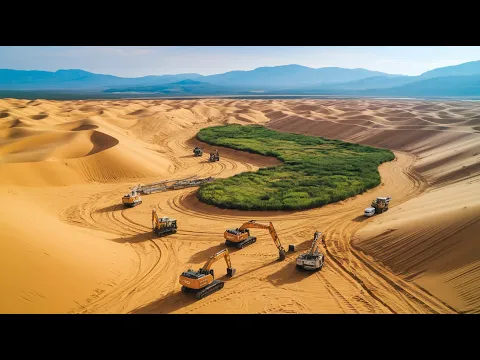
The video traverses the green wall of the Three Norths, the Taklamakan belt, the desert solar plants, the 700 km railway, and the counterpoint of Lake Poyang.
China’s battle against the sand proves that it is possible to make the desert retreat, as long as the effort does not become an excuse to destroy rivers and lakes. Tell us in the comments: did you believe that a desert the size of the Gobi could retreat?