Portuguese
  Spanish


The goal of 5,000 suspension bridges in Indonesia by the end of 2026 brings rural infrastructure to communities isolated by rivers and mountains, shortens travel to schools, health posts, and markets, and maintains a defined deadline for the execution of the works.
Indonesia aims to install 5,000 suspension bridges by the end of 2026 to reduce the isolation of rural communities separated by rivers, mountains, and paths without proper connection. The measure is still a goal in progress, not the delivery of 5,000 completed works.
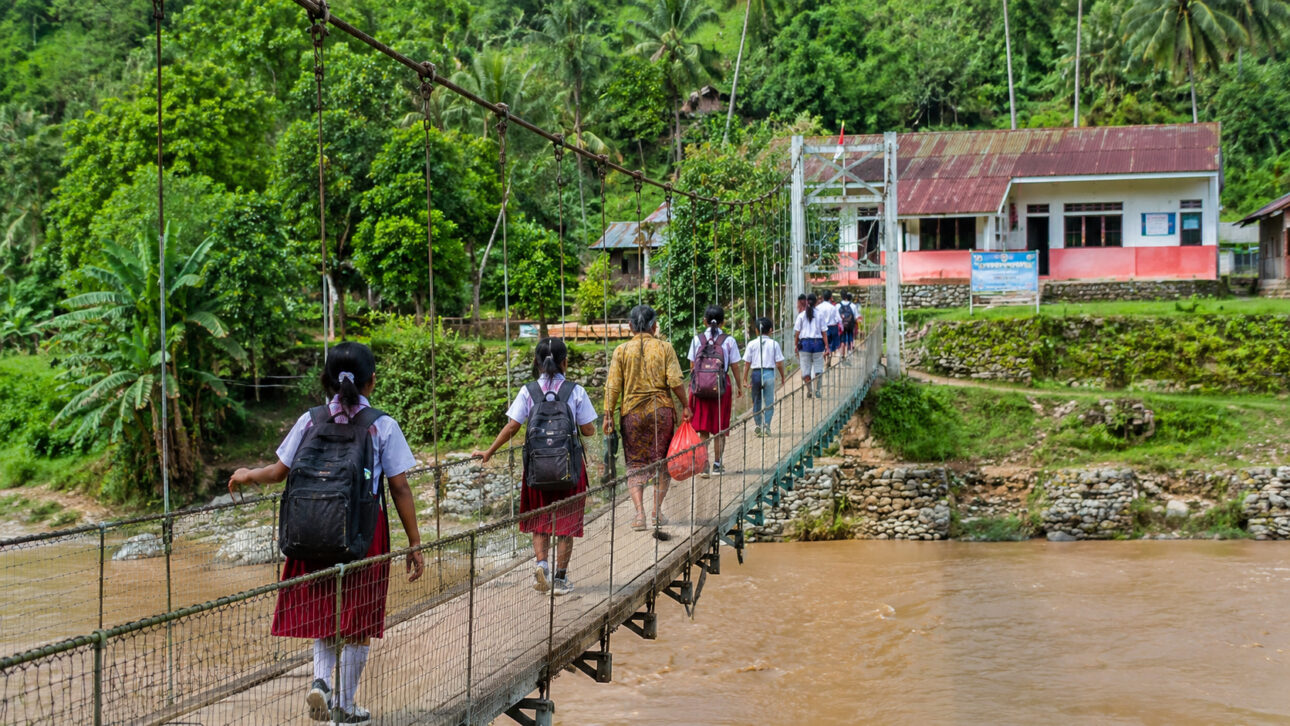
A short bridge can avoid a lengthy detour and make access to schools, health posts, and markets safer. In remote areas, the problem is not just the distance on the map, but the obstacle that interrupts the path.
The information was released by the Cabinet Secretariat of the Republic of Indonesia, a government body that supports the cabinet. The update was published on June 25, 2026 and concerns a joint action between the government, Indonesian Army, and local communities.
-
Self-assembling 200-ton tower crane climbs skyscrapers floor by floor using hydraulic jacks, dismantles itself without larger cranes.

-
U.S. Invests $75 Million in Projects to Extract Rare Earths, Gallium, Germanium, and Aluminum from Coal Waste

-
China Constructs Four 20 km Tunnels in World’s Deepest Canyon for Mega Power Plant to Outperform Three Gorges and Power All of Britain

-
China’s Engineered Bamboo: The “Material of the Future” Stronger Than Steel and a Sustainable Wood Alternative


First phase targets 2,500 suspension bridges by August 2026
The Cabinet Secretariat of the Republic of Indonesia, a government body that supports the cabinet, reported that the first goal is to complete 2,500 suspension bridges by August 2026. Construction continues to reach 5,000 bridges by the end of 2026, focusing on areas with difficult access.
Teddy Indra Wijaya, Secretary of the Indonesian Cabinet, summarized the initiative in a phrase released by the body: “Building bridges, connecting hopes.” The message conveys the intention to bring together communities that have been separated by natural barriers for many years.
The schedule makes it clear that the initiative is underway. The final result depends on the execution of the structures planned for the most distant regions of the country.
Rivers and mountains make a short bridge worth more than a long detour
A suspension bridge is an elevated structure that allows crossing a river, a deep passage, or another difficult point of the terrain. It uses cables and supports to keep the path steady above the obstacle.
In mountainous regions, opening an entire road may require long routes and many changes in the terrain. The bridge solves a decisive part of the route when two points are close but separated by a natural barrier.
The practical effect is simple: a crossing that previously depended on water, mud, or detour can become a direct path. Rural mobility comes to mean more safety for those who need to leave and return every day.
Schools, health centers, and markets enter the path of rural infrastructure
The new crossings have the potential to facilitate access to education, health, and public services. Children may no longer have to face rivers on their way to school, while families have a safer route to seek care.
Markets and small businesses also become closer when travel no longer depends on a difficult crossing. This can facilitate the circulation of people and products, without guaranteeing automatic financial results for those who live from rural production.
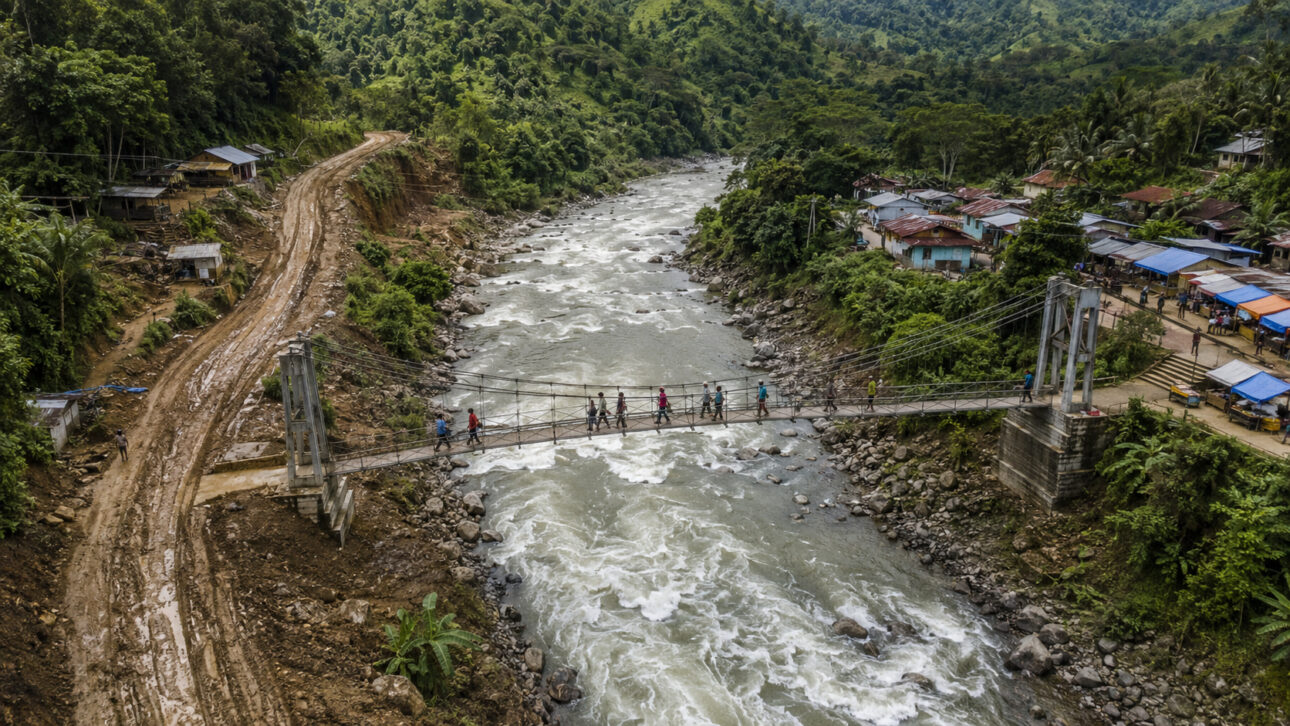
Rural infrastructure does not only involve roads, asphalt, or large constructions. In many places, a safe passage between two banks solves a daily problem that prevents access to basic activities.
Government, Army, and local communities bring the works to isolated areas
The construction brings together government, Indonesian Army, and local communities. The participation of groups familiar with the territory helps to bring materials and teams to places where access is limited.
In remote regions, any construction requires effort to transport parts, tools, and workers to difficult sections. Cooperation among the parties can facilitate this process and reduce obstacles during execution.
The priority reaches areas with complicated terrain and insufficient transport infrastructure. In these points, a bridge can create a shorter connection between a community and the services located in another area.
Indonesia’s Challenge Reminds of the Distance Faced in Parts of Brazil
The situation has similarities with communities in the Amazon, the Pantanal, and rural mountainous areas in Brazil. Rivers, dirt roads, and rugged terrain can also turn a few kilometers into a long journey.
The contexts are not the same, but the need is similar: to create a safe connection between those who live far away and the services that sustain daily life. A small bridge can reduce part of the isolation without replacing all the necessary roads.
The plan shows that public infrastructure also depends on smaller works. When the crossing is no longer dangerous, school, health, and commerce can become more accessible.
Indonesia’s goal is to complete 5,000 suspension bridges by the end of 2026. The plan places small crossings among the works capable of reducing distances that, in rural areas, weigh every day.
A bridge does not eliminate all the problems of an isolated region, but it can remove an obstacle that affects many families. It is this practical change that gives weight to the announced strategy.
Between a long road and a short bridge, which work could more quickly change the routine of an isolated community? Tell us in the comments and share the post.