Portuguese
  Spanish


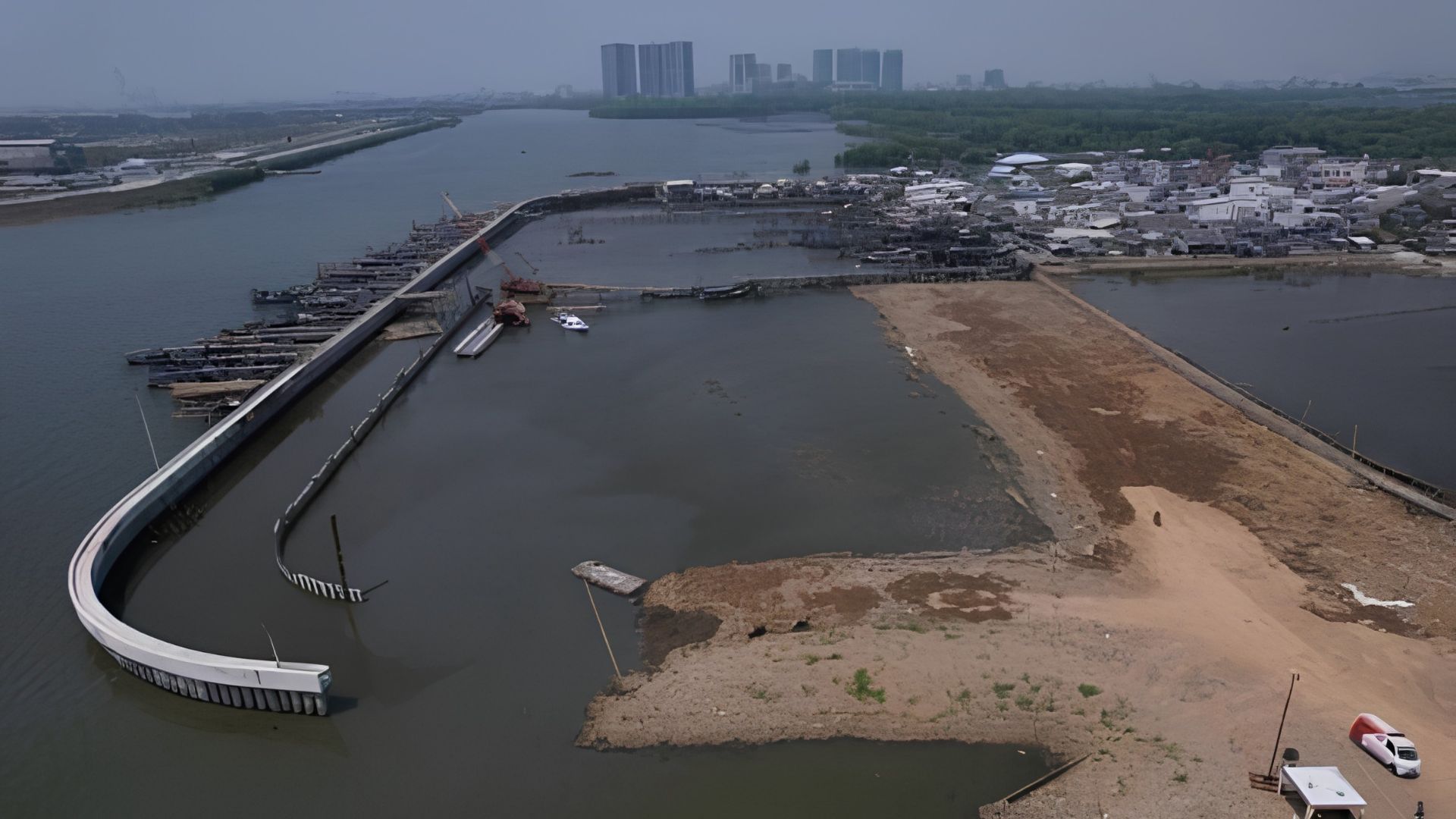

Indonesia accelerates sea wall of up to US$ 80 billion in Java to tackle coastal floods, land subsidence, and sea advance.
Indonesia is preparing one of the largest coastal engineering projects in the world to protect the northern coast of Java, a strategic strip that concentrates cities, ports, industrial areas, and a decisive part of the country’s economy. In June 2025, President Prabowo Subianto announced a megaproject of up to US$ 80 billion to erect a large sea wall along the coast, then described as about 700 kilometers, from Banten to East Java.
The plan was born from the combination of three pressures that have been worsening for years: sea level rise, coastal floods, and land subsidence in densely populated areas of Indonesia’s most populous island. In 2026, the government began detailing the latest design of the project as a coastal protection of 575 kilometers, divided into 15 segments, still under technical, environmental, and social evaluation.
Megasea wall on the northern coast of Java aims to protect ports, industrial zones, agricultural areas, and millions of residents
The northern coast of Java is treated by the Indonesian government as a critical strip for the country’s economic security. Authorities state that the project was not only designed to hold back seawater but also to protect industrial areas, ports, airports, farmlands, and urban centers exposed to floods, extreme tides, and coastal degradation.
-
Indonesia Plans to Build 5,000 Suspension Bridges by 2026 to Connect Rural Communities to Schools, Health Centers, and Markets

-
Self-assembling 200-ton tower crane climbs skyscrapers floor by floor using hydraulic jacks, dismantles itself without larger cranes.

-
China Constructs Four 20 km Tunnels in World’s Deepest Canyon for Mega Power Plant to Outperform Three Gorges and Power All of Britain

-
China’s Engineered Bamboo: The “Material of the Future” Stronger Than Steel and a Sustainable Wood Alternative



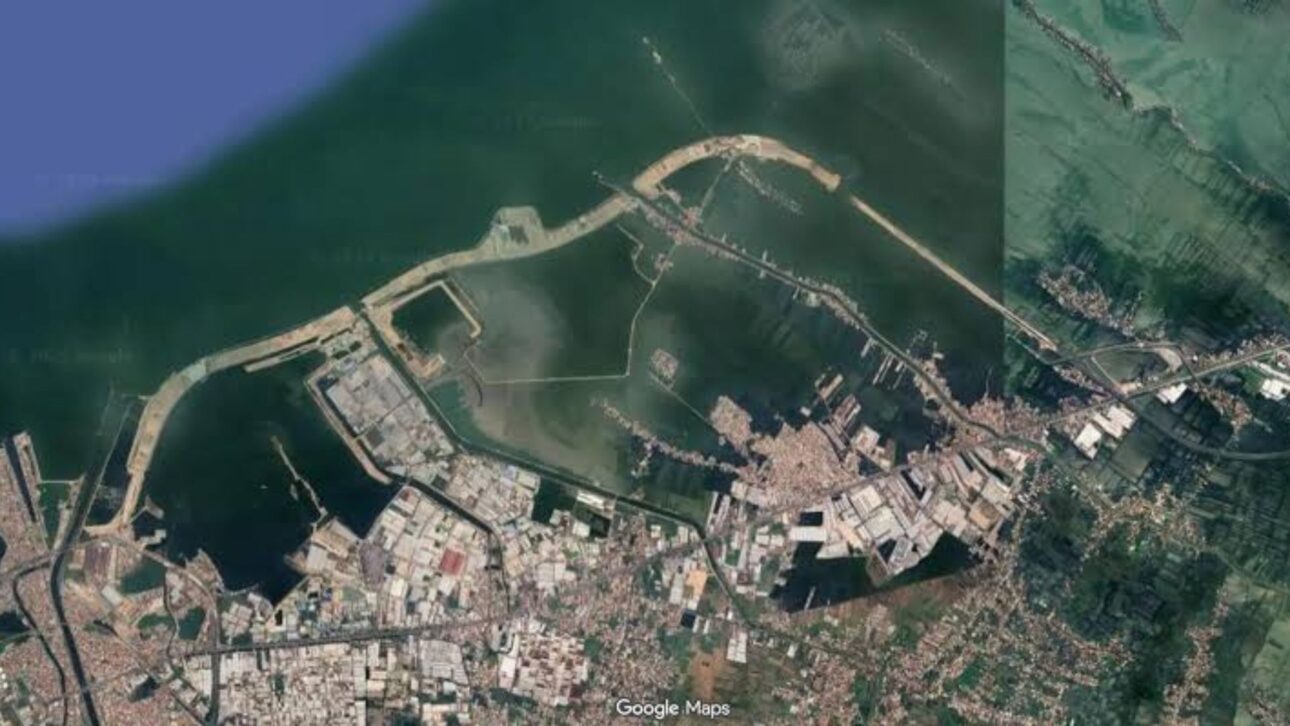
The proposal also gained political dimension by being presented as climate adaptation infrastructure and economic defense at the same time.
In May 2026, the government reiterated that the sea wall would be part of a broader strategy to preserve productive activities and reduce risk to communities and assets installed along the northern coast of Java.
Project of up to US$ 80 billion went from a 700 km idea to a 575 km plan divided into 15 segments
When announcing the megaproject in 2025, Prabowo said that the work could take about 20 years and would depend on its own coordination structure, seeking foreign capital to enable execution. At that time, authorities spoke of a barrier of approximately 700 kilometers between Banten and East Java.


In 2026, the government began working with a route of 575 kilometers, from Serang to Gresik, organized into 15 segments with subsections to be implemented in phases. Indonesian authorities said the final schedule was still being developed because the project needs to incorporate local differences, social impacts, and distinct economic characteristics along the coast.
Indonesia seeks international investors to finance the sea wall and accelerate coastal adaptation in Java
The billion-dollar cost has made financing one of the central pieces of the project. In 2025, Prabowo stated that he had invited foreign partners, including China and Japan, to participate in the initiative, indicating that the work is unlikely to be sustained solely by domestic public resources.
The search for external capital continued in 2026, while the government refined the master plan and deepened feasibility studies. At the same time, the project remained among the national priorities for adaptive infrastructure, with the justification that climate pressure and subsidence already affect a sensitive part of the country’s economic base.
Rising sea levels and land subsidence have made the north coast of Java one of the most vulnerable areas in Indonesia
The Indonesian government and the country’s meteorological agency point out that the advance of the sea can no longer be treated as a distant threat. Data cited by authorities and reported by Reuters indicate that the sea level along Indonesia’s coasts rose, on average, 4.25 millimeters per year between 1992 and 2024, with acceleration in recent years.
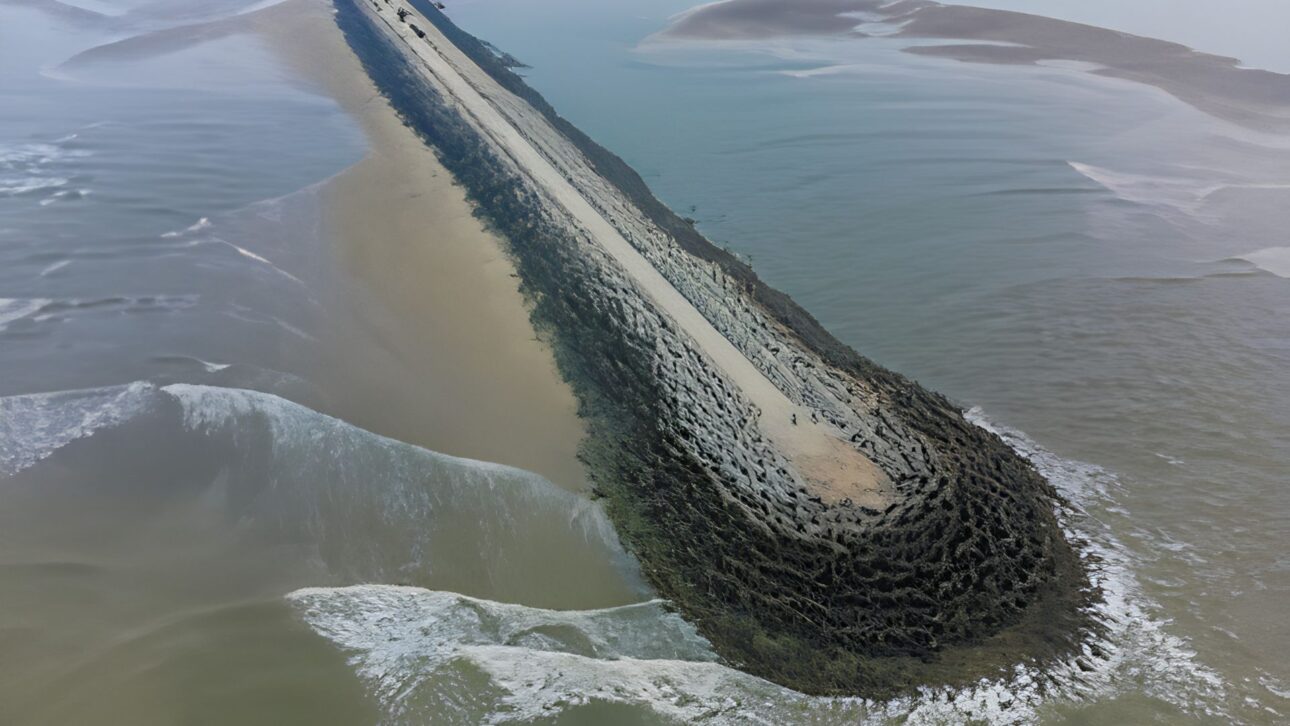
But the problem in Java goes beyond the ocean. Reuters itself highlighted that the excessive extraction of groundwater has been worsening the land subsidence on the island’s northern coast, especially in dense urban areas, making floods and permanent inundations even harder to contain. In parts of Jakarta, this process has become one of the most severe symbols of the country’s coastal vulnerability.
Maritime wall in Java attempts to contain coastal floods, but government is still adjusting the project to local impacts
Indonesian authorities state that the construction will be done thematically and segmented to accommodate regional differences along the coastline. This includes areas with intense economic activities, already established coastal communities, and points where hydrological risk and subsidence exhibit distinct behaviors.

The government also recognizes that the project needs to be calibrated with technical, environmental, and social criteria before advancing the entire planned extent. Therefore, even with the political announcement and the pressure for speed, the sections continue to be analyzed individually, without a final definition of all priority locations.
Indonesia’s coastal megaproject has become a central piece of the strategy to defend Java’s economy in the coming decades
The maritime wall of Java has been treated by the government as part of the necessary infrastructure to defend Indonesia’s economic backbone against extreme tides, floods, and the loss of productive areas.
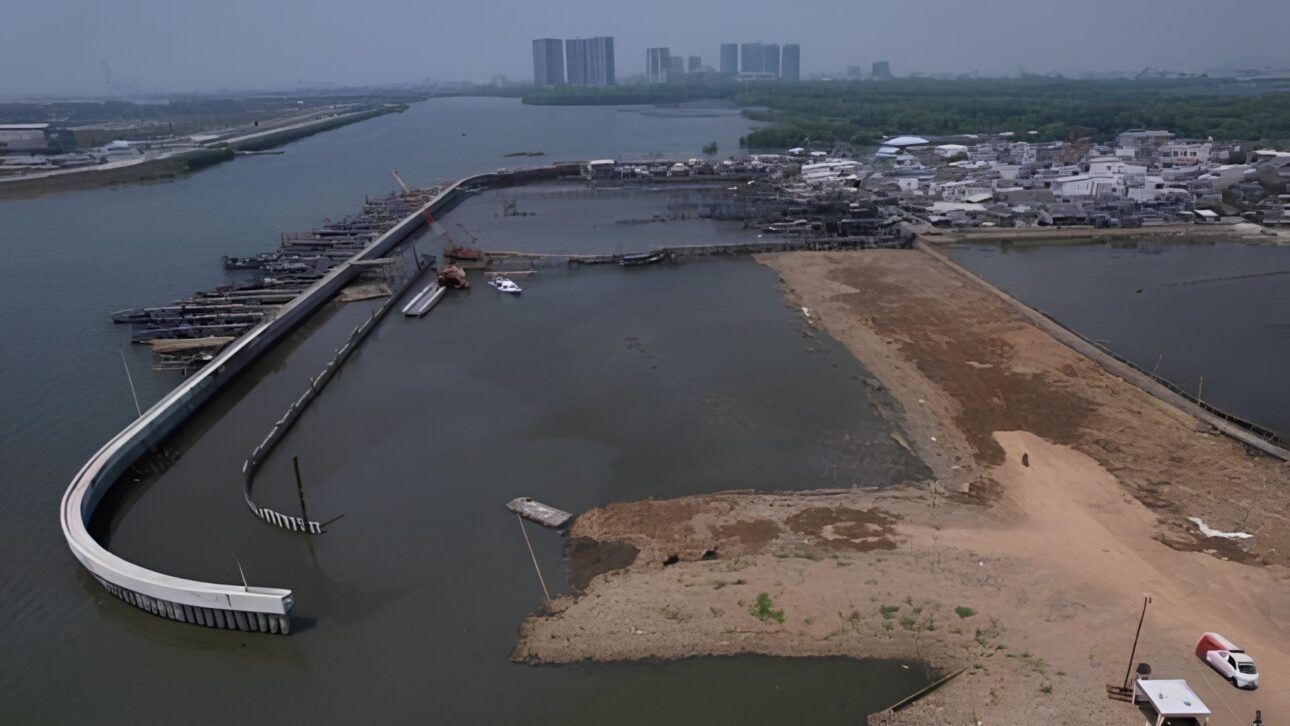
The official narrative combines climate protection, territorial security, and preservation of logistical corridors in an area that hosts millions of people and a decisive fraction of the national economic activity.
If it comes to fruition on the announced scale, the project will enter the list of the largest coastal interventions ever proposed in the world. The size of the work, however, helps explain why it remains surrounded by route revisions, financial modeling, local studies, and engineering adjustments before full execution along the northern coast of Java.