Portuguese
  Spanish


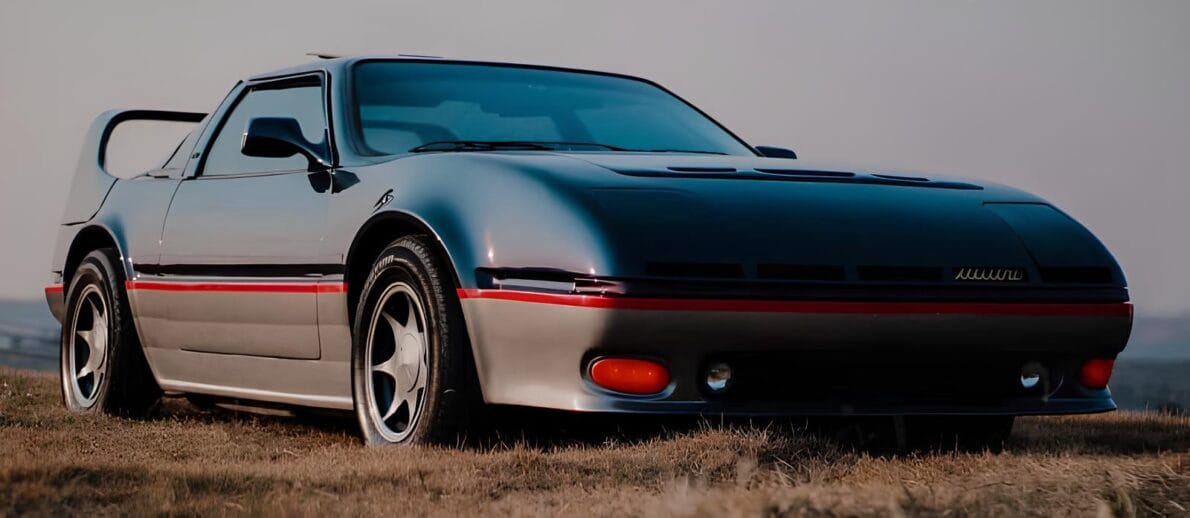


Meet The Miura X11, A Brazilian Model That Overflowed Luxury, Technology, And Refinement. Classic Car Came Equipped With Amazing Technologies For The Time That Even Today Remain Relevant, Check It Out!
The entrepreneur Itelmar Gobbi, who passed away in October 2021, will always be remembered as the creative spirit behind the Miura sports cars, produced in Porto Alegre by Besson Gobbi & Cia since 1977. Learn the main details about the classic Miura X11, a Brazilian car equipped with TV, Neon, and much more.
How Was The Classic Miura X11 Car Developed?
The partnership with partner Aldo Besson resulted in an uncommon level of refinement for Brazilian cars, with no limits to extravagance: the pinnacle of sophistication would be reached in 1990 with the X11 coupe.
The original concept of the classic Miura X11, named for being the 11th model of the manufacturer, was to be a more affordable version of the X8 coupe, with fabric-covered seats and no air conditioning option.
-
End of an era in Brazil: beloved sedan by Brazilians is discontinued despite having a 2.0 engine with 151 hp, CVT transmission, 466-liter trunk, and up to 650 km of range.

-
New Law Proposal in Brazil Could Heavily Penalize Drivers: Dangerous Overtaking May Become a Serious Offense with Fines Increased Tenfold and a 12-Month License Suspension; Update on 2026 Progress

-
Electric Revolution: Watts W125 Motorcycle Offers 160 km Range, 90 km/h Speed, and Affordable Price Starting at $3,000
-
General Motors Replaces Over a Thousand Workers with 50 Cobots at Electric Vehicle Plant, UAW Union Criticizes Move Amid Industry’s Automation Push



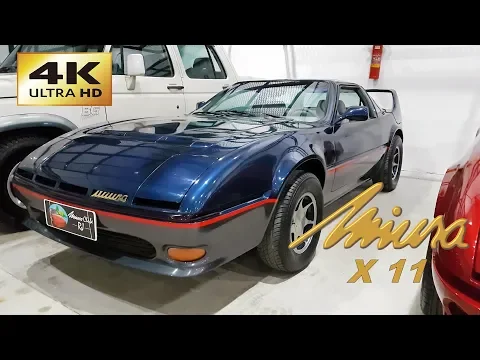

The low demand for the Spartan model caused the idea to be abandoned quickly. A group of executives saw the classic Miura X11 as the perfect opportunity to go in the opposite direction: to show that the company was capable of facing the invasion of imports. Thus, it made its first appearance at the 16th São Paulo Motor Show.
The level of equipment in the classic car was superior to the already established X8, representing what was most exclusive in the national industry:
Power steering, air conditioning, sunroof, leather interior, electric trio, door opening by proximity key, seats and steering column with electric adjustments, photochromic mirror, television on the dashboard, onboard computer with voice synthesizer (the car spoke to the driver) and the bargraph, a rhythmic light bar at the front that tracked the sound of the synthesizer.
Differentiators Of The Classic Miura X11
According to Sandro Zgur, president of the Miura Club of Rio de Janeiro, the X11 was developed in record time, so fast that there was not even time or resources for it to be homologated with Denatran. What few people know is that, technically speaking, every Miura X11 has its documents registered as X8, a curious situation that still confuses many enthusiasts of the Gaucho sports car.
Renamed Besson, Gobbi S.A, the company also made a point of abandoning the anachronistic and incoherent carburetor of the Volkswagen AP-2000 engine that was then used in the X8 for the Bosch LE-Jetronic analog electronic injection with four injectors, the same as the Gol GTi. The brakes were disc brakes on all four wheels and featured the help of the ABS system developed by Varga.
The suspensions, the same as the VW Santana EX, offered another interesting option: electronic shock absorbers provided by Cofap, with three different calibrations (asphalt, gravel, and cobblestones). The dynamic behavior was favored by the 14-inch alloy wheels with 195/70 tires. Optional were 15-inch BBS wheels.
Negative Point Of The Classic Miura X11 Car
The body of the classic X11 followed the same basic style as the X8 models, characterized by a wedge-shaped front with retractable headlights and the omission of traditional fog lights. Practically handcrafted, the interior of the classic car was almost entirely covered in leather: the material was present in the door panels, dashboard, console, and steering wheel.
Complete, the dashboard used the same instrumentation standard as the Alfa Romeo 2300, however, with its own graphics. Another piece of equipment that caused a sensation was the Speedostat cruise control, with controls inserted in the gear shift lever.
The negative point of so much sophistication and refinement was the weight: the Miura X11 was 120 kg heavier than a VW Santana, which is why its advertising material never emphasized performance numbers. The manufacturer’s ambition was to captivate and retain its clientele through exclusivity, not sportiness.