






 Portuguese
  Spanish
  6 min of reading
  0 comments


Experts Point Out That the Creation of a Common Currency Among BRICS Countries Could Redesign the Global Financial System, Reduce Dependence on the Dollar, and Change the International Economic Balance in the Coming Years.
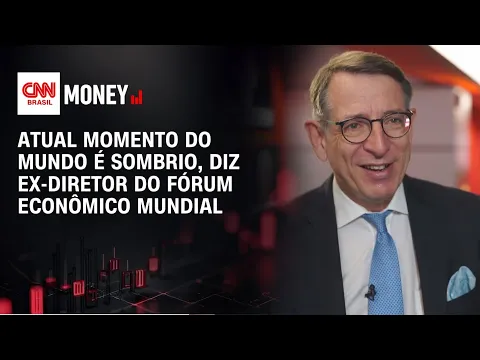
The creation of a common currency among BRICS countries—now a group of 11 members—could alter the balance of the international financial system and reduce the weight of the dollar, according to the assessment of German Frank-Jürgen Richter, former director of the World Economic Forum.
In an interview, he stated that the idea will only progress if China and India resolve their differences, but, “if that happens, in four or five years, it will be a major shock to the American economy.”
Monetary Dispute and Time Window
For Richter, the adoption of a shared unit of account among BRICS members will not happen quickly.
-
Brazilian Joins Homeownership Consortium, Faces Decade of Dual Payments Totaling $141,000, Surpassing Traditional Mortgage

-
Land Rover to Halt Production in July, Putting 371 Jobs at Risk, as Chinese Automaker Negotiates to Convert Factory to 100,000 Vehicles Annually by 2027

-
Mexican Pest Threatens U.S. Cattle Herds at Historic Lows, Potentially Boosting Brazilian Beef Exports as Burger Prices Soar

-
Brazilian Freight Bill Progresses in Congress with $5,000 Minimum Wage, 70% Advance Payment, and Fines Up to $1 Million, as Agriculture and Industry Warn of Rising Costs and Legal Uncertainty


First, an understanding between Beijing and New Delhi would be essential, as the two largest emerging economies in the bloc are rivals on geopolitical and border issues.
Only after this agreement could the proposal gain technical and political traction.
In his words, it is not “overnight,” but once the stalemate is overcome, the impact would be felt in a few years, with the potential to repricing contracts and reserves and reorder financial flows.

Even though diplomatic coordination is complex, the discussion gained momentum with the recent expansion of BRICS.
The group, which was formed by Brazil, Russia, India, China, and South Africa, now also includes Egypt, Ethiopia, Indonesia, Iran, Saudi Arabia, and the United Arab Emirates.
The economic diversity increases the potential reach of the currency, but also broadens the heterogeneity of exchange rate and fiscal policies, a challenge for any common arrangement.
U.S. Pressures and Dollar Effect
The former FEM director assessed that a BRICS currency and the advancement of payments outside the dollar would hit core U.S. interests, which currently benefit from the dollar’s role as a reserve currency and pricing unit for oil and other commodities.
He cited former President Donald Trump’s concern about this possibility.
In January, the Republican threatened to tariff up to 100% on BRICS countries seeking alternatives to the dollar; since then, protectionist rhetoric has intensified amid new trade disputes with China.
According to Richter, a loss of relevance for the dollar could pressure the financing cost for the U.S., which relies on extensive issuance of government bonds.
He argues that a significant part of the strength of the American currency derives from the confidence and liquidity of its markets, factors that could be partially eroded if large economies align in a competing settlement and reserve system.
China and India at the Center of the Equation
Despite the interest from countries like Russia, Iran, and Brazil, the convergence between China and India remains the decisive factor.
The two neighbors are facing border disputes and distinct strategic agendas, although they maintain relevant trade interdependence.
Without a governance agreement, checks and balances between the two powers, the common currency proposal tends to remain in the realm of political statements and technical studies.
Besides the geopolitical calculation, there are operational issues.
A BRICS currency would require rules on issuance, backing, monetary policy, risk sharing, and payment infrastructure.
Possible models range from a scriptural currency, used only for compensation between central banks and commercial banks, to a deeper arrangement inspired by monetary unions, which would require levels of fiscal integration currently absent in the bloc.
Internal Resistance in Brazil and Bloc Priorities
In Brazil, the idea faces resistance from part of the business community and economic policy makers.
Members of the BRICS+ Business Council say that the debate is old but rarely enters the official agenda as a priority.
According to this view, the immediate focus is on trade integration, use of local currencies in transactions, and strengthening the New Development Bank (NDB), the bloc’s bank, as a source of multilateral financing.
Critics point to the risks of contagion in crises, power asymmetry among members, and exchange rate volatility.
For them, a common currency would only make sense with robust stabilization mechanisms and a clear loss-sharing regime, something considered distant from the current stage of cooperation.
“BRICS Pix”: Payments, Not Currency
While the common currency remains a distant goal, discussions are advancing on a digital payments system, called BRICS Pay, which seeks interoperability between national platforms—such as Pix in its Brazilian version and equivalent systems in other countries—and, in perspective, a partial alternative to Swift.
The proposal has been described as a platform to facilitate cross-border settlements, not as a new currency.
Tests and prototypes have been carried out with Russian leadership and participation from other members, but there is still no public and definitive timeline for full operation.
The reading of business people and technicians is that this incremental path tends to reduce costs and dependence on the dollar in trade between countries, without requiring the political concessions of a monetary union.
Even so, technical, regulatory, and compliance barriers remain that will require harmonization among central banks and supervisors.

Horasis in São Paulo and the Strategic Debate
Richter was in Brazil for the tenth global meeting of Horasis, an organization he founded after leaving the FEM, held in São Paulo with the University of São Paulo (USP) as co-host.
The event brought together researchers, executives, and officials from various countries to discuss international cooperation and long-term economic trends.
In panels dedicated to finance and geopolitics, the BRICS currency and the design of a new payments ecosystem returned to center stage, reflecting the business community’s interest in mitigating exchange rate risks and expanding financing routes.
According to the founder of Horasis, the American reaction to the reorganization of financial flows will be a key element on the board.
“The U.S. dollar is the primary currency, the world’s reserve currency. The main contracts for oil and other commodities are denominated in dollars,” he said, emphasizing that any creation of a BRICS currency would impact one of the anchors of global trade.
What Comes Next
In the short term, the BRICS agenda should remain focused on payments, local currencies, and the NDB, with the common currency addressed in an exploratory manner.
In parallel, the escalation of tariff measures and export controls among major economies tends to accelerate regional initiatives for partial dedollarization.
The pace, however, will continue to be conditioned by the bloc’s political coordination capacity and the search for technical solutions that preserve the financial stability of countries with very different macroeconomic realities.
If the common currency project advances with an agreement between China and India, as Richter claims, the four to five years window to provoke shocks to the dollar’s role would place governments, banks, and companies in front of an accelerated transition.
In this context, the pressing question is: what concrete steps are BRICS countries willing to take now to turn ambition into viable infrastructure without compromising the macroeconomic security of the bloc?





-

-

-

-

-

-

76 people reacted to this.