






 Portuguese
  Spanish
  9 min of reading
  0 comments


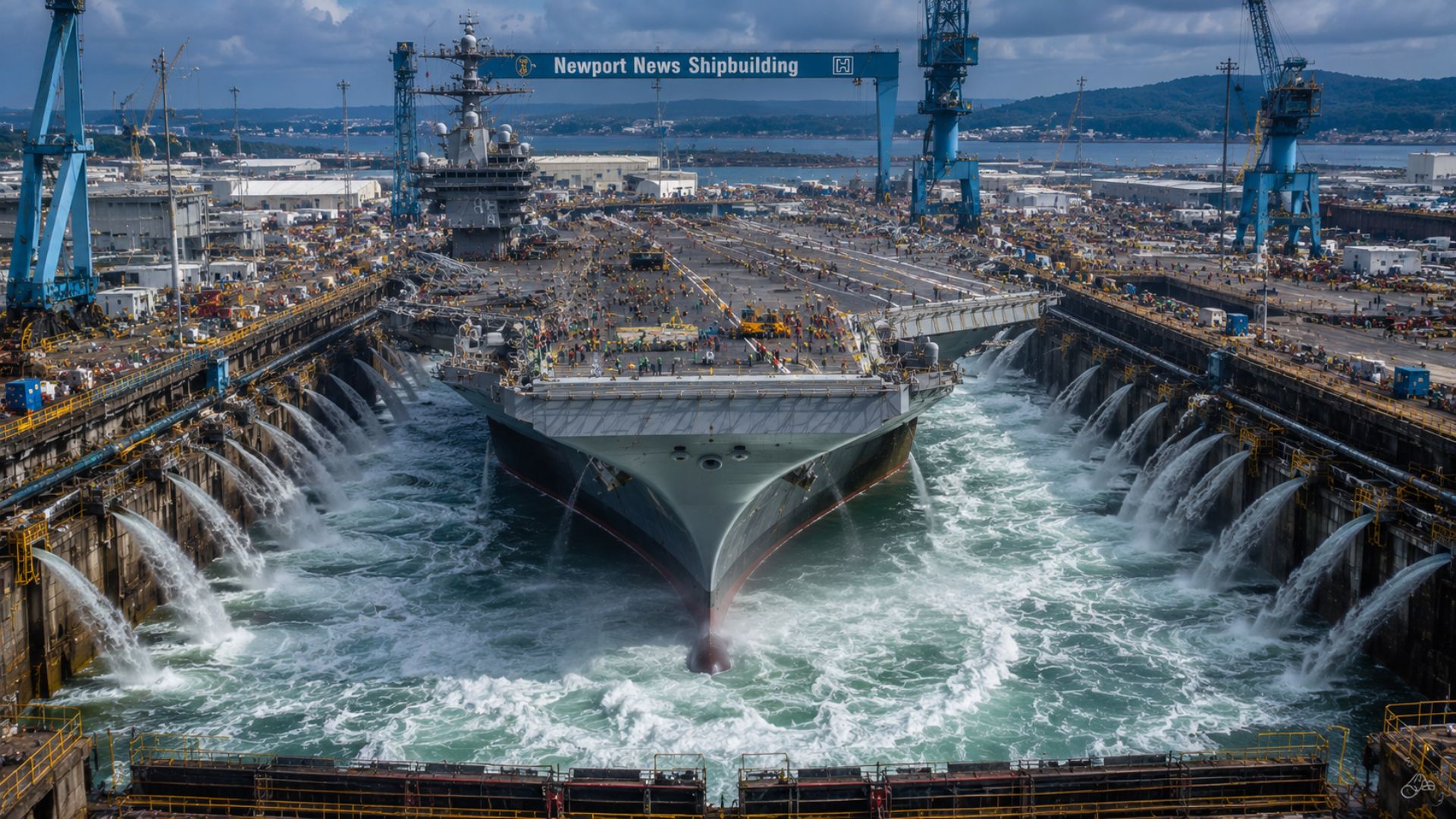
More than 160 million gallons of water, equivalent to 240 Olympic swimming pools, need to be pumped back into the dry dock to put a 100,000-ton nuclear aircraft carrier back into operation. The complete overhaul of this type of vessel reaches the billion-dollar mark, with contracts exceeding 2.8 billion dollars.
The scale of modern military naval engineering defies any easy comparison for the lay public. To put a nuclear aircraft carrier that has spent years in maintenance inside a dry dock back to sea, the technical team needs to pump more than 160 million gallons of water, a volume equivalent to 240 Olympic swimming pools filled to the brim.
According to HII, the operation takes place in very specific shipyards, with infrastructure prepared to receive vessels weighing around 100,000 tons and exceeding the length of three official football fields lined up. Each movement requires coordination among thousands of workers, billions of dollars in direct investment, and strict protocols for radiological safety developed over decades by the American military naval industry.
Why a nuclear aircraft carrier enters dry dock

The dry dock visit doesn’t happen by chance or due to damage. The nuclear reactors that power these vessels have an autonomy of up to 25 years without refueling, an extensive period that eliminates the need for shipyard entry for long stretches of the ship’s operational life.
-
Federal Police involved in the case to identify the person responsible for hacking the Civil Defense system, which sent ten false alerts, frightened residents of different capitals, and turned messages about real risks into notifications with “misanthropy” and even alien attacks.

-
Extreme drought causes ghost village to reappear at the bottom of the reservoir that supplies Athens, revealing houses, a school, and ruins swallowed since the 1980s as the lake shrinks and exposes the water crisis threatening the capital of Greece.

-
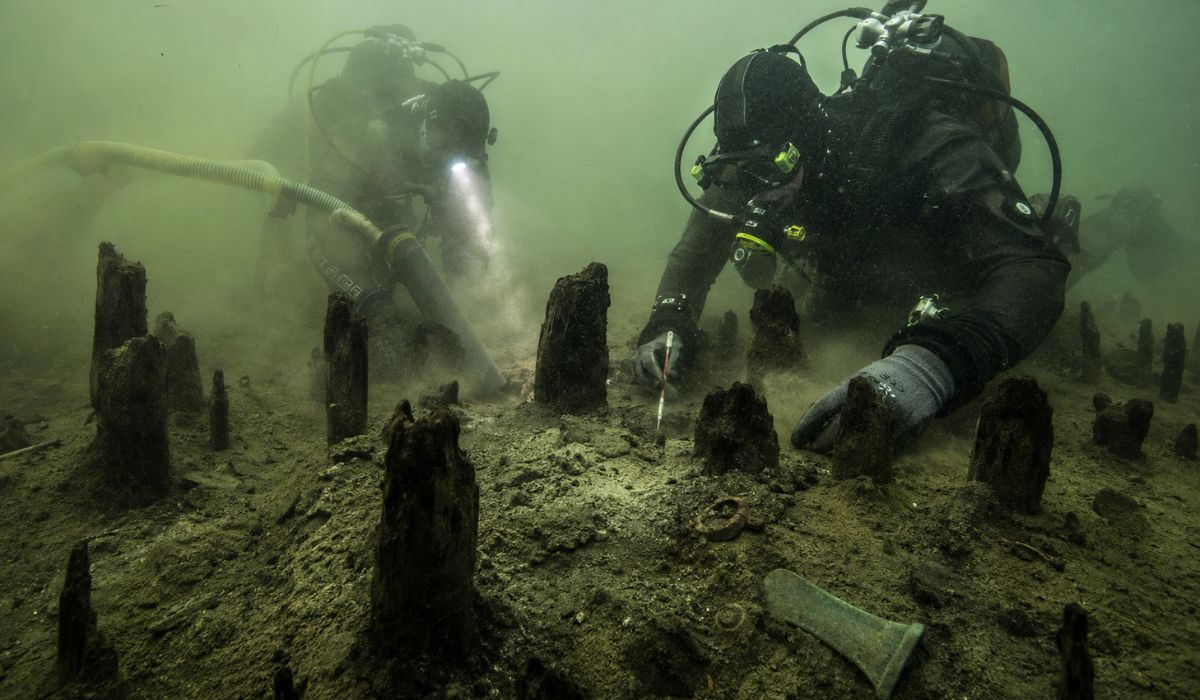
An entire village lay asleep at the bottom of a lake for 3,000 years: divers suction sediments in Italy and reveal more than 600 wooden stakes, bronze tools, and traces of a Bronze Age settlement hidden underwater.
-
They call it the “Shopee house” and even cardboard, but the R$ 20,000 house is a certified Wood Frame from Alea, financed by Minha Casa Minha Vida: understand if it’s worth more than masonry.



When this limit approaches, the operation is inevitable. The process is technically known as RCOH, an acronym for Refueling Complex Overhaul, and constitutes one of the most complex maintenance procedures in modern naval engineering worldwide.
This moment requires an enormous logistical reorganization by the American Navy. The entire crew needs to be relocated, all onboard systems must undergo inventory, and the operational schedule needs to be adjusted to accommodate the vessel’s prolonged absence from the country’s active fleet.
The duration of the intervention is also impressive. The USS George Washington, of the Nimitz class, required 26 million man-hours during its complete overhaul, under a 2.8 billion dollar contract with the American federal government, a value that demonstrates the financial dimension of the commitment undertaken by the program.
The only capable shipyard in the Western Hemisphere

The geography of nuclear maintenance is as restricted as the technology involved. Only one shipyard in the Western Hemisphere currently has certified capacity to perform this work on American nuclear aircraft carriers.
The location is Newport News Shipbuilding, in Virginia. The industrial complex occupies 550 acres of total area and has been in continuous operation since 1886, with a history of more than 800 ships built over nearly 140 years of activity in the heavy naval engineering sector.
Within this shipyard operates Dry Dock 12, considered the largest construction dry dock in the Western Hemisphere. The structure is 662 meters long by 76 meters wide, dimensions that comfortably accommodate the impressive size of any American Navy nuclear aircraft carrier.
The contrast with Chinese shipbuilding infrastructure is often used in industry analyses. China operates more than 200 shipyards across its territory, while the United States has only four active public naval shipyards, a disparity that has been highlighted as a point of strategic concern for American military competitiveness in the long term.
The aircraft carrier’s entry guided by tugboats

The vessel’s arrival at the dry dock requires precise coordination among multiple teams around the hull. At least six high-power tugboats are positioned around the ship to guide the final maneuver to the exact docking point within the shipyard.
These tugboats are not common vessels seen in civilian cargo ports. Their engines range from 4,000 to 8,000 horsepower, specifically developed to operate with large structures in confined spaces, configurations that require specific training for the personnel involved in the maneuver.
The models used are typically known as harbor tugboats and escort tugboats, designed to apply lateral force with absolute control over large vessels. The combination of raw power with millimeter precision is what makes it possible to move a 100,000-ton structure with the necessary delicacy to avoid accidents.
During this initial phase of the operation, the dry dock remains full of water. The ship slowly floats in, guided by the tugboats and steel cables fixed at specific points on the pier, in a sequence of controlled movements that depend on constant visual confirmation from the entire team involved in the process.
The drainage that supports the giant on keel blocks


Once positioning is confirmed at all reference points, the pumps begin operation to empty the dock. The process takes hours to complete the removal of over 100 million gallons of water present in the structure, a necessary interval to ensure a controlled descent of the vessel.
As the water level gradually drops, the hull descends onto the keel blocks. These wooden and concrete structures are installed with millimeter precision at the support points on the bottom of the dock, creating the base upon which the entire weight of the ship will rest during months or years of maintenance.
Any error in the positioning of these blocks can cause catastrophic consequences. A block out of its correct place generates structural deformations whose correction cost easily reaches hundreds of millions of dollars, which is why this stage requires triple verification before the vessel’s arrival.
With the dock completely dry, normally submerged parts of the hull become accessible for the first time since the last maintenance. Propellers, propulsion shafts, rudders, and the raw hull itself enter the scope of work for the technical teams who will begin inspection and component replacement tasks throughout the overhaul cycle.
The invisible work during years of overhaul
With the dock empty, thousands of workers begin simultaneous operations at different points of the ship. In the specific case of the USS George Washington, teams operated in continuous shifts for almost six years straight, totaling millions of hours of specialized work across various technical fronts.
The nuclear reactors undergo the most delicate procedure of the cycle. The fuel is unloaded following strict radiological safety protocols and reloaded with material capable of providing energy for another 25 years of continuous operation without the need for further refueling.
In parallel, thousands of valves, pumps, and piping components are replaced with new units or completely overhauled in external workshops. More than 600 internal tanks are inspected, cleaned, and re-preserved against the typical corrosion of the marine environment, an essential step to ensure the structure’s durability for the coming decades of use.
The propeller shafts also undergo a meticulous process. They are removed from the vessel, measured with tolerances on the order of thousandths of a millimeter, and reinstalled after complete technical verification. The propellers themselves, each weighing tens of tons, are removed, refurbished in a specialized workshop, and reinstalled on the hull to ensure optimal performance in future missions.
Electronic modernization and new exterior painting
In addition to the mechanical part, the overhaul updates the vessel’s entire digital and electronic infrastructure. On the upper decks and in the command island, combat systems are modernized with the latest technology available in the defense market.
This update is especially important for maintaining tactical competitiveness. Radars are replaced, electronics are fully updated, and communication systems are rebuilt from scratch, with integration between different onboard platforms and land-based command centers.
The outer hull also undergoes a new aesthetic and protective treatment. The paint is renewed with a specialized coating that reduces the friction of the structure with water, a technical gain that translates into fuel savings during all future operations carried out by the refurbished aircraft carrier.
The combination of electronic modernization and structural renovation leaves the ship practically as good as new. A vessel that entered the dry dock with 25 years of accumulated operation leaves rebuilt to operate for another 25 years without the need for such a deep intervention again, a cycle that allows the American government to maintain an active fleet with targeted and well-planned investments.
Critical flotation and the moment of greatest risk
Leaving the dry dock follows a protocol as rigorous as entering it. Teams perform a detailed final inspection of the hull, checking every weld executed during the work and every new component installed in the different sectors of the vessel.
After technical approval, the gates open and water begins to enter gradually and in a controlled manner. The flooding speed is deliberately slow, because internal currents formed by the rapid entry of water could displace the hull uncontrollably, causing serious structural damage in seconds.
The complete process takes long hours and is monitored by sensors that record in real-time every pressure variation and every minimal movement of the ship. The most delicate moment of the entire operation occurs when the hull begins to detach from the support blocks that sustained the vessel during the dry dock maintenance cycle.
This phase is technically called critical flotation. It is the moment of greatest structural risk in the process, and any instability can compromise all the work carried out in previous months or years. When this stability is confirmed through electronic measurements, the main gate is removed and the ship begins to exit the dry dock under the command of tugboats that return to position around the structure.
The fast cruise and sea trials before returning to service
Leaving the dry dock does not end the process. The aircraft carrier is transferred to a finishing pier, where the electronic systems are activated for the first time since the beginning of the overhaul, a process that requires constant technical monitoring and several rounds of verification.
The next stage is the so-called fast cruise. The ship remains docked while the crew operates all systems as if they were at sea, a simulation that serves to identify failures in a controlled and safe environment before the definitive return to regular military operations.
Next come the sea trials themselves. The propulsion system is taken to maximum speed to verify the vessel’s power and stability, and the electromagnetic aircraft launch systems are tested with weighted sleds that simulate the actual weight of planes during takeoff.
The landing system also undergoes extreme evaluation. Capable of stopping a 50,000-pound aircraft in less than 100 meters, the structure is tested under near-real conditions to ensure that the nuclear aircraft carrier is prepared for the intense operational regime it will face in the next global projection missions of the US Navy.
The triumphant return and strategic significance
Approved in all tests, the aircraft carrier begins its return to its home port. Direct communication with the port team occurs 15 or 20 kilometers away, with confirmation of the exact docking point, the prepared infrastructure, and coordination with local maritime traffic.
When the ship is finally positioned and moored at its destination pier, one of the oldest traditions of world military navigation is fulfilled. The crew lines up along the rails in a continuous formation, from bow to stern, uniformed and at attention, a practice known as Manning the Rails that visually signals the vessel’s return.
To understand the importance of this operation in the current military context, one only needs to observe the logistics of the US fleet. When the USS Ronald Reagan entered dry dock in March 2025 for 17 months of maintenance in Bremerton, Washington, the US Navy was simultaneously managing more than 11 aircraft carriers in different operational and maintenance stages.
Each nuclear aircraft carrier back in active service represents a floating air base capable of accommodating 5,000 crew members and executing more than 270 air missions per day. Without the complete maintenance cycle described throughout this process, a sustainable global military fleet simply does not exist, and that is why billions of dollars and millions of man-hours continue to be directed to these monumental operations with each new scheduled overhaul cycle.
And were you impressed to discover the scale of engineering involved in taking a nuclear aircraft carrier out of dry dock, with over 160 million gallons of water being pumped to float 100 thousand tons of steel back into the sea?
Tell us in the comments if you knew that only one shipyard in the Western Hemisphere can perform this type of maintenance, if you follow military engineering topics like this, and what else caught your attention in the process, from nuclear refueling to the tradition of Manning the Rails upon arrival at the home port. The discussion helps to understand how long-term industrial decisions continue to shape the geopolitical balance of the planet in the 21st century.




-

1 person reacted to this.