Portuguese
  Spanish


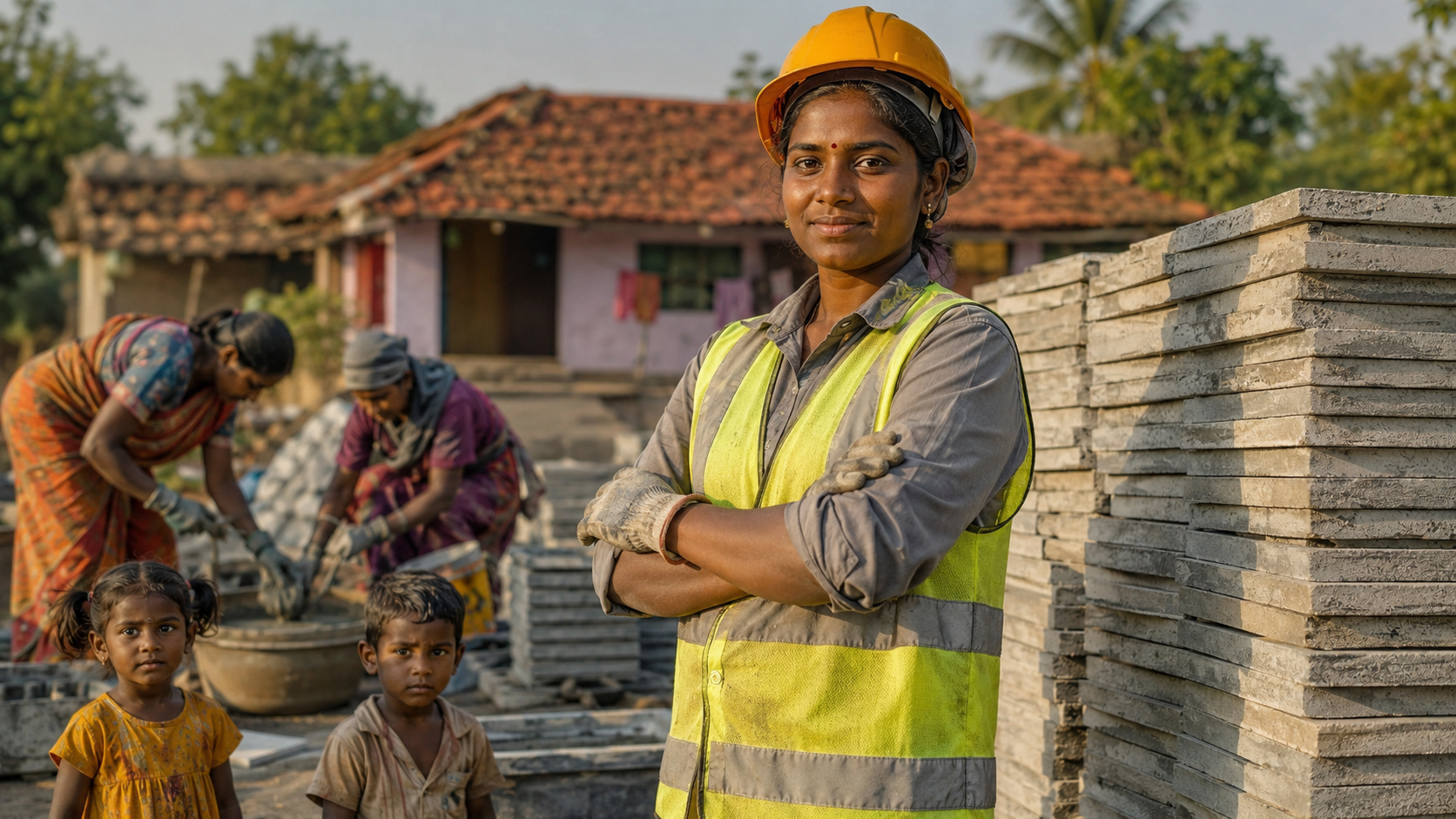

The story of Nithya, a mother who couldn’t leave the village to study, reveals the importance of access to vocational training in construction, bringing family income and opening doors for female entrepreneurship worldwide
A 25-year-old mother, who couldn’t leave her village in India because of her children, took a 20-day masonry course, started a company with other women, and began with an order of 600 plaques for the local council.
The story took place in Tamil Nadu, in the Tiruchirapalli district, and shows how practical training can pave the way for women who want to work without leaving their families behind. The information was published by World Bank, an international financial institution focused on development.
Nithya wanted to help with the household income and provide a better life for her two young children. The problem was simple and harsh: going to the city meant being away from the children, and opportunities for women near the village were limited.
-
General Motors Replaces Over a Thousand Workers with 50 Cobots at Electric Vehicle Plant, UAW Union Criticizes Move Amid Industry’s Automation Push

-
On the world’s highest navigable lake, the Uros people have hand-built around 100 floating straw islands, living on them for 3,000 years without concrete or foundations.

-
Newly Completed Brazilian Highway in the Serra da Rocinha Becomes a 16.5 km Cycling Challenge and Boost for Local Tourism

-
Havaianas: From Humble Beginnings to a $900 Million Global Fashion Icon



The masonry course that opened a way out without leaving the children behind
The change began when Nithya’s women’s support group informed her about a masonry course offered by a Community Skills School set up nearby.
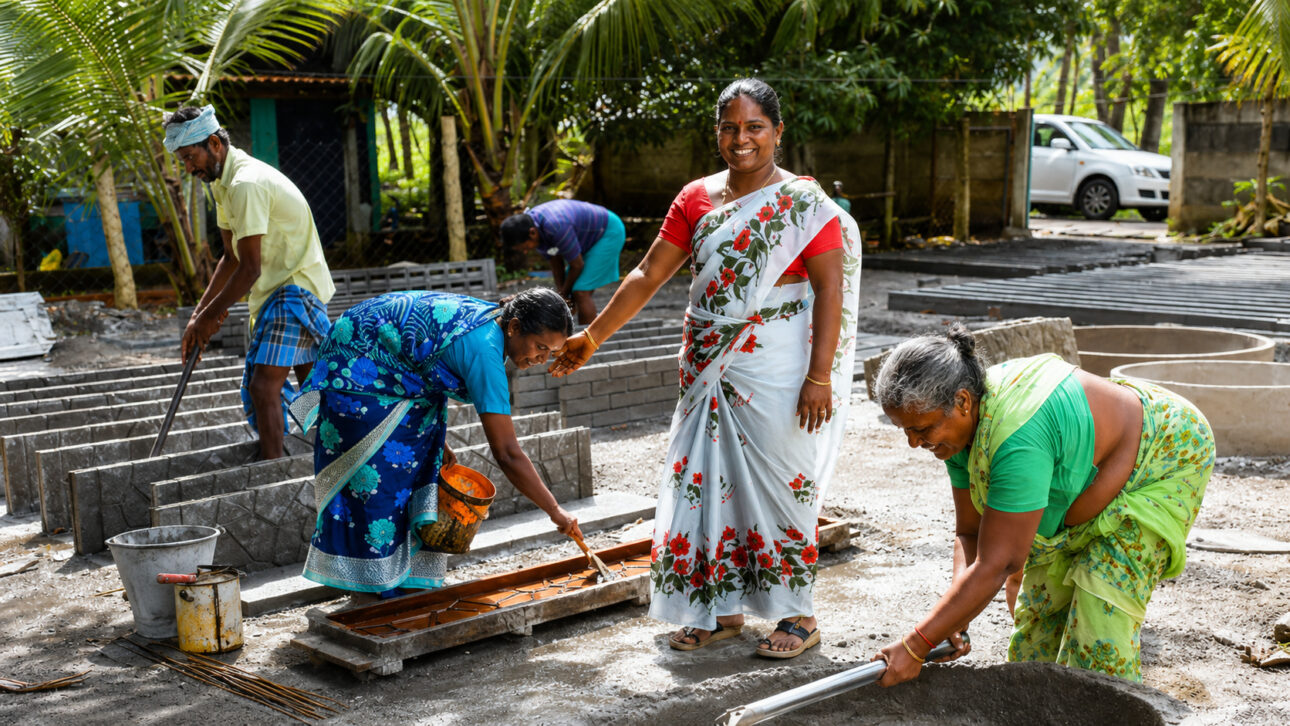
The training lasted 20 days and taught a skill related to construction, a sector still seen as predominantly male in many places. For Nithya, the course meant not just learning to work in construction. It meant finding a way to earn income without abandoning her family routine.
During the training, she met three other women with the same goal. They all wanted to build a better life but needed a feasible opportunity within the reality of the village.
The first order for the women-created company came from the local council
After the course, Nithya and the three partners formed a masonry company. The first big order was the production of 600 signboards for the village’s local council.
This detail changes the weight of the story. It wasn’t just a course with a certificate or an isolated activity. The training led to real work, with a concrete order and direct participation of women in a construction-related area.
The company started operating within the community itself. Nithya and the partners ran the business and even hired three other women from the village.
Construction became daily income for village women
The company created after the course began to ensure income for the participants. Nithya and her partners earned about INR 1,000 ($ 12.50) per day, as cited in the original report.
This information reinforces the practical impact of professional qualification. For a mother who couldn’t leave the village, masonry ceased to be a distant skill and became work close to home.
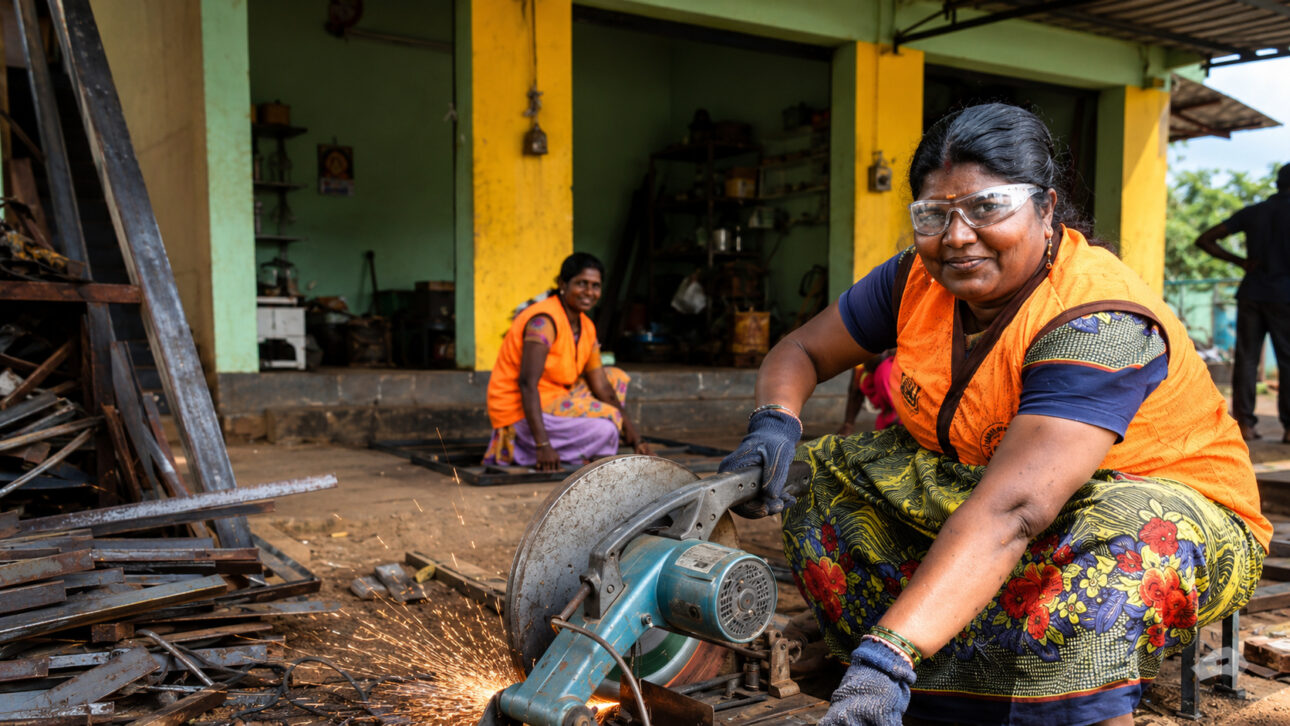
World Bank, an international financial institution focused on development, detailed that the case is part of the Vazhndhu Kattuvom program, supported by the Tamil Nadu Rural Transformation Project.
Why construction is still a barrier for women
Nithya’s story draws attention because construction usually requires strength, relocation, local contacts, and entry into a male-dominated environment. For many women, the difficulty begins even before the first opportunity.
In Nithya’s case, the barrier was also familial. She wanted to work but couldn’t move to a city and leave her children. This point brings the story closer to the reality of many Brazilian women who seek technical courses, income, and autonomy without disrupting the home routine.
The example shows that training near the community can make a difference. When the course reaches the place where the person lives, the chance of participation increases, especially for those who take care of children or depend on family to organize the day.
The Tamil Nadu program trained young people in various professions
The Community Skills Schools are part of a larger effort in Tamil Nadu. Since 2019, 2,500 such schools have been created within the project.
These schools have helped train more than 50,000 young people in about 75 professions. Among the participants, 65 percent were women.
The logic of the model is simple. The training takes place with local businesses and people from the community itself. Thus, the training becomes more practical and closer to the type of work that may exist around the village.
What this model teaches about vocational courses and female entrepreneurship
Nithya’s story shows that a short course can have a greater effect when it comes along with local opportunity, community support, and a real chance of work.
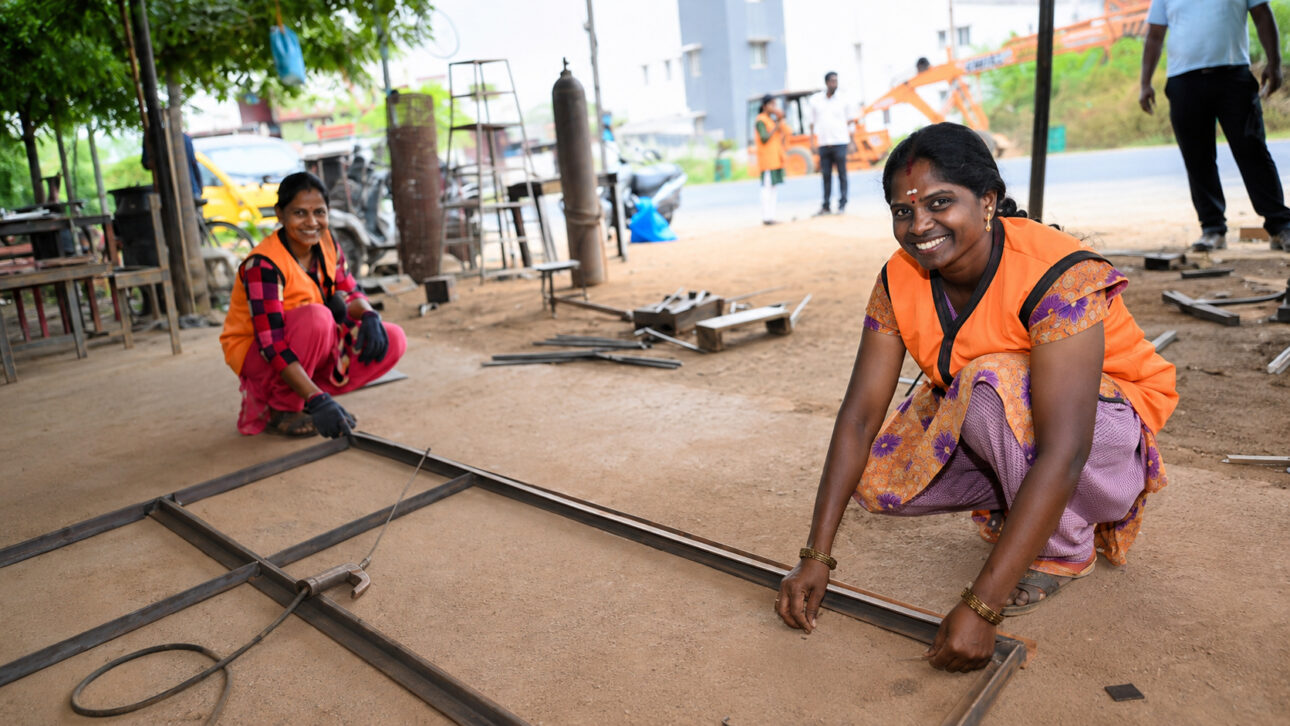
The issue and the main point is not to exactly copy the model from India. The lesson is to bring together vocational courses, local demand, and female entrepreneurship.
When a woman learns a profession that can be practiced near or even inside the home, income no longer depends solely on distant employment. In Nithya’s case, masonry opened a business, generated work for other women, and showed that construction can also be a path to autonomy.
The journey of a mother in Tamil Nadu sums up a simple and powerful change: 20 days of training turned into a female masonry company, an order of 600 slabs, and income within the village itself.
The case also shows an important consideration. Not every course changes someone’s life on its own. The difference appears when the training meets a real community need and when women can turn learning into work.
Do you think technical courses near home could open more doors for women in Brazil? Leave your comment and share this story with those who believe in income, qualification, and new opportunities.