






 Portuguese
  Spanish


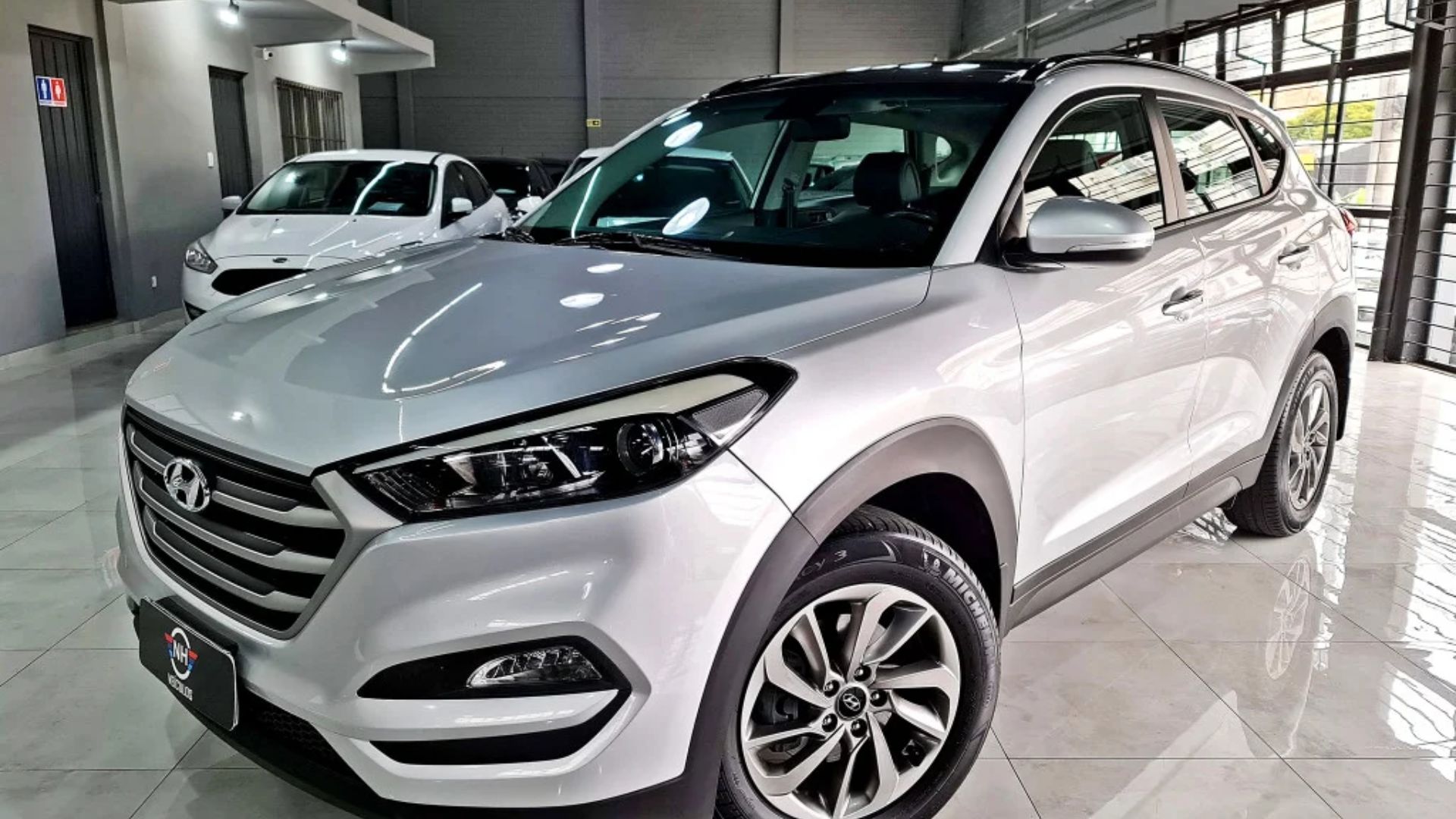


SUV That Remains Valued in the Used Car Market and Maintains High Demand Among Drivers Seeking Robustness, 2.0 Engine, and Automatic Transmission for an Affordable Price, Despite Values Higher Than Expected by Many Buyers.
The first-generation Hyundai Tucson continues to attract attention from those looking for a robust SUV, 2.0 engine, and automatic transmission for less than R$ 50 thousand.
In practice, however, the dream of finding units from the 2010 to 2013 batches for “around R$ 30 thousand” collides with the current reality of the used car market, where most well-preserved examples appear at higher price levels.
Hyundai Tucson 2.0 Automatic: Trajectory and Consolidation in Brazil
The Tucson began its journey in the Brazilian market in the mid-2000s, initially imported from South Korea, with options for 2.0 16V and 2.7 V6 engines, as well as manual and automatic transmissions.
-
Chinese SUV Achieves 24.4 km/l, Outperforms Toyota Yaris Cross in Real-World Tests with 224 hp Hybrid System, Offers 51-Liter Tank for Greater Range, and Costs Up to R$ 5,000 Less.

-
Uber Black Revamps Fleet, Drops Ten Car Models and Sets Deadline for Electric BYD Dolphin

-
Chinese Giant Uses Metal Structures and Cranes to Deliver Over 700 Electric Cars to Brazil

-
Uber Faces Shareholder Scrutiny as Board Accused of Ignoring Safety, Compliance, and Harassment Warnings Amid Over 3,500 U.S. Lawsuits


A few years later, the utility vehicle began being assembled in Anápolis (GO), in partnership with Caoa, which helped to expand the offer and reduce costs compared to imported SUVs.
While new generations of the Tucson and the ix35 were arriving at dealerships, the first generation remained in line for a long time, practically without significant design changes.
This prolonged production made the model one of the most recognized medium SUVs in the country and left a large volume of units available today in the used car market.
With a medium size, high driving position, and family-oriented proposal, the Tucson helped consolidate Brazilians’ preference for sports utility vehicles, especially among consumers seeking more space and a sense of robustness compared to sedans and medium hatches.
Real Prices: How Much Does a Tucson 2010–2013 Cost Today

In advertisements and informal conversations, it is still common to hear that it is possible to find a Tucson 2010–2013 “in the range of R$ 30 thousand.”
However, a survey of the most recent price references shows a very different scenario.
Updated data from the Tabela Fipe indicates that the 2012 Hyundai Tucson with a 2.0 16V engine appears in the range of R$ 41.7 thousand to R$ 42.7 thousand, depending on the configuration.
For the 2013 2.0 automatic model, the FIPE reference value is around R$ 47.4 thousand, which places it closer to R$ 50 thousand than R$ 30 thousand.
Classified platforms and websites specializing in used vehicles confirm this range.
In recent public advertisements, it is common to find 2011, 2012, and 2013 Tucsons listed between approximately R$ 35 thousand and R$ 50 thousand, varying according to mileage, condition, version, and region of the country.
In many cases, well-preserved 2013 automatic units exceed R$ 48 thousand.
Offers in the range of R$ 30 thousand to R$ 33 thousand exist, but tend to be in the minority and are generally associated with higher mileage, the need for repairs, or other points of attention.
Therefore, the old reference of “approximately R$ 33 thousand” for a Tucson 2010–2013 is now outdated, considering price bases and advertisements on a national scale.
Why the Tucson Remains Valued Among Used SUVs
Even being an old project, the first-generation Tucson continues to have good liquidity in the used car market.
Several factors help explain this relative appreciation.
First, the long period of national production and coexistence with newer generations have increased knowledge of the model among consumers, workshops, and dealers.
There is good availability of parts and labor, which typically weighs positively at the time of resale.
In addition, its mechanical set is known to be relatively simple, with the 2.0 16V engine and four-speed automatic transmission widely disseminated in the independent network.
Fuel consumption is not among the lowest by current standards, especially in urban cycles, but the package of interior space, higher suspension, and sense of robustness remains appealing to those who prioritize comfort and versatility over extreme economy.
Another point that supports higher prices is the general behavior of the used car market.
In recent years, the appreciation of semi-new and used vehicles, combined with the increase in prices of brand new cars, has pushed the reference of older models that still provide medium SUV size and a good level of equipment upwards.
Is It Possible to Find a Tucson 2.0 Automatic for Less Than R$ 50 Thousand?

For those specifically looking for a Hyundai Tucson 2.0 with automatic transmission and a budget of up to R$ 50 thousand, the most likely scenario today is to find units between R$ 40 thousand and R$ 50 thousand, especially from the 2011, 2012, and 2013 batches.
Values below this usually involve some kind of compensation: high mileage, history of accidents, pending documentation issues, or immediate maintenance needs.
The recommendation in these cases is always to compare the asking price with the current Tabela Fipe, with other offers of equivalent models, and with the estimated cost of any repairs.
A Tucson that seems cheap in the range of R$ 30 thousand may require considerable investments in suspension, tires, engine, automatic transmission, or bodywork, which, in practice, has nullified the initial savings for many buyers.
On the other hand, those willing to pay closer to the market average tend to find examples in better overall condition, with up-to-date service records, a revised mechanical set, and a lower risk of surprises.
In this price range, the chance of the SUV maintaining a significant portion of its value in a future resale also increases, provided that usage and maintenance are careful.
How to Choose a Used Tucson Without Taking Risks
When evaluating a Tucson 2010–2013, experts recommend paying extra attention to the maintenance history.

Service notes, stamps in the manual, revisions at trusted workshops, and proof of regular oil changes help reduce the risk of hidden problems.
Next, it’s advisable to carefully inspect the automatic transmission, checking for jerks, noises, or slipping during gear changes.
Oil leaks and signs of overheating also sound an alarm.
An evaluation of reliability at a trusted workshop, with electronic module reading, is often a good investment before purchase.
Bodywork, alignment of doors, hood, and trunk, as well as the undercarriage, help identify possible poorly repaired collisions.
It is also important to check the documentation status, any administrative restrictions, and the history of accidents and auctions.
By cross-referencing all these factors with the asking price and the FIPE reference, the buyer can understand whether the offer is indeed below, within, or above the average.
In a market where most 2.0 automatic Tucsons today range between R$ 40 thousand and R$ 50 thousand, accepting a very low price without detailed investigation can be costly later.
If you were looking for a 2.0 automatic Tucson today, would you prefer to pay a bit more for a well-documented example in the R$ 40 thousand to R$ 50 thousand range or would you still risk an offer of R$ 30 thousand knowing the possible hidden costs?


Câmbio automatizado (tipo powershift) .
O resto é com vocês !
Até parece que a Tucson da foto vai está com esse preço. Porque não colocou na foto o modelo do ano mencionado.
Tenho uma para vender, 2011 35 mil 51998667328 santa Catarina