






 Portuguese
  Spanish
  5 min of reading
  0 comments


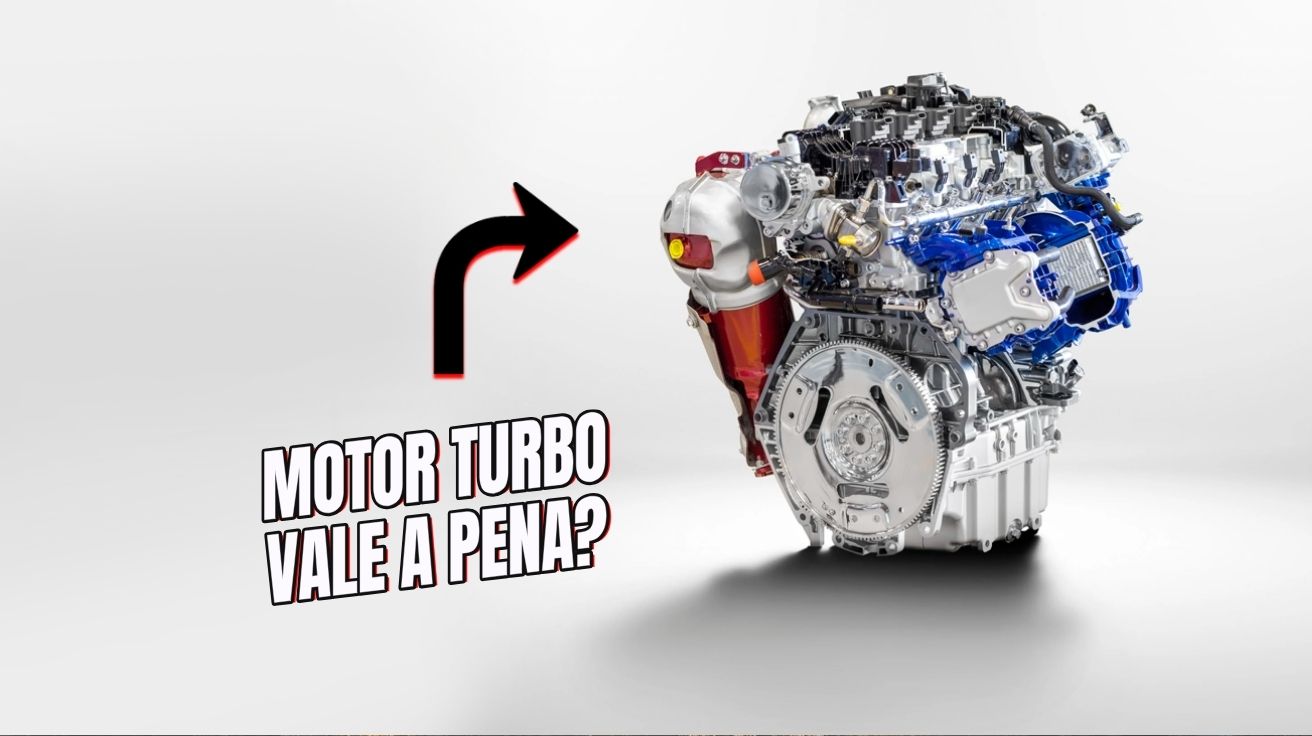
Turbocharged Engine Technology Advances in Brazil and Transforms the Automotive Landscape, Requiring New Care and Strategies for Those Who Drive or Plan to Buy a Car.
The turbocharged engine has ceased to be a luxury limited to sports or high-performance cars and has become a component present even in entry-level models.
The change in the profile of Brazilian consumers and the advancement of automotive engineering have made this type of engine not only more common but also desirable.
Today, compact versions with a 1.0 turbo engine share space with medium and large SUVs that adopt the technology to improve fuel economy and performance.
-
A mechanic opened the engine compartment of an 11-year-old Ford to replace a part and found a wallet with money, gift cards, and the badge of the worker who had assembled that car at the factory.

-
China took 46 years to surround its largest desert with a 3,000-kilometer green belt, but the megaproject against sandstorms still faces drought, low tree survival, and advancing desertification in the Taklamakan.

-
Intrigued by the resistance of Amazonian fish in warm, acidic, and low-oxygen waters, a scientist from INPA turned the rivers of the Amazon into a natural laboratory and has just gained international recognition.
-
Florida goes after Burmese pythons in the Everglades, removes 3.7 tons of invasive snakes, and prevents more than 4,000 hatchlings from being born in the swamps.





Popularization of the Turbocharged Engine in Brazil
According to a report published by CNN Brasil, this transformation has been accompanied by an increase in interest in technical information, maintenance care, and comparisons with traditional naturally aspirated engines.
Since the pioneering Fiat Uno Turbo, launched in 1994, many things have changed.
The initial fear of possible failures or premature wear has given way to confidence based on tests, certifications, and manufacturers’ adaptations to the conditions of the national market.
Technology and Efficiency in the Turbocharged Engine
The newspaper highlights that Horse, a manufacturer of engines used in various Renault models, has invested in solutions to ensure durability and efficiency of turbocharged engines.
Fabio Silva, the company’s research and development manager, told CNN Brasil that “engines with direct fuel injection and turbocharging are more efficient and consume less fuel.”
These engines come with state-of-the-art components, such as cylinder heads with optimized geometry, electronic control of turbo pressure, and special coatings like Diamond-Like Carbon (DLC), which reduces friction and extends the lifespan of moving parts.
Power and Fuel Efficiency: A Beneficial Combination
The thermal efficiency and the ability to extract more power from smaller volumes are the biggest attractions of the turbocharged engine.
A car with a 1.0 turbo engine can deliver more than 120 horsepower, comparable performance to 1.8 or even 2.0 vehicles from the past decade.
This extra power enhances the driving experience on highways and urban accelerations, as well as offering fuel savings, provided that the driver maintains rational driving habits.
Reliability and Risks of Turbocharged Engines
According to CNN Brasil, the challenge lies in the maintenance and proper use of the turbocharged engine.
According to automotive mechanic expert Daniel Monteiro, factory turbocharged engines are reliable, as long as the driver follows the manufacturer’s recommendations.
“The projects that offer much more reliability are those that leave the factory; modified vehicles carry much more risk,” explains Monteiro.
Changes such as increasing turbo pressure, removing catalytic converters, or altering the electronic control unit (ECU) can compromise the entire system.
Care to Preserve the Turbocharged Engine
Another point of attention is the habit of turning off the engine immediately after intense use—something detrimental to the turbo system, as the turbine is still spinning at high speed and may suffer accelerated wear.
It is also essential to change the oil within the specified timeframes and with the exact type recommended in the vehicle manual.
The same goes for the air filter: if it is dirty or damaged, the turbine may suck in particles that compromise its functioning.
Among the basic recommendations to preserve a turbocharged engine are:
- Always change the oil within the correct timeframes, using the lubricant specified by the manufacturer.
- Keep the air filter clean and in good condition, avoiding impurities that could harm the turbine.
- Avoid using the car under heavy load and at very low revs, which overloads the system without generating benefits.
- Never turn off the engine immediately after intense use, allowing the turbine to cool down at idle.
- Do not remove devices that make up the turbo system, such as sensors, valves, or mufflers—even if the goal is to achieve the famous “turbo roar.”
Adaptation to Brazilian Traffic
In regions with hot climates or heavy traffic, these practices become even more important.
The constant variation in temperature and the abrupt accelerations require resilience from the engine.
Therefore, the turbocharged engine demands constant care and attention.
Economy and Sustainability
The popularization of this type of engine also has a positive environmental impact.
Thanks to greater energy efficiency, turbocharged engines emit less pollutant gases and consume less fuel.
This makes them allies of global sustainability goals while also representing direct savings for the consumer.


Popular Models with Turbocharged Engines
Brands such as Fiat, Volkswagen, and Chevrolet already offer various options with turbocharged engines in Brazil.
Models like Pulse, T-Cross, Onix Turbo, Tracker, HB20, and Fastback show that turbo engines have spread across different categories and price ranges.
The previously hesitant consumer now seeks this feature when buying a new car, especially when aiming to combine power and controlled fuel consumption.
Technical Assistance and Specialized Maintenance
The market for parts and maintenance has also adapted to the new reality.
Specialized workshops have emerged in large urban centers, and manufacturers have strengthened the training of their dealership networks.
This ensures more qualified support for owners of turbocharged vehicles, reducing the risk of errors in maintenance and increasing the longevity of the engines.
Turbocharged Engine: A Trend That Is Here to Stay?
With all these changes and innovations, turbocharged engines have stopped being a mystery and have become key players in automotive sales in the country.
The technology has evolved, technical assistance is better prepared, and the after-sales network now understands the specificities of this type of engine.
It remains for the consumer to follow the basic recommendations to enjoy all the benefits that turbocharged engines can offer—without shocks or unpleasant surprises.
And you, do you drive a turbocharged car? Do you think this technology is here to stay, or do you still prefer traditional naturally aspirated engines?




-

-

10 people reacted to this.