Portuguese
  Spanish


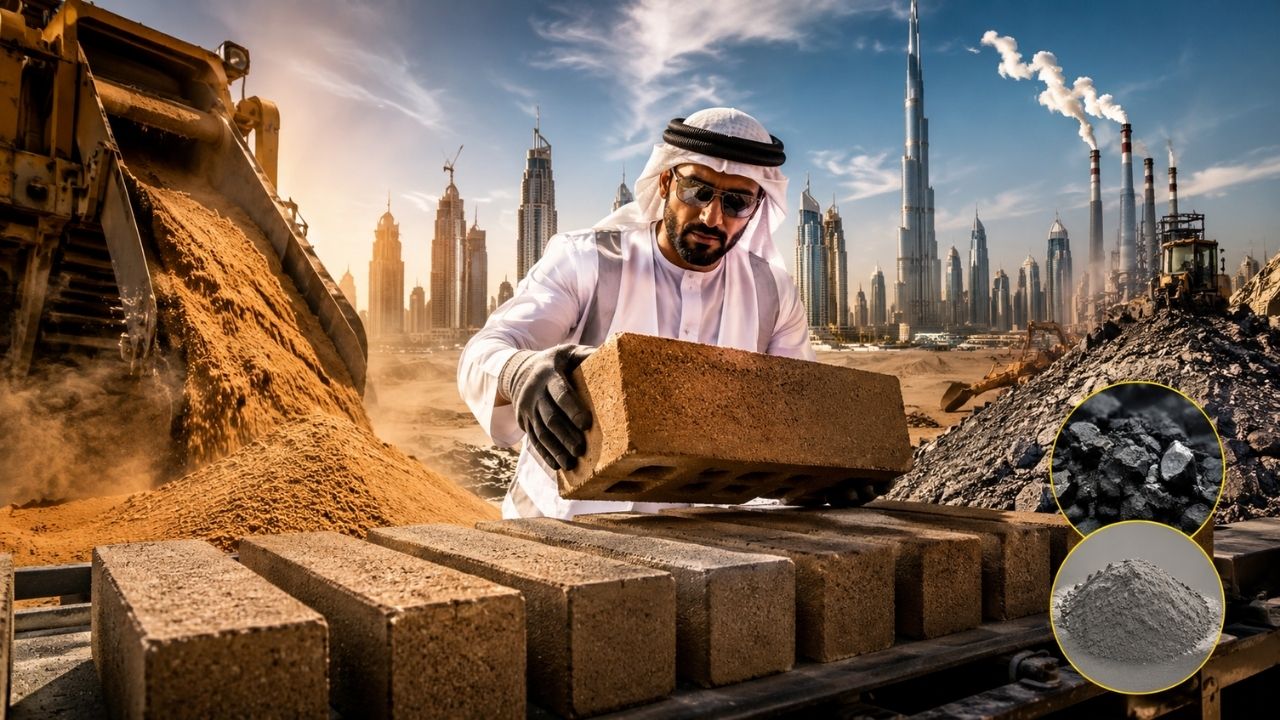

Research from the University of Sharjah transforms desert sand into eco-friendly bricks with industrial ash, slag, and curing at room temperature. The study aims to reduce Portland cement, test sulfate resistance, and evaluate industrial production, but the technology still depends on pilot scale before widespread adoption in sustainable regional civil construction.
Desert sand has become the basis for eco-friendly bricks developed by scientists at the University of Sharjah, in the United Arab Emirates. The research was published on November 17, 2025, in the Journal of Materials in Civil Engineering and released on February 10, 2026, by the university.
The study shows an attempt to transform an abundant material in arid regions into an alternative for civil construction. The proposal uses local sand, slag, and industrial ash in a formulation that reduces dependence on Portland cement, while industrial production still requires scale testing.
An abundant material that construction has not always managed to use
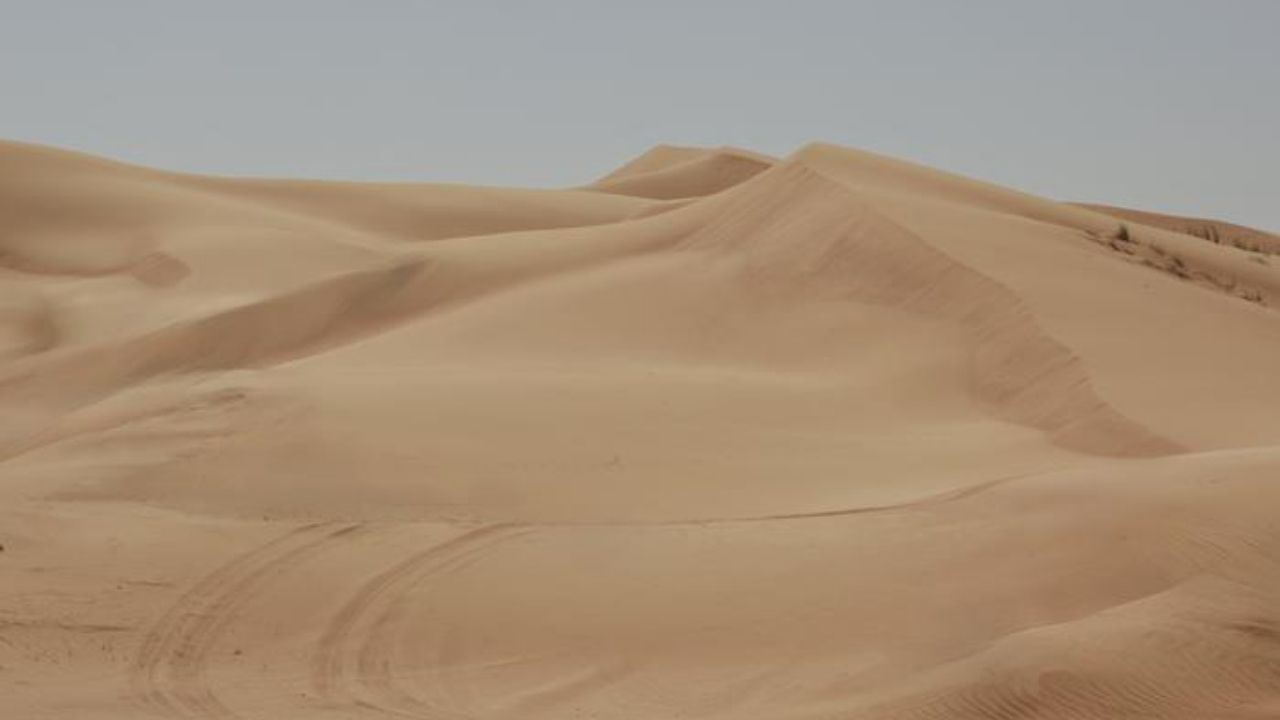
Desert sand seems, at first glance, an obvious resource for countries surrounded by dunes. However, in practice, it is often underutilized by conventional construction because its characteristics do not always meet the requirements of materials used in concrete, mortar, or common bricks.
-
Spain Launches World’s Largest Floating Dry Dock: 56-Meter Giant Produces Massive Concrete Structures in A Coruña Using Technology Proven in Brazil

-
AI-powered toys that talk, recognize faces, and collect data face scrutiny from Brazilian government over children’s privacy concerns

-
4,000-Year-Old Child’s Skull Unveils Ancient Burial in 7,500-Year-Old Norwegian Rock Shelter, Impressing Archaeologists

-
Norway Defeats Brazil in World Cup but Invests Billions to Preserve the Amazon, Strengthens Amazon Fund, and Joins Brazil in Leading Global Effort Against Tropical Deforestation


This is the paradox that motivated researchers in the United Arab Emirates. The region has large volumes of sand, but not all of this raw material can easily enter the construction production chain. Without proper treatment, the material may require expensive processes, which reduces its industrial appeal.
How Desert Sand Became Eco-Friendly Brick in the Laboratory
In the study, scientists combined desert sand collected in the Sharjah region with alkali-activated binders. This technology uses alkaline solutions to trigger chemical reactions capable of forming a rigid structure, similar to a resistant mineral matrix.
The formulation also incorporates industrial by-products, such as blast furnace slag and industrial ashes. Instead of relying solely on Portland cement, the proposal takes advantage of materials that can gain new value within the construction industry, reducing the need for inputs with a higher environmental impact.
Brick Hardens at Room Temperature, Without Thermal Curing
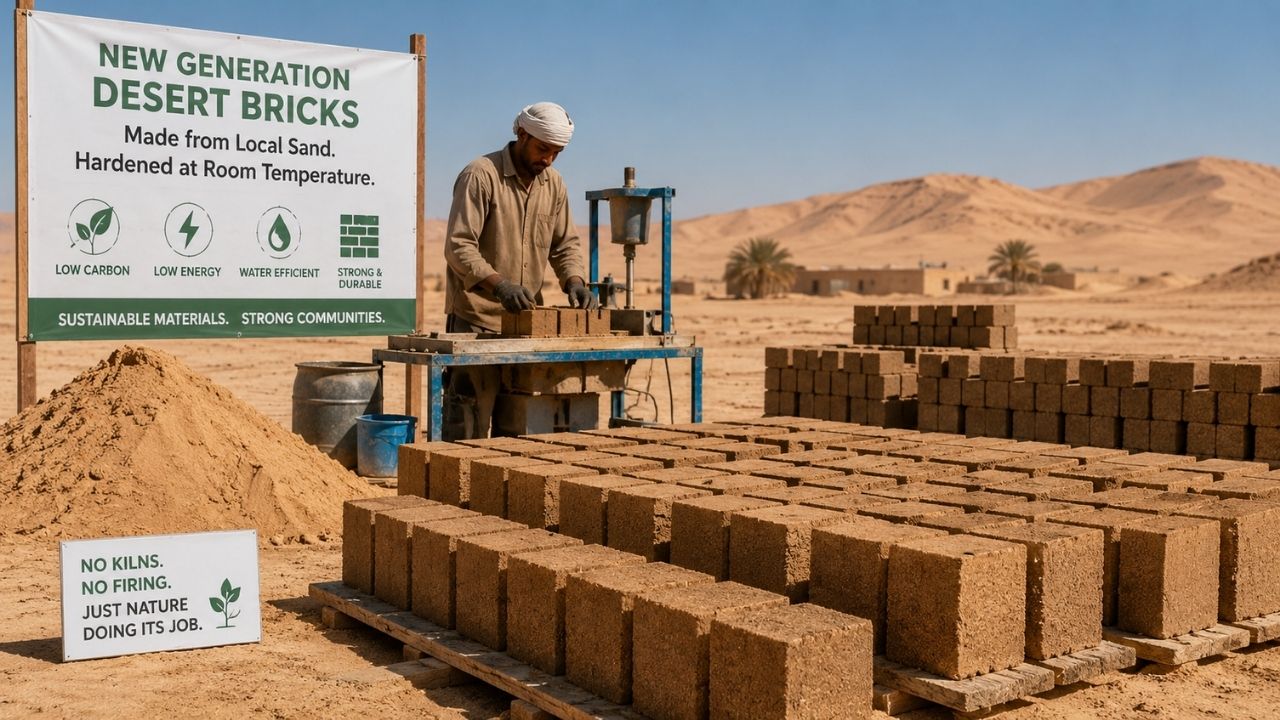
One of the central points of the research is that the bricks were cured at room temperature. This means that the tested process did not require an oven or thermal curing, a step that could increase energy consumption and raise manufacturing costs.
This detail makes the technology more interesting for arid regions. If industrial production is confirmed in the future, desert sand could be used near its origin, reducing transportation, utilizing local materials, and decreasing part of the energy linked to conventional brick manufacturing.
Portland Cement Targeted Due to Emissions
Portland cement remains one of the most used materials in the world because it combines strength, durability, and wide availability. The problem is that its production has a high climate impact. According to the University of Sharjah’s statement, it is associated with up to 10% of global carbon dioxide emissions.
The research does not claim that the new brick will replace cement in all constructions. What the study indicates is an alternative route to reduce dependence on Portland cement in masonry units, especially in places where desert sand is abundant and reusable industrial materials are available.
Resistance to Sulfates Caught Researchers’ Attention
The bricks underwent durability tests, including water absorption, wetting and drying cycles, efflorescence, and sulfate exposure. According to the researchers, the performance met the ASTM standards cited in the study, used as an international reference for material quality and safety.
Sulfate resistance is important because this type of chemical attack can damage construction materials in coastal, marine areas, or with soils and groundwater rich in this compound. In the reported tests, the desert sand bricks maintained integrity and, in some cases, outperformed cement-based bricks.
Lower water absorption reinforces the promise of durability
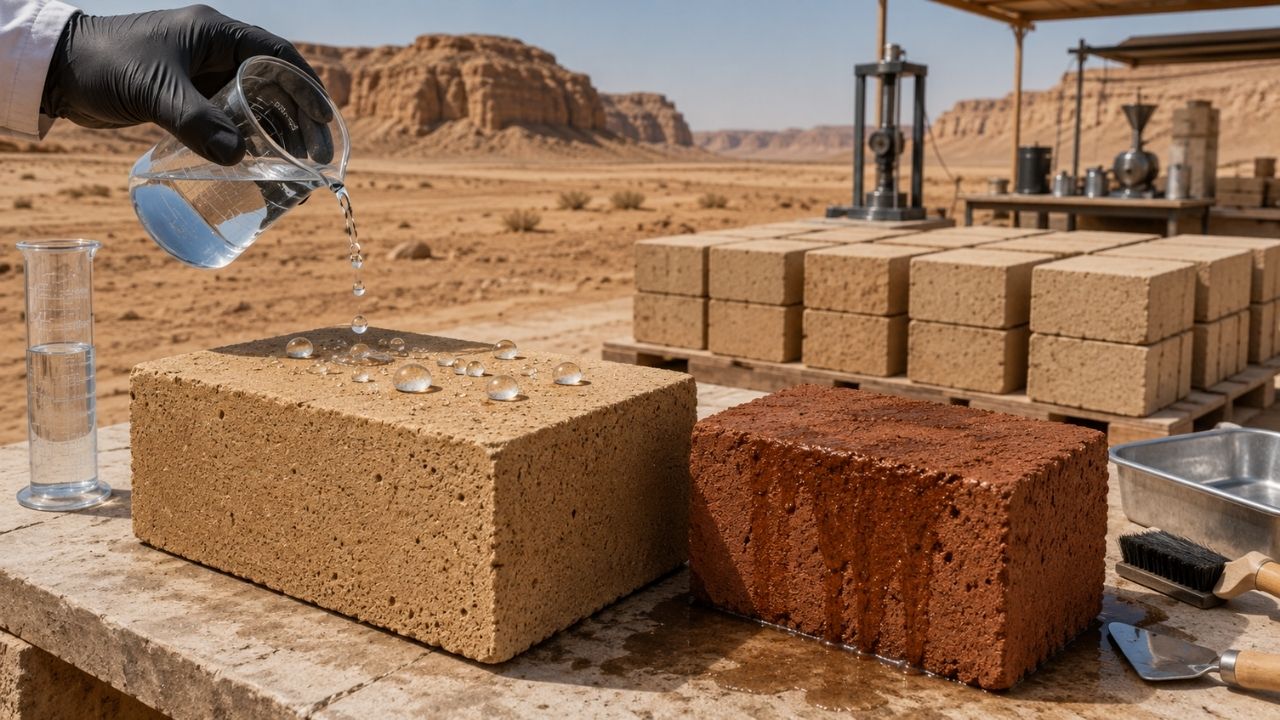
Another point observed by the researchers was the lower water absorption. This indicator is relevant because excessive water ingress can compromise the durability of masonry materials over time, especially in aggressive environments.
According to the team, the eco-friendly bricks demonstrated superior mechanical performance to conventional cement-based bricks in some of the tests. This result reinforces the hypothesis that desert sand can cease to be seen only as a problematic material and become part of more resistant technical solutions.
Slag and industrial ashes change the logic of waste
The use of slag and industrial ashes expands the environmental interest of the research. These by-products, when reused in construction materials, can reduce waste and decrease the pressure for conventional raw materials.
In practice, the proposal creates a combination between local abundance and industrial reuse. Desert sand enters as a regional resource, while industrial by-products help form the necessary bond to transform the mixture into brick. This logic directly aligns with the search for materials with a lower carbon footprint.
Industrial production is still the major obstacle
Despite the promising results, the technology is still in the experimental stage. The study shows feasibility in the laboratory, but real adoption depends on tests in larger units, pilot production, quality standardization, and cost analysis.
The researchers also plan to better quantify the environmental benefits and assess the manufacturing logistics. Industrial production will be the decisive test to know if the desert sand brick can compete with alternatives already established in the construction market.
Construction in Arid Regions May Gain a New Alternative
For countries with large desert areas, the possibility of using local raw materials is strategic. Construction in arid regions may depend on material transportation, high energy consumption, and more expensive supply chains, making any locally viable alternative more relevant.
If the research advances to a commercial scale, desert sand could become part of a new generation of construction materials. Even so, the path requires caution, because laboratory strength, industrial cost, and application in real construction need to converge before any widespread use.
Strong Promise, but Still Far from Common Construction
The transformation of desert sand into an ecological brick shows how engineering can reevaluate materials previously considered of little use. The study from the University of Sharjah combines local sand, slag, industrial ashes, and curing at room temperature to seek construction less dependent on Portland cement.
The advancement draws attention because it combines sustainability, reuse, and adaptation to arid regions. But the main question remains open: will this technology be able to leave the laboratory and compete with conventional bricks in price, scale, and technical trust? Do you believe that desert sand can become a common material in the constructions of the future, or does it still seem like a distant bet? Share your opinion.