Portuguese
  Spanish


The Taklamakan Desert was surrounded by China with a green belt of 3,000 kilometers after 46 years of planting. The project attempts to contain desertification and sandstorms in Xinjiang, but Reuters pointed out criticisms about low tree survival, drought, and limited effectiveness against dust in Beijing as well.
The Taklamakan Desert, the largest in China, was surrounded by a green belt of about 3,000 kilometers after a campaign started in 1978. The conclusion was reported by Chinese state media and reported by Reuters on November 29, 2024.
The environmental work is part of the country’s efforts to contain desertification and reduce sandstorms that hit Chinese regions during spring. Even so, the megaproject still faces doubts about tree survival, drought, and real effectiveness against the dust that reaches large urban centers.
China completed green belt after 46 years
The green belt around the Taklamakan was completed in the autonomous region of Xinjiang, in northwest China. According to the People’s Daily, a newspaper linked to the Chinese Communist Party, the last 100 meters of trees were planted on the southern edge of the desert.
-
Spain Launches World’s Largest Floating Dry Dock: 56-Meter Giant Produces Massive Concrete Structures in A Coruña Using Technology Proven in Brazil

-
AI-powered toys that talk, recognize faces, and collect data face scrutiny from Brazilian government over children’s privacy concerns

-
4,000-Year-Old Child’s Skull Unveils Ancient Burial in 7,500-Year-Old Norwegian Rock Shelter, Impressing Archaeologists

-
Norway Defeats Brazil in World Cup but Invests Billions to Preserve the Amazon, Strengthens Amazon Fund, and Joins Brazil in Leading Global Effort Against Tropical Deforestation




The completion marks a symbolic stage of a campaign of almost half a century. The project began in 1978, within the program known as the “Three North Shelter Forest Program,” popularly called the Great Green Wall.
Green belt is about 3,000 kilometers long
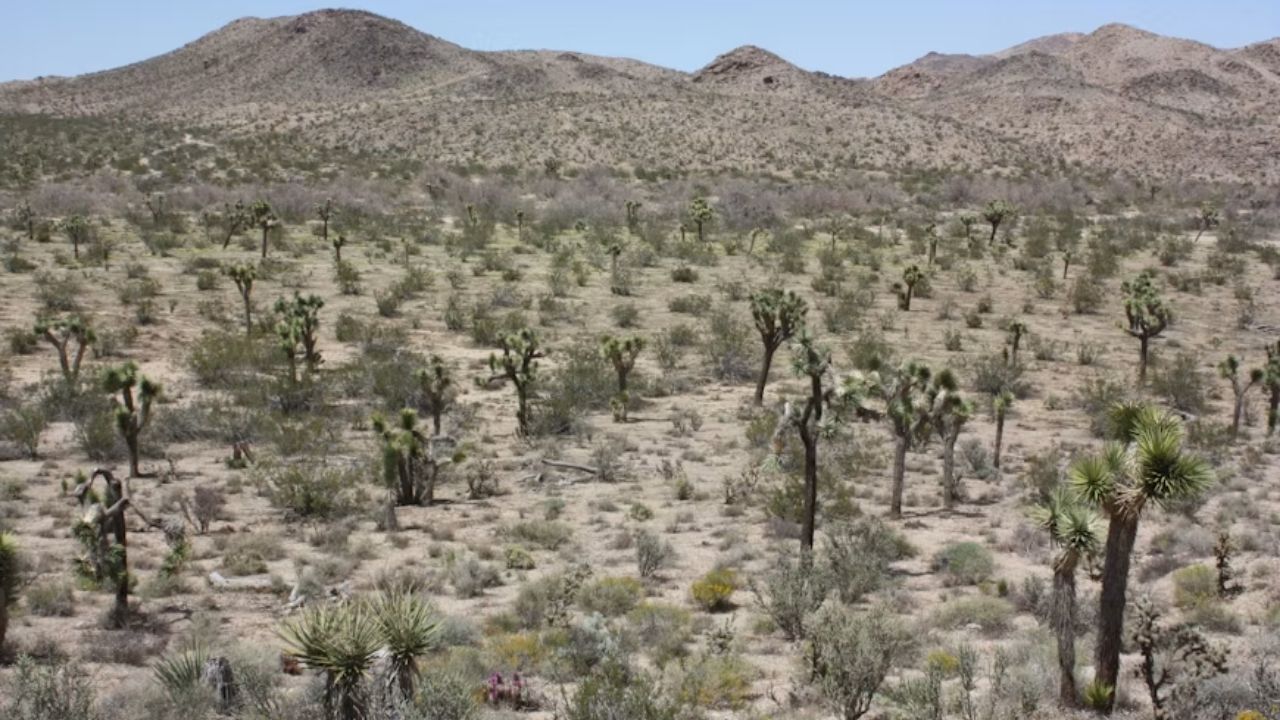
The vegetation barrier is about 3,000 kilometers around the desert of Taklamakan. The proposal is to create a natural protection to reduce the advance of sand and contain the effects of strong winds in one of the most arid areas of the country.
The Taklamakan is one of the most well-known desert regions in Central Asia. Therefore, surrounding it with vegetation has practical and symbolic value for China, which has been trying for decades to curb the expansion of degraded areas in the north and northwest of the territory.
Project is part of the Chinese Great Green Wall
The Chinese Great Green Wall is not a concrete construction. It is a broad program of planting, restoration, and vegetation protection created to tackle desertification, erosion, and sandstorms.
According to Reuters, more than 30 million hectares of trees have been planted since the beginning of the program. The scale is impressive, but the size of the environmental challenge also remains large.
Forest coverage has increased in the country
The source reports that the planting helped raise China’s total forest coverage to more than 25% by the end of the year prior to the report’s publication. In 1949, this coverage was about 10%.
In Xinjiang, forest coverage also increased. According to data cited by the People’s Daily, it rose from 1% to 5% in the last 40 years. The progress shows results in planted area, but does not eliminate the difficulties of maintaining vegetation in extremely dry regions.
Taklamakan requires resilient species
The project involved decades of testing with different trees and plants. The goal was to identify species capable of withstanding the arid environment, difficult soil, and winds that move large volumes of sand.
This step is essential because planting trees around a desert does not guarantee they will survive. In dry areas, lack of water, salinity, intense heat, and low humidity can compromise the growth of seedlings.
Critics point to low tree survival
Despite the completion of the green belt, critics cited by Reuters claim that tree survival rates have often been low. This is one of the main weaknesses of large reforestation projects in arid areas.
The criticism does not deny the planting effort, but questions its long-term environmental efficiency. If many trees do not survive, the green barrier may lose strength and require permanent maintenance to fulfill its function.
Sandstorms still hit Beijing


Another point raised by critics is that the method has proven limited in reducing sandstorms. These events continue to hit Beijing recurrently, especially during periods of seasonal winds.
This reinforces that the problem is broad. The dust reaching the Chinese capital does not depend solely on a specific area, but on climatic factors, dry soils, atmospheric circulation, and environmental degradation in different regions.
Desertification still affects more than a quarter of the territory
Even with decades of planting, 26.8% of Chinese territory is still classified as desertified, according to official data from the forestry department cited by Reuters. The index represents a slight decrease compared to the 27.2% recorded a decade earlier.
This number shows that China has made some progress, but has not solved the problem. Desertification remains a structural challenge for a country that combines large arid areas, agricultural pressure, and the effects of environmental changes.
Government promises to continue planting vegetation
Zhu Lidong, a forestry official from Xinjiang, stated in a press conference in Beijing that China will continue planting vegetation and trees along the edge of the Taklamakan. The goal is to keep desertification under control.
The statement indicates that the closure of the green belt does not represent the end of the work. In practice, enclosing the desert is one step; keeping the barrier alive and functional is another challenge.
Poplars to be restored with floodwaters
According to Zhu Lidong, poplar groves at the northern edge of the Taklamakan will be restored by diverting floodwaters. The measure seeks to reinforce vegetated areas in a region where water is the most decisive resource.
The plan also foresees new forest networks to protect agricultural lands and orchards at the western edge of the desert. The strategy combines sand containment with the defense of nearby productive areas.
Project mixes environmental ambition and permanent risk
The 3,000-kilometer green belt shows China’s capacity to execute long-term environmental projects. Few countries can maintain campaigns of this size for 46 years, spanning different economic and political phases.
At the same time, the Taklamakan reminds us that nature imposes limits. Without sufficient water, constant maintenance, and suitable species, a green barrier can become vulnerable in the face of drought and advancing sand.
What the green belt can or cannot solve
The green belt can help stabilize edge areas, protect agricultural stretches, and reduce local sand displacement. But it does not work as a sole solution against all of China’s dust storms.
This point is important to avoid exaggerations. The project can be relevant without being definitive. The very persistence of desertification in more than a quarter of China’s territory shows that combating the problem depends on multiple actions.
Megaproject became a symbol of the fight against desertification
The completion of the green belt around the Taklamakan transformed the project into a symbol of China’s attempt to tackle the expansion of arid areas. The visual impact of encircling the country’s largest desert helps explain why the news gained international attention.
But environmental symbols need to be measured by lasting results. The survival of the trees, the real reduction of dust, and the protection of nearby communities will be the main tests for the green belt in the coming years.
China shows scale, but the challenge continues
China took 46 years to complete the green belt around the Taklamakan. The achievement combines planning, large-scale planting, and an attempt to contain one of the country’s biggest environmental challenges.
Even so, the desert has not disappeared, and desertification remains present in a significant part of China’s territory. Do you believe that reforestation megaprojects can halt deserts in dry regions, or does the solution depend more on water, soil management, and changes in land use? Leave your opinion in the comments.