Portuguese
  Spanish


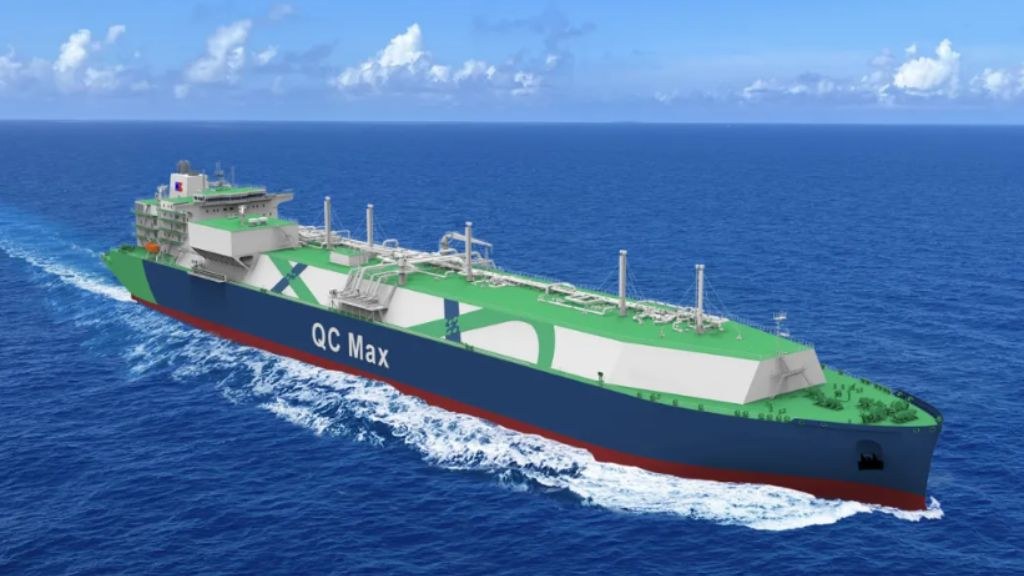
Qatar, owner of the largest natural gas fleet in the world, has ordered the largest class of liquefied gas ship ever designed, a colossus of 344 meters capable of carrying 271 thousand cubic meters of super-cooled fuel, and the first hull of this gigantic series has just begun construction in China.
Few countries bet as much on a single resource as Qatar does on natural gas. Small on the map, but sitting on one of the largest gas fields on the planet, the emirate built its fortune by exporting this fuel worldwide in the form of liquefied natural gas. And to transport ever larger volumes, it ordered a new generation of ships tailor-made for gigantism: the QC-Max class.
The first ship of this series has just officially begun construction at a Chinese shipyard, and the numbers are impressive. Each unit will be 344 meters long, almost three and a half times the size of a football field, and have a capacity for 271 thousand cubic meters of liquefied gas. Qatar’s order is not for one or two ships: it reaches two dozen vessels of this colossal size.
Transporting gas at negative 162 degrees
Moving natural gas across the ocean is an engineering feat that we rarely stop to admire. To fit on the ship, the gas needs to be cooled to about negative 162 degrees, the point at which it becomes liquid and shrinks hundreds of times in volume. At this extreme temperature, the fuel is stored in special tanks, insulated like gigantic thermos bottles, which need to maintain the extreme cold throughout the weeks-long sea crossing.
-
Expert Challenges Alarmism Over El Niño in Brazil: Atmosphere Yet to Respond to Warm Pacific, Advises Farmers Against Selling Cattle or Delaying Planting Before September

-
In a Degraded Atlantic Forest Area, a São Gonçalo Resident Transforms Land into a Living Eco-Museum, Now a Model for Environmental Education

-
World’s First Lithium-Sulfur Battery Factory Launches, Promising to Double Range Without Relying on China
-
AI Data Centers Now Feature Built-In Nuclear Power Plants and Have Ordered Non-Existent Reactors


Any failure in this insulation is a serious problem, so these ships are true high-tech floating vaults. The tanks use special materials and shapes to withstand the cold and the waves’ motion without cracking, and part of the gas that naturally evaporates during the journey is even reused to power the ship itself. It’s a delicate balance between naval engineering, cryogenics, and safety, mastered by very few shipyards in the world.
Qatar’s bet on gigantism
Why build such large ships? For the same logic that drives colossal container ships: economy of scale. The more gas that fits in a single ship, the lower the cost of transporting each cubic meter, and for a country that lives off exporting gigantic volumes, every cent saved on freight becomes a competitive advantage against rivals like the United States and Australia, who also compete in the global gas market.
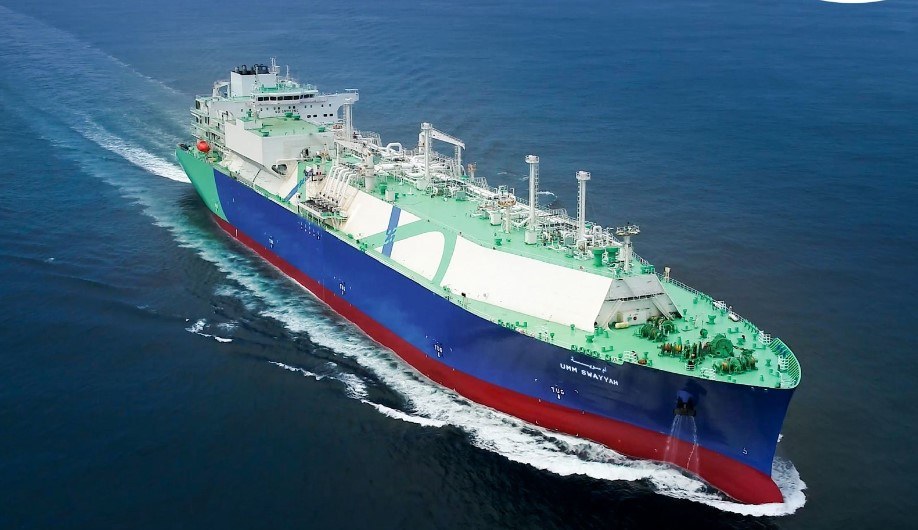
Qatar is experiencing a historic expansion of its gas production, and this new fleet is the missing piece to deliver all this extra volume to buyers. Asia and Europe are the major destinations, especially after the European continent sought new suppliers to reduce dependence on Russian gas. Having more and larger ships means, in practice, more bargaining power and more presence in important markets.
It’s worth sizing up what this fleet means. Qatar shares the top spot in the liquefied gas exporters’ ranking with the United States and Australia, and its strategy has always been to ensure it has enough own ships to deliver the product anywhere in the world, without relying on chartering third-party vessels. Ordering dozens of giant tankers at once is a way to shield this logistics for decades and secure long-term supply contracts.
The size of the ships also changes the routes. A QC-Max is too wide to pass through some canals and narrower ports, which requires planning specific routes and investing in terminals capable of receiving it in purchasing countries. It’s a chain effect: the gigantism of the ship pulls behind it an entire reform of port infrastructure worldwide, from the Gulf to regasification terminals in Europe and Asia.
Why China is building Qatar’s ships
There’s a curious geopolitical detail in the story: Qatar’s ships are being built in China. For decades, South Korea alone dominated the manufacturing of top-tier tankers, but Chinese shipyards invested heavily and began to compete for and win such contracts, showing that the Chinese shipbuilding industry has risen to a level and is now competing for the elite of the most complex ship construction that exists.
This says a lot about how the world’s industrial map is changing. A Gulf country, rich in gas, orders from an Asian power the technology to transport its wealth to Europe. It’s globalization of energy in its purest form, with each link in the chain, from the well to the ship to the consumer, spread across different continents and tied by billion-dollar long-term contracts.
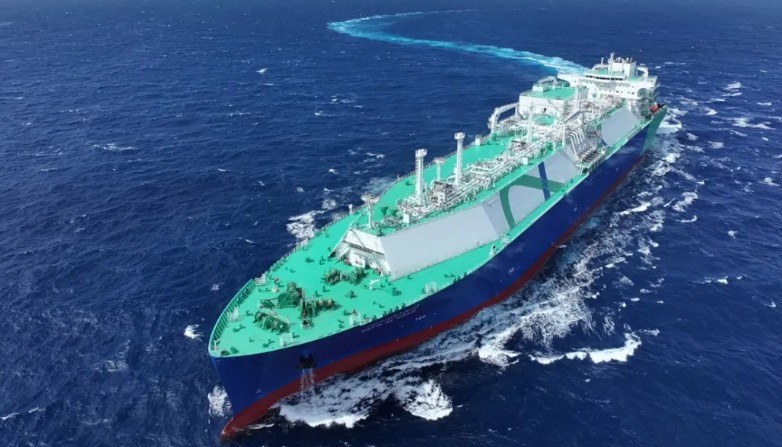
A note on the future is warranted. Natural gas is sold as a transition fuel, cleaner than coal, but it is still fossil and emits carbon, and some question betting so much on a source that the world promises to abandon in the coming decades. Qatar, of course, bets that this transition will be long and that gas will remain in high demand for a long time, and is building the fleet to support this bet.
For now, the picture is of a small country playing big, building the largest gas ships in history to secure its place at the center of the global energy market. Each of these colossi is a heavy chip in this strategy.
Will Qatar succeed by betting so high on a gas that the world promises to leave behind?