Portuguese
  Spanish


Supercomputers have returned to the center of the dispute between China and the United States after LineShine took the world lead without GPUs, surpassed El Capitan, and showed strength, but high consumption revealed that energy efficiency also matters in the technological race.
China returned to the top of supercomputers in June 2026 with LineShine, a machine installed at the National Supercomputing Center in Shenzhen. The system surpassed El Capitan, from the United States, took the lead in the TOP500 ranking, and once again placed the Asian country in first place in high-performance computing.
According to Época Negócios, the achievement involves a direct technological dispute between China and the United States, at a time marked by American restrictions on Chinese access to advanced chips. LineShine drew attention because it reached the top without using GPUs, relying on about 45,000 processors and its own high-speed network.
LineShine puts China back at the top of the world ranking
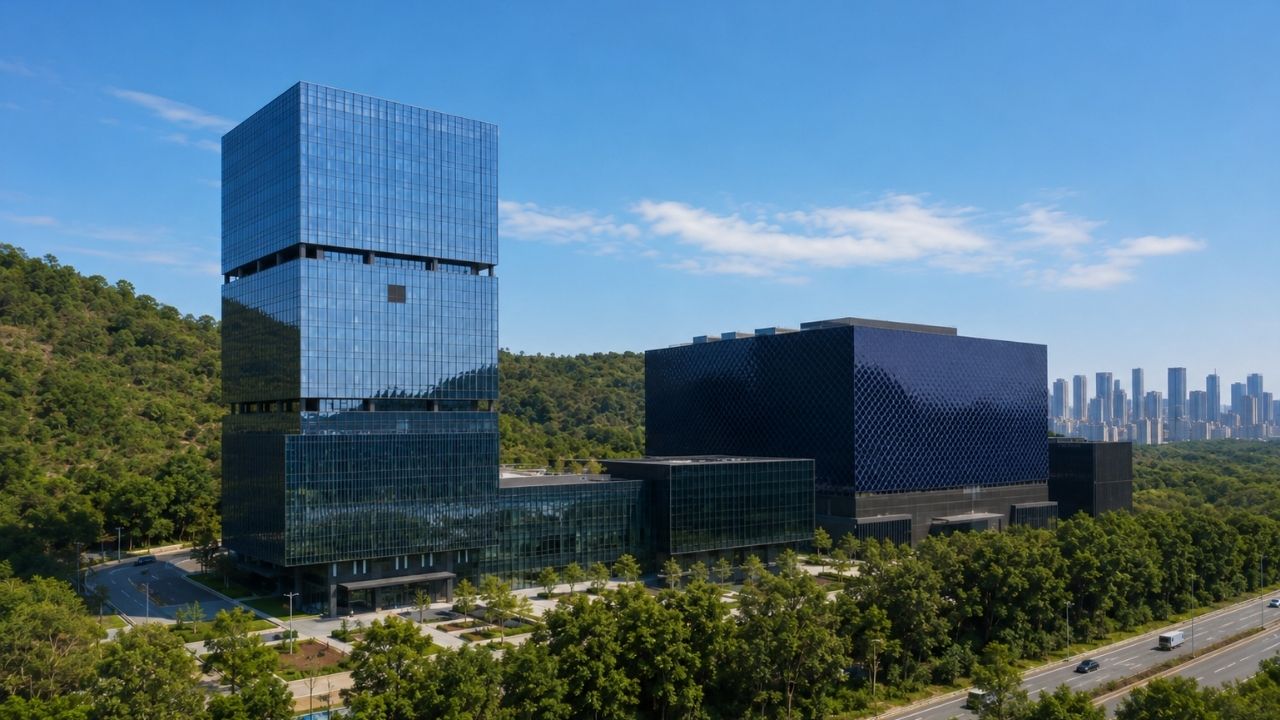
The LineShine has taken the first position among the world’s fastest supercomputers by surpassing El Capitan, an American system that had been treated as a global benchmark in performance. The Chinese machine reached the mark of 2.198 exaflops in the HPL test, becoming the first to exceed the threshold of 2 sustained exaflops.
-
Injured Amazon River Dolphin Rescued by Local Community and Real-Life “Aquaman” in Brazil’s Tocantins River

-
Spanish Startup Develops Europe’s Densest Solid-State Battery at 402 Wh/kg

-
Telescope Launched 80 Billion km from Earth Could Use the Sun as a Giant Lens to Magnify Exoplanets, Potentially Revealing Continents, Oceans, and Signs of Life
-
Australian Researcher Turns Discarded Coffee Grounds into Eco-Friendly Bricks with 80% Less Pollution and Double the Strength Required by Law




This result has both technical and symbolic weight. It is not just about a faster machine, but a demonstration of strength in an area considered strategic for science, industry, defense, artificial intelligence, and complex simulations, sectors where processing capacity can mean a real competitive advantage.
The victory draws attention for the chosen path
The most surprising aspect of LineShine is the fact that it does not use GPUs, components that have become fundamental in many modern supercomputers. Instead, China opted for a CPU-based structure, with approximately 45,000 LX2 processors, each with 304 cores operating at 1.55 GHz.
This architecture demonstrates a technical response to a scenario of international restrictions. By developing a solution without relying on the most contested components on the market, China turned a limitation into a showcase of its own engineering, reinforcing the discourse of technological autonomy amid competition with the United States.
Competition with the United States goes beyond speed
LineShine’s leadership reignites the technological rivalry between China and the United States, especially because the advancement occurs during a period of trade barriers and controls over high-performance chips. Washington attempted to limit Chinese access to advanced components, while Beijing sought to strengthen its own alternatives.
Even with LineShine reaching the top, the United States still maintains a strong presence in the ranking, with machines among the top positions. The difference is that China has returned to occupy the most prestigious position, something that hasn’t happened since 2018, and this changes the political weight of the competition.
Unprecedented power came with high consumption
Although LineShine’s performance has impressed, energy consumption has become a delicate point. The machine requires about 42.2 megawatts, a number well above the 29.7 megawatts attributed to El Capitan. This means that the Chinese system is faster but also less energy efficient.
This detail prevents a purely triumphalist reading. In supercomputers, raw power is not the only relevant criterion, as operational cost, cooling, electrical infrastructure, and sustainability increasingly factor into the calculations of governments, research centers, and companies that rely on this type of technology.
Why supercomputers matter beyond the rankings
Supercomputers are used to solve problems that ordinary computers cannot process in a viable time. They can work on climate simulations, new material research, energy studies, natural disaster modeling, biotechnology, digital security, and the development of advanced artificial intelligence systems.
Therefore, leadership in the TOP500 ranking goes beyond national pride. Those who dominate high-performance computing gain the ability to accelerate research, test extreme scenarios, and anticipate solutions in critical areas, transforming these machines into instruments of scientific, economic, and geopolitical influence.
LineShine shows strength, but also exposes a challenge
The LineShine proves that China has managed to regain the global leadership in supercomputers with a technical route different from the most common one. Without GPUs, with its own processors and an internal network called LingQi, the system managed to surpass El Capitan by about 20% and achieve an unprecedented performance mark.
At the same time, the consumption of 42.2 megawatts reveals the dilemma of the new technological race. The next generation of supercomputers will not be judged only by speed, but by the ability to deliver computational power with efficiency, autonomy, and lower energy cost, especially in a world increasingly pressured by energy.
The Chinese milestone opens a new phase of the computational race
China’s return to the top of the supercomputers shows that the global technology race does not depend solely on who has access to the most coveted chips. It also depends on strategy, scale, proprietary architecture, and the ability to overcome obstacles imposed by competing markets and governments.
The LineShine, therefore, does not end the race between China and the United States. It opens a new stage, in which performance, energy efficiency, and technological independence go hand in hand. Do you think this Chinese victory changes the balance of global technology or is it just a temporary stage in this dispute? Leave your opinion in the comments.