








The French shipping giant CMA CGM has launched the world’s largest container ship, a colossus capable of carrying more than 24,000 containers at once, powered by liquefied natural gas to pollute less than the heavy oil monsters, and has already set sail from Shanghai on its maiden voyage to Europe.
It’s hard to imagine the size of the thing. The CMA CGM Notre Dame has a capacity for 24,212 standard containers, those six-meter boxes you see stacked in port yards and behind trucks. Lined up, these containers would form a line of hundreds of kilometers. All of this fits into a single ship that has just taken the title of the largest container ship in operation on the planet, under the French flag.
The ship began its maiden voyage departing from Shanghai, China, and is expected to arrive in Europe at the beginning of July, with an official ceremony scheduled for the port of Le Havre, France. Between Asia and the Old Continent, it will cross half the world loaded, connecting Chinese factories to European shelves in a single journey of a freighter that is, itself, a floating city of steel.
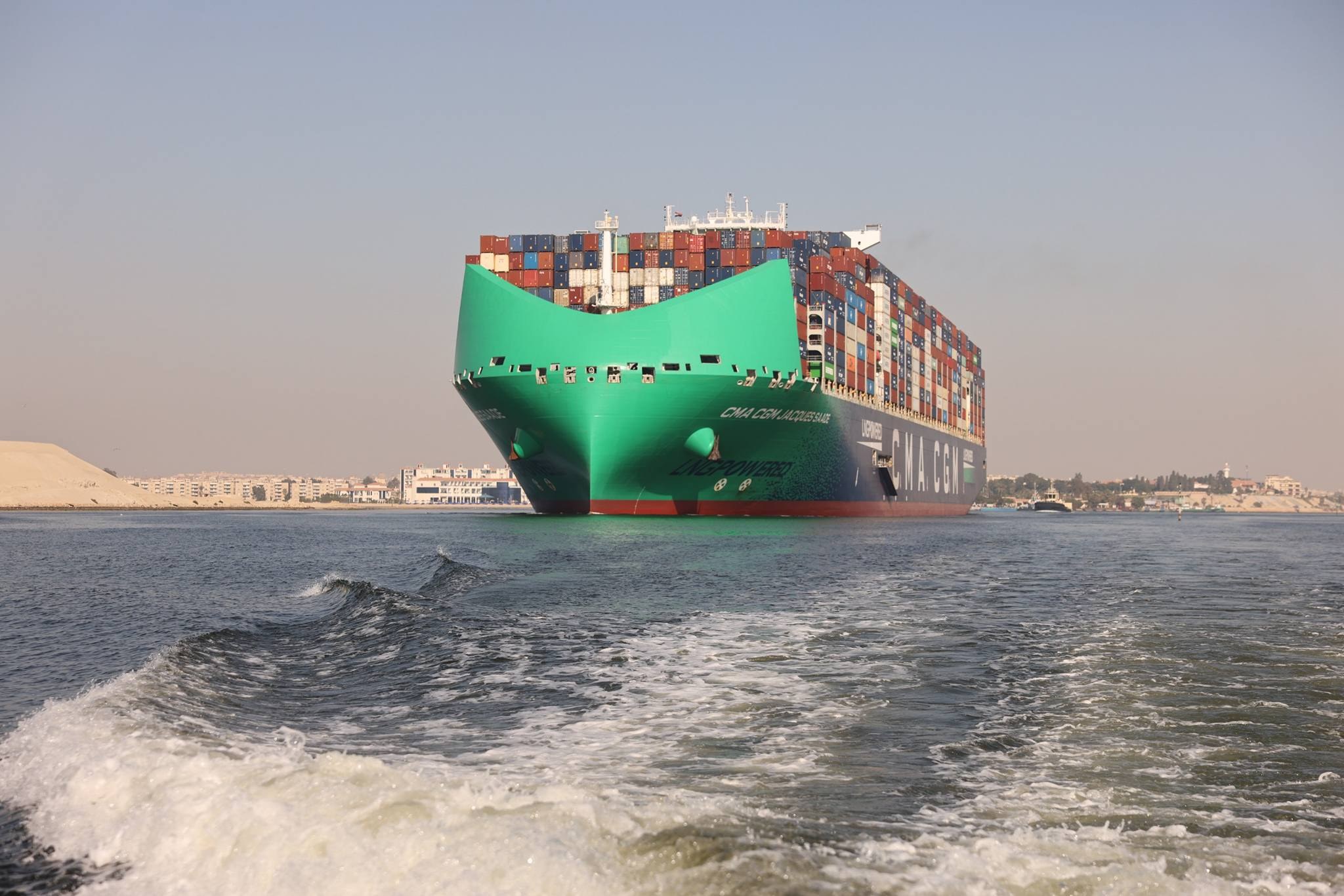
A floating city of steel
The dimensions of such a ship are almost unbelievable. It exceeds 400 meters in length, more than four football fields in a row, and is so wide that it barely fits in the locks of the world’s largest canals. To maneuver such a structure in port, a team of tugboats and pilots is needed, and each loading and unloading operation moves thousands of containers in a logistic ballet timed to the minute.
-
NASA Explores How Microgravity and Sensors Alter Soccer Ball Spin in Space

-
Qatar Commissions World’s Largest Gas Ship, a 344-Meter Giant Now Under Construction

-
Expert Challenges Alarmism Over El Niño in Brazil: Atmosphere Yet to Respond to Warm Pacific, Advises Farmers Against Selling Cattle or Delaying Planting Before September
-
In a Degraded Atlantic Forest Area, a São Gonçalo Resident Transforms Land into a Living Eco-Museum, Now a Model for Environmental Education



Manning this giant, on the other hand, surprisingly requires few people: a few dozen people command the entire ship, such is the automation on board. It is the economy of scale taken to the extreme, the same logic that makes global trade work: the larger the ship, the lower the cost of transporting each box, and it was this math that pushed shipowners to build increasingly colossal vessels.
Why natural gas came into play
The detail that sets the Notre Dame apart is not just its size, but what powers the ship. Instead of the traditional heavy fuel oil, dirty and cheap, which has historically fueled global shipping, it uses liquefied natural gas. The switch significantly reduces the emission of pollutants such as sulfur and particulate matter, as well as cutting some carbon dioxide, in a sector that is one of the great invisible villains of global pollution.
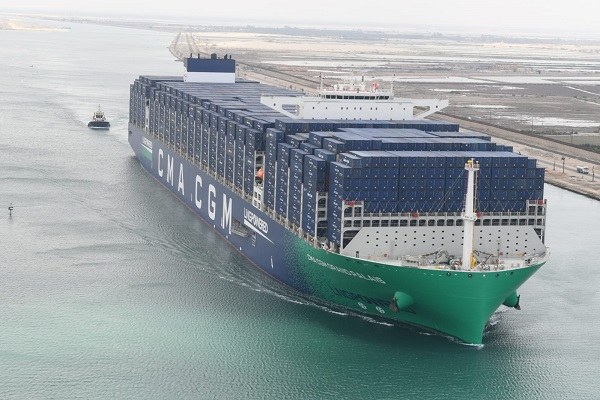
Maritime transport carries about 90% of everything the world trades and, if it were a country, it would be among the largest carbon emitters on the planet. Therefore, each giant ship that switches from heavy oil to gas is a step, albeit partial, towards cleaner shipping. LNG is not the final solution, some point out that it still emits methane, but it is the bridge the industry has found while truly clean fuels do not mature.
There is a physical limit looming over this escalation, and it has a name: ports. A 24,000-container ship is only useful if there is a dock capable of receiving it, with sufficient depth, cranes tall enough, and a yard to handle the mountain of cargo it unloads at once. Therefore, few ports in the world can operate these giants, and each new record-holder pressures entire terminals to upgrade to avoid being left out of the major routes.
For Brazil, which dreams of receiving increasingly larger ships in its ports, this race is a reminder. It is useless to produce and export record volumes if the ship that would come to collect the cargo does not fit at the dock due to lack of dredging or infrastructure. The scale of ships has become, in the end, another chapter of the same infrastructure story that separates those who only produce from those who truly dominate global trade.
The race of the giants
The Notre Dame is the newest record holder, but it will hardly hold the title for long. The race for the largest ship is constant: as soon as one shipowner launches their colossus, another is already designing a bigger one, and Asian shipyards are working on projects that promise to break the current mark. It is a contest of prestige and efficiency, where each new giant redefines what is considered the limit of the possible in naval engineering.
For the consumer, this entire scale has a concrete effect that we don’t even notice: it is part of the reason why products from the other side of the world arrive so cheaply. When a single ship carries 24,000 containers, the freight cost diluted in each product becomes almost nothing. The price of the sneakers, the cell phone, and the toy you buy carries, hidden, the economy of these sea monsters.
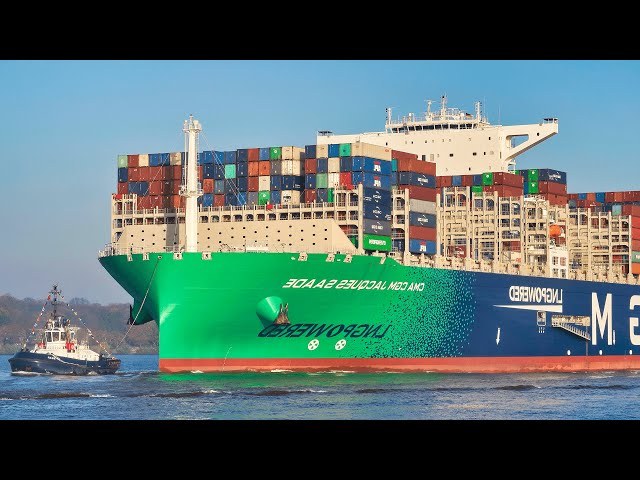
A pinch of caution is warranted with gigantism. Ships like these only work in ports prepared to receive them, with deep drafts and huge cranes, and any accident with one of them, as has been seen in narrow channels, can halt global trade for days. Concentrating so much cargo in a single vessel is efficient, but it also creates unique points of failure that frighten global logistics.
Still, it’s impossible not to be impressed. Seeing a ship the size of a skyscraper lying down cross the ocean carrying the equivalent of an entire city of goods is one of those portraits of the modern world that we find hard to believe is real.
How far will the race for giant ships go before the scale becomes too great a risk?


