





 Portuguese
  English
  Spanish
  4 min of reading
  29 comments


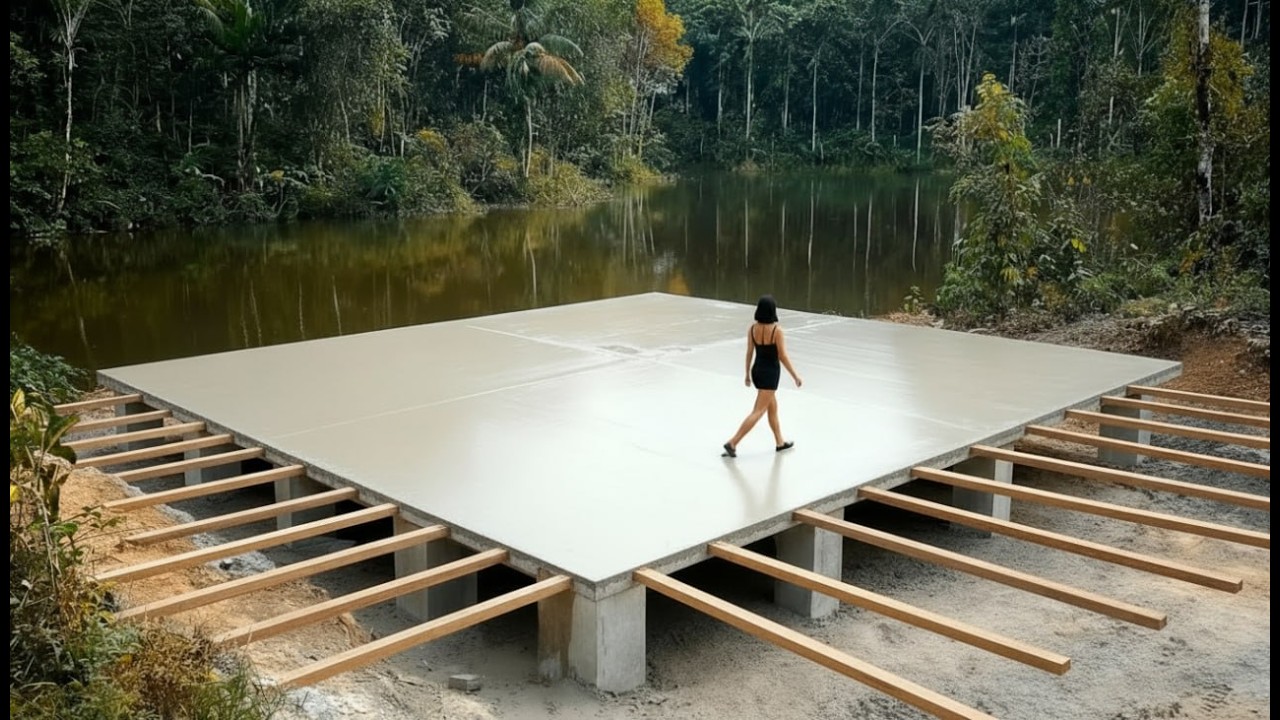


Woman Builds Her Own House By A Lake In The Jungle, Lives Isolated From Civilization And Completes The Work In 120 Days Without Urban Support Or Conventional Infrastructure.
In a scenario where there are no paved roads, electrical networks, neighbors, or any type of modern convenience, a woman decided to turn isolation into a life project. By the edge of a lake surrounded by dense vegetation, she single-handedly built a complete house in just 120 days, using manual labor, basic materials, and a level of dedication rarely seen even in professional works. The account of this journey, shared in a video on the profile @freefootsteps877, shows that the true beauty of a construction does not arise from comfort, but from continuous effort, patience, and decisions made one by one, without shortcuts.
From day one, the location posed clear challenges. The calm lake, surrounded by green hills and tall trees, was not just a landscape: it defined the pace of the work, the access to materials, and even the construction techniques adopted. Before any walls were built, there was observation of the terrain, manual markings, and careful planning so that the house would integrate into the environment, without relying on ready-made solutions.
Site Selection And Construction In A Totally Isolated Environment
The decision to build by a lake in the jungle required total adaptation to local reality. Without roads, without electricity, and without regular supply of materials, everything had to be planned to function autonomously. The isolation was not a circumstantial obstacle, but a permanent condition of the work.
-
Brazil delivers a giant dam worth R$ 365.7 million in Rio Grande do Sul, capable of forming an artificial lake with 138 million m³ of water, equivalent to 55,300 Olympic swimming pools and an area larger than 2,500 football fields.

-
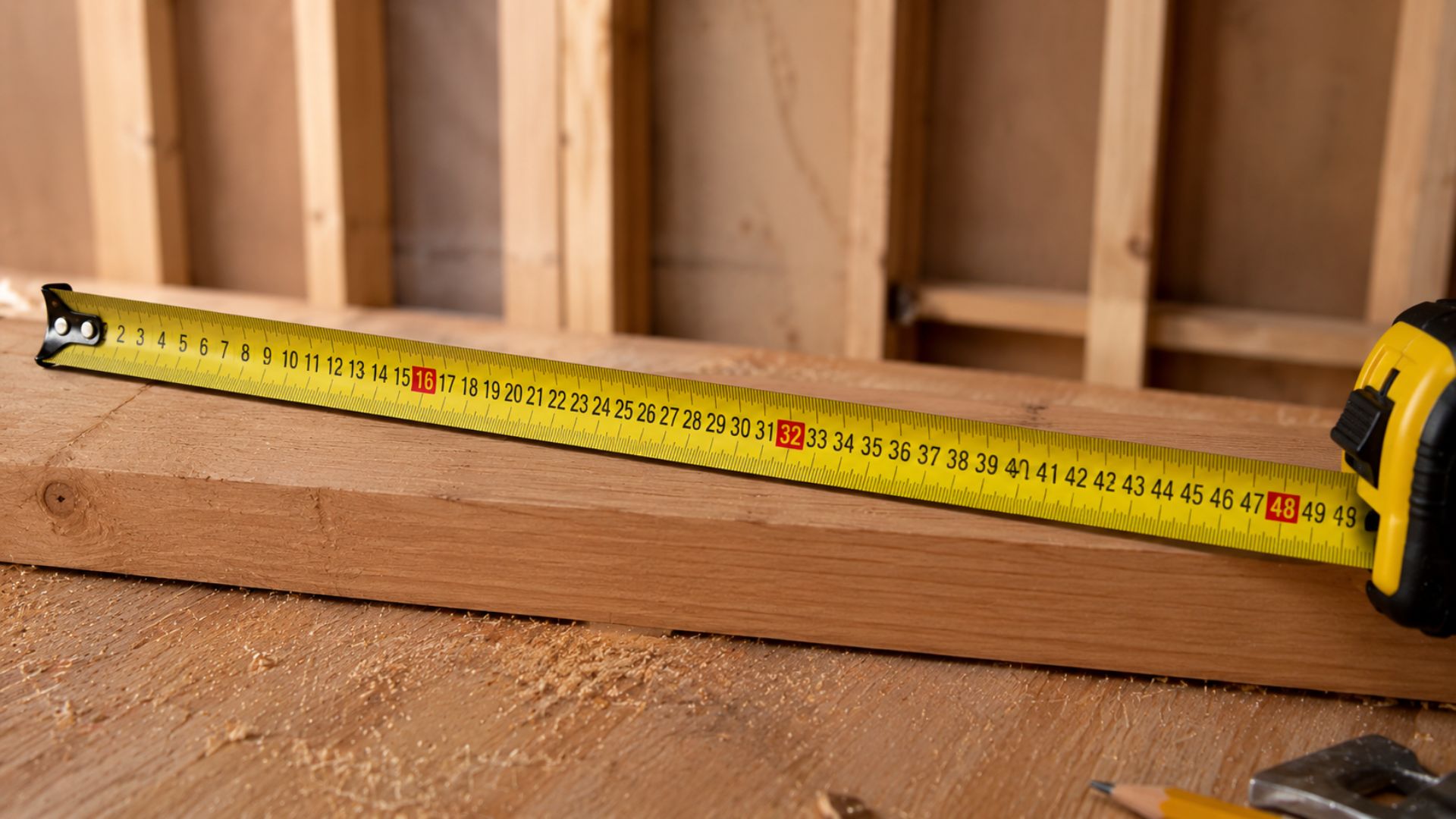
Most people use a tape measure their whole lives without ever understanding why some numbers are painted red; the explanation lies in a 16-inch spacing that is invaluable for those who work with walls and wood.

-
How much does it cost to build a 60 m² house? A real construction project in Minas Gerais revealed a cost of R$ 156,570, which was below the CUB estimate and showed how a compact project with 2 bedrooms can be affordable.

-
Dissatisfied with seeing the construction industry rely on increasingly expensive and polluting materials, students from Paraná used orange peel in mortar, caught attention in an innovation challenge, and can now turn the project into a product with tests at UTFPR.



The images show the builder walking around, assessing the relief, the incidence of sunlight, and the proximity to water. The house was not positioned by chance: the choice of the spot took into account drainage, soil stability, and protection against excessive moisture—critical factors in flood-prone areas surrounded by dense vegetation.
Raised Foundation And Structure Designed To Coexist With The Lake
The first major visible stage of the project was the foundation. Instead of supporting the house directly on the ground, the structure was elevated on pillars, creating a solid base above the water level. This technical decision reduces risks of infiltration, protects the building during intense rainfall, and increases the construction’s durability.

The execution of the base reveals care with load distribution and structural reinforcements. The rebar was positioned to absorb tensions and avoid future deformations, something essential in a location where external maintenance is limited. Even without large-scale industrial concrete or machinery, the result is a robust, functional foundation that aligns with the environment.
Wall Raising With Manual Labor And Precise Control
With the base ready, the walls began to rise slowly, row by row. Bricks, mortar, and simple tools dominated the scene. Each layer was set with precision, maintaining alignment and plumb even without professional measuring equipment.

The images show the constant use of reference lines and manual adjustments, ensuring that the structure grew uniformly. There is no uncontrolled haste. The progress is constant, disciplined, almost ritualistic. Each wall bears the mark of individual work, without outsourcing or division of tasks.

Use Of Simple Materials And Accessible Techniques
The entire construction relies on basic materials and accessible techniques. Bricks, stone, concrete, wood, and water form the core of the project. Nothing is prefabricated. Nothing arrives ready at the construction site. Everything is molded there, step by step.
This method reinforces the idea that the house is not just a shelter, but the direct result of practical learning. Throughout the work, the builder not only performs tasks but masters each material, understanding its behavior, limits, and possibilities in a natural environment.
Sloped Roof And Protection Against Moisture And Climate
The roof emerges as one of the most visual stages of the project. With a steep slope, it was designed to facilitate the drainage of rainwater, something essential in humid regions surrounded by dense vegetation. The support structure uses wood and natural elements, integrating with the rest of the construction.

The final covering creates an efficient layer of thermal and water protection, ensuring internal comfort even in an environment subject to climatic variations. The house gains its own identity, with a simple, functional appearance clearly inspired by vernacular techniques.
A House Built As An Extension Of One’s Own Work
Over the 120 days, each surface of the house passed through the hands of its builder. There are no “neutral” or impersonal parts. Every corner reveals a decision, a correction, a learning experience. The work is not only a technical process, but a visible personal transformation.
What is seen is not just the birth of a house, but the consolidation of a relationship between person, environment, and work. The construction ceases to be an end in itself and comes to represent a physical legacy of autonomy and intention.
Self-Sufficiency, Silence And A New Concept Of Housing

When the house finally stands by the lake, the scenery takes on a different meaning. The isolation ceases to be an absence and becomes a choice. Without neighbors, without urban noise, and without dependence on conventional infrastructure, the dwelling becomes a functional and symbolic refuge.

The project documented by @freefootsteps877 shows that living outside the urban standard does not mean precariousness, but a redefinition of priorities. Instead of speed and convenience, time, total control over the process, and a direct connection with the inhabited space come to the forefront.






Parabéns moça senhor Jesus Cristo te abençoe com muita saúde, sabedoria e proteção divina 🙌🏼🙏🏼
A base será que alinha com o peso da casa com as vigas e colunas, a parte de cima da casa não tem vigas nem trelicas com caixarias pra aguentar o peso de uma laje de cimento ela fez um tijolo duplo estranho. Melhor contratar um engenheiro pra fazer uma planta dessas ainda mais quando molha a base sei lá
No meio da selva? Sem energia elétrica? Não é a mesma visão da leitura com o vídeo.