






 Portuguese
  Spanish


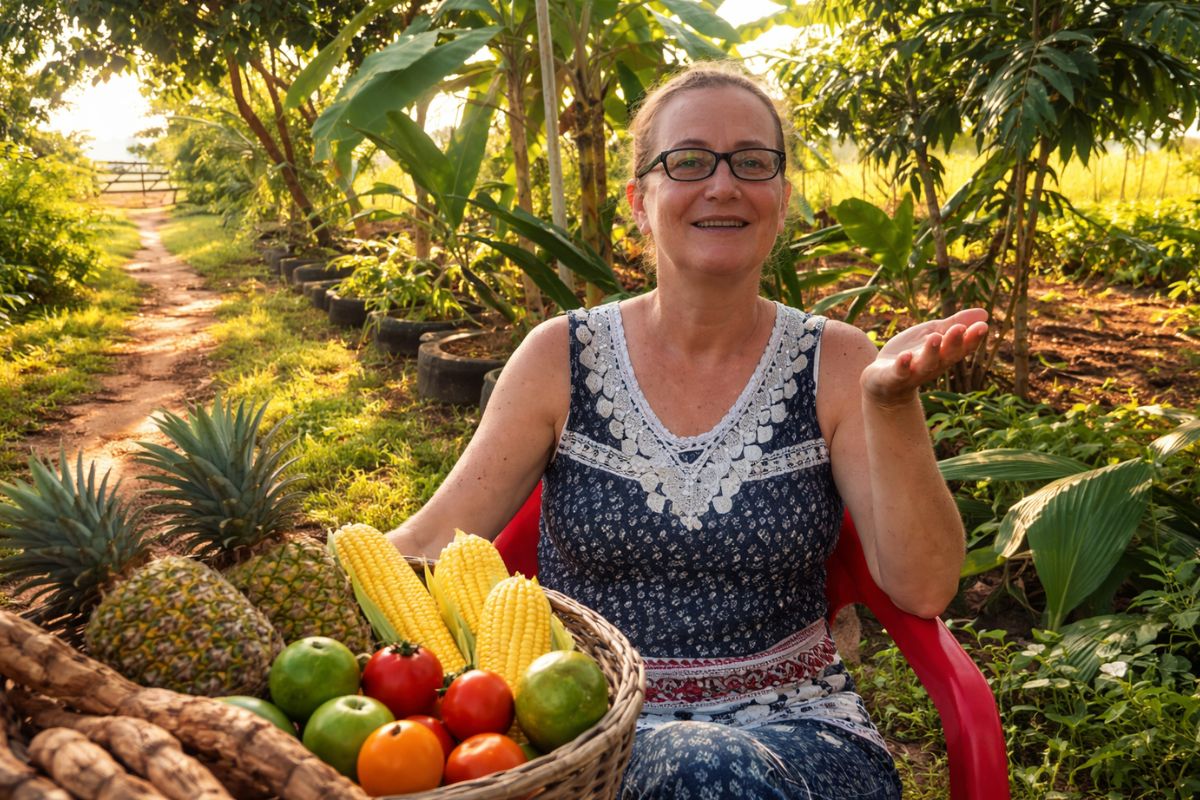


From Site Considered Weak and “Without Future” to Living Example of Abundance: A Producer’s Agroforestry Shows How Leaves, Patience, and Organic Management Can Restore Tired Soils and Generate Food All Year Round.
When she arrived at the site, the producer heard from neighbors that the land “didn’t even produce pineapple.” She tried the conventional route, bought chemical fertilizer, urea, and many seedlings, but almost everything died. The frustration became a turning point. After taking a course and diving into hands-on practice with the land, she decided to change everything and invest in agroforestry. Today, on the same soil that was once sandy and exhausted, she harvests fruits, corn, beans, cassava, vegetables, and sees the site transform into a mosaic of green islands and black soil.
With a hoe, wheelbarrow, shredded leaves, and a lot of persistence, she built practically single-handedly an expanding agroforestry, which became a reference for those who think weak soil is doomed. From the sand that “produced nothing” arose a living, diverse, and fertile agricultural system, sustained by organic matter, intelligent management, and love for the land.
From Land “That Doesn’t Produce Even Pineapple” to the Foundation of an Agroforestry

At first, the story seemed to be heading towards failure. Upon arriving at the site, she did what many would do. She bought fertilizer, urea, various seedlings, and invested in irrigation. Even so, almost everything died. The soil, an old pasture of the Cerrado, was tired, low in organic matter, with the appearance of beach sand.
-
A Dutchman created a ‘box’ that makes trees grow in the desert almost without water and without irrigation: the invention has already brought seedlings to dozens of countries and achieves up to 90% survival where common planting did not exceed 10%.

-
Abandoned warehouse hid a giant collection of rare computers, with over 2,000 artifacts from the 1930s to the 1980s.

-
Scientists warn that melting ice is triggering an alarming chemical transformation in preserved areas, and the first signs are already concerning researchers worldwide.
-
China placed 198 robotic legs under a 7,600-ton school and made the building walk 62 meters in 18 days, rotating the historic structure as if a concrete structure had gained feet to escape demolition.





People confidently said that the land didn’t produce even pineapple. Instead of giving up, she decided to change her perspective. She took a course, listened to simple guidelines, and returned home ready to experiment.
The turning point was abandoning the attempt to “force” the land with chemical inputs and starting to treat the site as a living organism, the basis for a future agroforestry.
From then on, organic management came into play. She began composting, producing her own seedlings, bringing shredded leaves to the land, and enriching the beds with organic matter. A friend advised her to use even more leaves and vegetable scraps, and the soil began, slowly, to respond.
The Agroforestry is Born: Lines of Trees, Beds, and Islands of Diversity

The first area of the agroforestry was just over 200 square meters. Small, but strategic. In it, she tested what she had learned: making lines of trees and, between the lines, forming deep beds of organic matter.
These beds functioned as a sort of “placenta,” sustaining the young trees with moisture, nutrients, and protection.
Over time, the first fruit trees began to appear. Lemon, papaya, jabuticaba, passion fruit, banana, camu-camu, Sicilian lemon, and other species started to settle there, supported by beds that had previously grown vegetables like green onions, cilantro, kale, and lettuce.
The logic of agroforestry was materializing in practice: while the trees grew, the beds produced food and, at the same time, improved the soil.
She also organized the site into “islands” of planting. In each island, she mixes banana, pineapple, cassava, corn, beans, pumpkin, blackberry, and other species.
The plants become companions: one protects the other from the sun, wind, and drought, creates shade, maintains moisture, and shares nutrients through the organic matter accumulated on the ground.
On another front, “cribs” appeared, small basins where she concentrates branches, leaves, ash, and organic scraps to hold moisture from the rain when dry periods hit hard.
Instead of bare soil, the ground lives covered with straw, leaves, and shredded material, a trademark of a well-managed agroforestry.
From Sand to Black Soil: How Organic Matter Changed Everything

Visually, the change is evident. What once looked like beach sand, light and poor, is now dark soil, full of roots, organic matter, and life.
This transformation did not happen overnight, but was the result of constant work with leaves, straw, and vegetable scraps. She recounts that she even put a truckload of shredded leaves in some areas to form deep beds.
Everything that the city discards becomes input: leaves, ash, rice straw, pruning branches. In agroforestry, organic waste becomes wealth, and the soil ceases to be a problem to become an ally.
The results show in the plants. Banana trees that do not turn yellow during droughts, cassava that finally produces, beans, corn, and vegetables that barely thrived before.
Even during dry periods, under the blanket of organic matter, the soil remains moist. The land that once did not respond now yields abundance.
Agroforestry as a Response to Life and Not Just Production
The change wasn’t just in the landscape. When the couple moved to the site, the family was going through a tough time.
The land was struggling, and so were they. Working with the agroforestry became, at the same time, a source of income, therapy, and purpose.
She started practically alone, with a hoe and wheelbarrow, collecting leaves and building beds. Over time, her husband started to help by bringing ash, straw, and shredded leaves in the truck.
Friends and acquaintances began contributing branches and seedlings. What was once a loss with purchased and lost seedlings became a flow of exchanges: today she receives and donates seedlings, seeds, and knowledge.
The agroforestry also changed their relationship with time. She wakes up early, faces fatigue, but knows that the result will come from consistency, not hurry.
She often compares it to a child. If a child does not receive food, care, and attention, they do not develop. With the land, she says, it’s the same. If the soil does not receive nutrients, coverage, and respect, it suffers.
Now, with a more established system, she harvests more than she can consume. She sells baskets, participates in fairs, and shares food with her children, friends, and the animals on the site.
Chickens, dogs, and other animals benefit from the daily abundance. For her, agroforestry is synonymous with abundance.
Simple Tools, Living Knowledge, and Almost Zero Cost
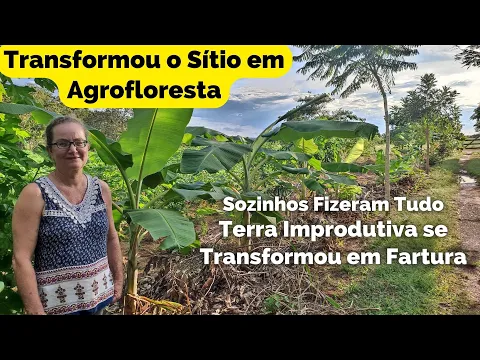

One of the strongest lessons she conveys is that you don’t need a lot of money to start an agroforestry. According to the producer herself, what she uses the most is the hoe and the wheelbarrow. The rest comes from nature and the network of relationships she has built.
At first, buying seedlings and inputs brought losses. With practice, she understood that she could produce seedlings, gain exchanges from friends, take advantage of what the city discards, and transform everything into fertile soil.
Organic matter becomes fertilizer. Leaves become cover. Ash and rice straw become reservoirs of moisture and nutrients.
The conventional agriculture she learned from her parents worked in a time when the land was less degraded. Today, she sees that the first step is to restore the soil. Only then can the same land support her work and the future of her grandchildren.
Agroforestry emerges as a way to produce food, restore the environment, and strengthen community ties, without relying on expensive packages external to the site’s reality.
The Message from Someone Who Transformed Weak Land into Abundant Agroforestry
Looking back, she sees a path full of work but also reward. The site, once seen as a poor area, has become a showcase of everything that is possible when dedication, organic matter, and patience are combined.
Today, she walks through her own agroforestry, harvesting corn, watermelon, peppers, sugarcane, cassava, various fruits, and feels in practice what it means to live in a place where the land responds.
Her speech sums up the philosophy that guides her work: the land produces if you plant and care for it. For her, the greatest proof is simple.
Where it was said that not even pineapple would grow, there are now islands of diversity, shade, branches, flowers, fruits, and food for people and animals.
In this producer’s view, agroforestry is not just a technique; it is a way of relating to the soil, with time, and with life itself, transforming scarcity into abundance day after day.
And you, looking at your reality, do you believe that agroforestry can be a viable path to recover tired soils and produce more food in small areas, or do you still have doubts about taking that first step?





Adoraria fazer isso!