Portuguese
  Spanish



Municipalities Win “Billionaire Forgiveness” of R$ 1.5 Trillion and 30-Year Installments with the Fiscal Sustainability Amendment, While the People Remain Suffocated by Debt
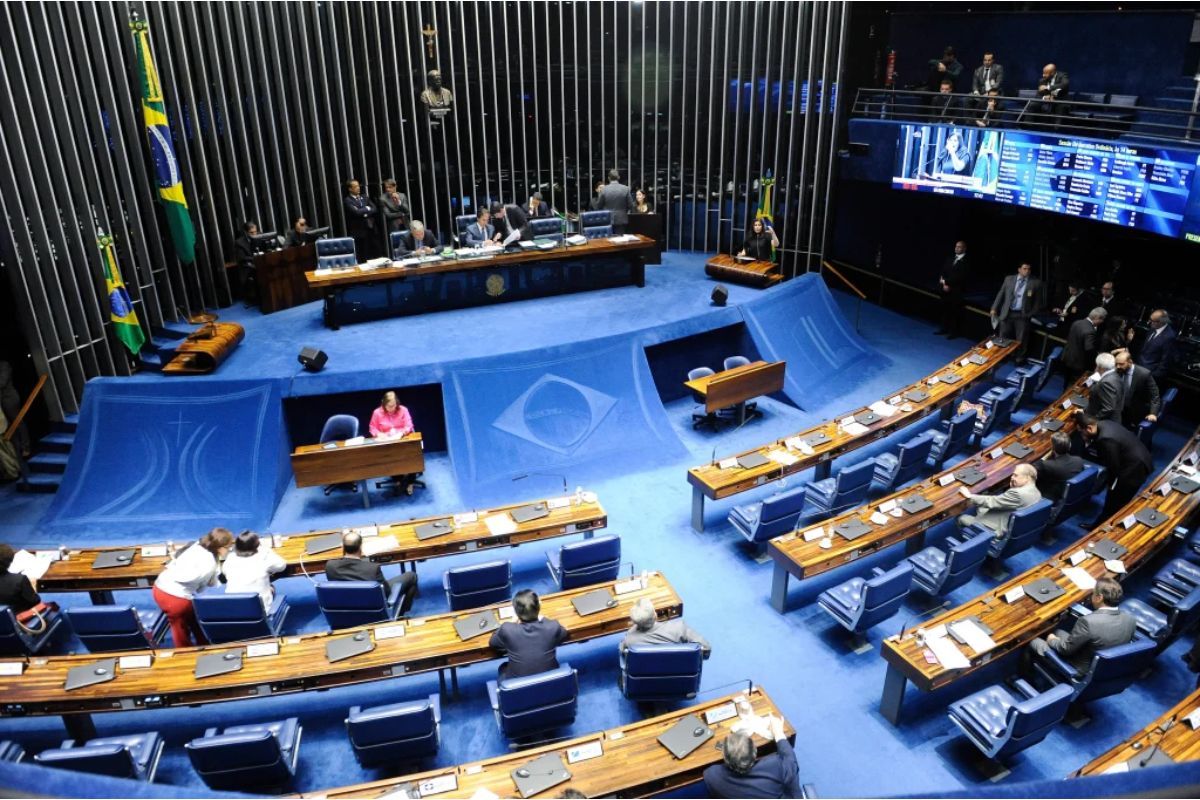
Approved in the second round in the Senate on Tuesday (2), the PEC 66/2023, dubbed the Fiscal Sustainability Amendment, promises to relieve municipal coffers by an impressive R$ 1.5 trillion over the coming decades.
Mayors and managers celebrate what they call a “historic achievement.” But one uncomfortable question remains: why can governments renegotiate debts with 30-year terms and lower interest rates, while the population remains crushed by bills, credit cards, and loans with abusive rates?
The Municipal Refis
The proposal, orchestrated by the National Confederation of Municipalities (CNM), completely changes the way Brazilian cities handle their overdue accounts.
-
Abandoned Building in Brazil to Become Biotechnology Unit with $10 Million Investment, Bridging Science, Industry, and Public Health

-
Company Offering “Stones to Diamonds” Scheme Sells Ruined Italian Homes to Brazilians for 1 Euro, Disappears with Promised Renovations, Leaving Buyers in Debt to Italian Tax Authorities Until 2028 Without Property

-
Plastic Packaging Drives Santa Catarina Industry to 230% Growth, Aiming for R$ 500 Million by 2030 Amid Sector Crisis, with New Gearless Line Expanding in Southern Brazil to Compete in South America

-
Flamengo Star Invests in Brazilian Coastal Luxury Real Estate as Itapema Surpasses Balneário Camboriú in High-End Market Growth


Social security debts and court orders can now be paid in up to 300 months, with a chance of extension to 360 months.
This means that mayors now have conditions that any indebted worker would dream of: payment in 30 years, reduction of interest and fines, along with a lighter indexer.
The heavy Selic is out, and IPCA + up to 4% per year is in.
Meanwhile, millions of Brazilians cannot extend a payment plan beyond 12 installments and face interest rates reaching 400% per year on credit cards. The contrast could not be more cruel.
Court Orders and Detachment: More Flexibility for Mayors
Another central change lies in the payment of court orders, which are now limited to 1% to 5% of the Net Current Revenue of municipalities. In practical terms, it’s as if the government is saying: “pay only when you can, and a little at a time.”
Additionally, the PEC guarantees unprecedented freedom in managing finances: mayors can use up to 50% of tax revenues, fees, and contributions until 2026 and then 30% until 2032, including surpluses from municipal funds.
For the citizen, however, there is no such flexibility: taxes are due every month, with no chance of detachment or leeway. The tax man does not accept eternal installment plans.
Hidden Benefits: Pasep and Forgiveness of Charges
The measure also eliminates the charge of 1% of Pasep on municipal social security funds. It may seem small, but it represents over R$ 62 billion by 2055.
On top of that, there is the forgiveness of fines, interest, and charges on social security debts, resulting in relief that any Brazilian would love to see on their bank statement.
The Social Cost of “Sustainability”
The CNM celebrates an economy of R$ 1.5 trillion, distributed across various fronts:
- R$ 1 trillion just from changing the indexers of debts until 2055;
- R$ 251 billion from the detachment of revenues until 2032;
- R$ 41.4 billion from reductions in interest and fines;
- R$ 88 billion from renegotiation of the RGPS;
- R$ 62.1 billion from exemption from Pasep.
While mayors see “fiscal sustainability,” the average citizen sees inequality: the government takes care of itself and forgets who finances the public machine every month.
The Point That Was Left Out
Curiously, the only point rejected in the text was the obligation for municipalities with their own social security systems (RPPS) to adopt rules similar to those of the Union.
This measure would have brought an additional saving of R$ 9.8 billion per year. Not even that passed.
The History of a Privilege
The PEC was suggested in 2023, gained traction in 2024, and consolidated in 2025 with extensive political mobilization. There were meetings with senators, ministers, and marches in Brasília.
The result has come now: mayors receive a luxury forgiveness, an installment plan that any indebted Brazilian would love to have in hand.
The Question That Won’t Be Silenced
While the Fiscal Sustainability Amendment is celebrated in Brasília as a historic victory, real life remains tough for most of the population.
Those with debts on credit cards, student loans, bank loans, or even overdue taxes do not see any “sustainability plan.”
The feeling is clear: there is a Brazil for public managers and another for the common citizen. For municipalities, forgiveness, installment plans, and lower interest rates. For the people, relentless collection, short deadlines, and abusive interest rates.
The PEC resolves the future of the municipalities. But who resolves the future of the people?