Portuguese
  Spanish



NASA Is Working on Innovative Technology for Electric Planes. The Company Created a Safer Solid-State Battery with Greater Range, Promoting Significant Advances.
The electrification of aviation, that is, the possibility of traveling from one country to another commercially with electric planes, is still something almost impossible to achieve. The main challenge is the absence of durable and safe batteries enough for this type of travel. However, NASA is developing a new solid-state battery component that could change the landscape.
Solid-State Battery Does Not Use Liquid Electrolyte Chemicals
Currently, there are batteries that can be used in planes. However, they only work for some lighter aircraft, which are more similar to drones than electric planes. Additionally, the power supply capacity is still far below what is actually required.
The lithium-ion batteries, which are used in electric cars, also do not meet the safety standards required for use in aviation. The problem here is flammability, the same reason why it is not possible to place items like laptops or phones in your checked baggage when flying.
-
U.S. university performs surgeries with remotely controlled humanoid robots

-
A 12-year-old boy from the municipal network of Canoas won gold in the Brazilian Mathematics Olympiad, earning the school’s first national medal in history and standing out in a competition that brought together more than 18 million students, demonstrating how public education can uncover hidden talents in Brazil.
-
Why did a company that was already earning US$ 1 million decide to completely change its strategy? The answer begins with used bottles, worms, and an unexpected decision.

-
Where it almost never rains, residents hung giant nets in the desert mountains and started to ‘fish’ drinking water from the fog: the nets can collect thousands of liters per day directly from the mist.


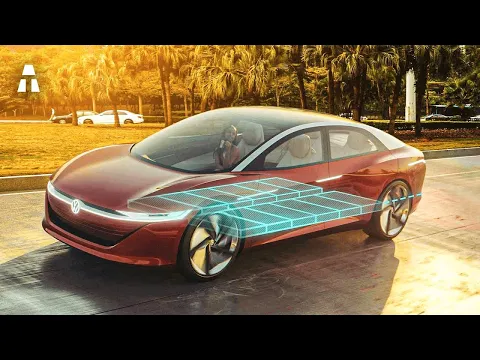

In search of a solution to overcome current obstacles, NASA has been working on a technology that does not utilize liquid electrolyte chemicals for battery production. These substances can undergo a chain reaction that causes them to heat up, react further due to heat, and consequently catch fire.
Thus, NASA is betting on solid-state batteries, according to data from Euronews. They not only deliver the power and efficiency needed for electric planes, but also maintain a solid structure even when damaged, which means they are unlikely to catch fire.
Solid-State Battery Can Withstand Temperatures Twice as Hot
A selenium-sulfur battery prototype was produced and generated double the energy per kilogram compared to a standard lithium-ion battery. NASA researchers discovered that the technology could withstand temperatures twice as hot.
According to Rocco Viggiano, the principal investigator of the NASA project, this initiative not only eliminates 30% to 40% of battery weight in electric planes but also allows for double or even triple the amount of energy that can be stored, far exceeding the capabilities of lithium-ion batteries that are seen as the state of the art.
Although there have been advances, those responsible for the solid-state battery remind that it still needs to undergo new testing. Furthermore, this technology is currently considered extremely expensive, which would make its use in commercial flights unfeasible. However, researchers continue to seek ways, and electric planes now seem closer to reality than before.
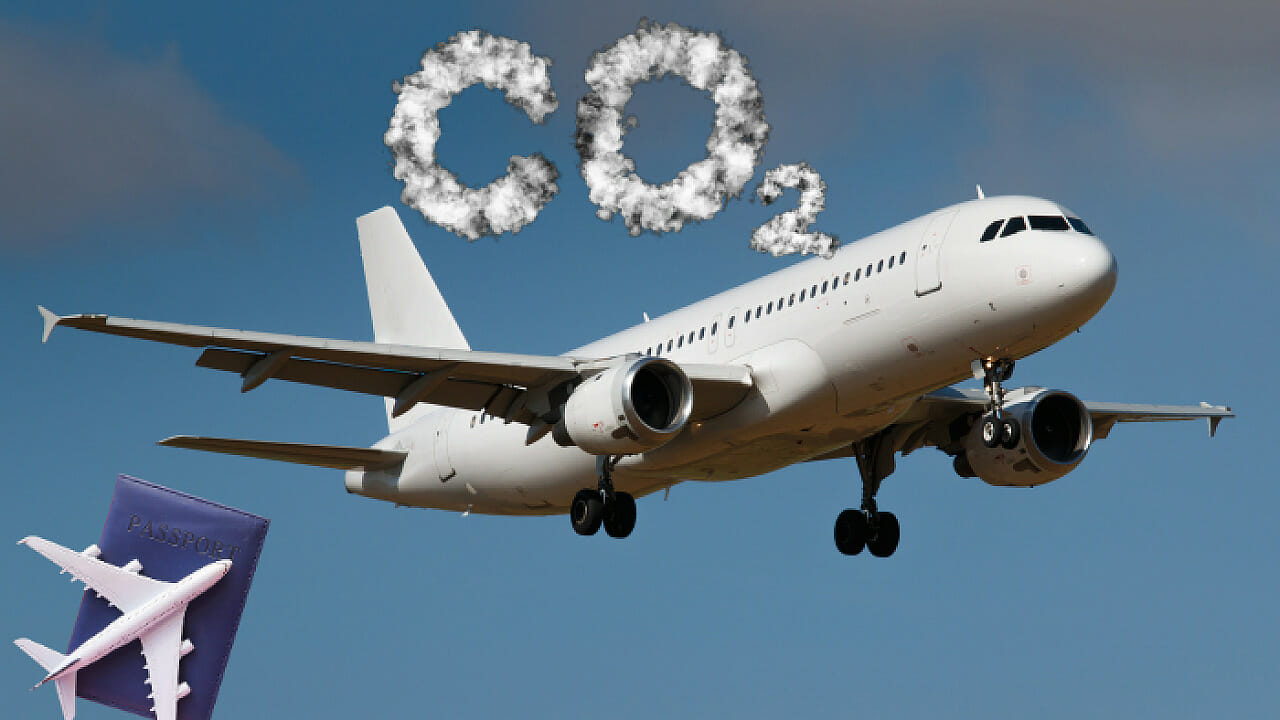
The fact that the new technology is clean could enhance the efforts of the scientific community, since currently aviation accounts for approximately 2.4% of global CO2 emissions, and eliminating, or at least reducing, these emissions is seen as a priority for the sector.
Hydrogen Can Also Revolutionize the Market
In addition to electrification, another way to reduce or even eliminate emissions in the sector is through the use of hydrogen. The fuel emits no pollutants and can be produced in a completely renewable way.
In May, Alaska Airlines delivered a Bombardier Q400 model with a capacity of 76 passengers to ZeroAvia for refurbishment with non-polluting technology.
The company is now advancing its plans to test flights of the world’s largest hydrogen-powered aircraft sooner than expected, due to the development of modular engine systems.