Portuguese
  Spanish


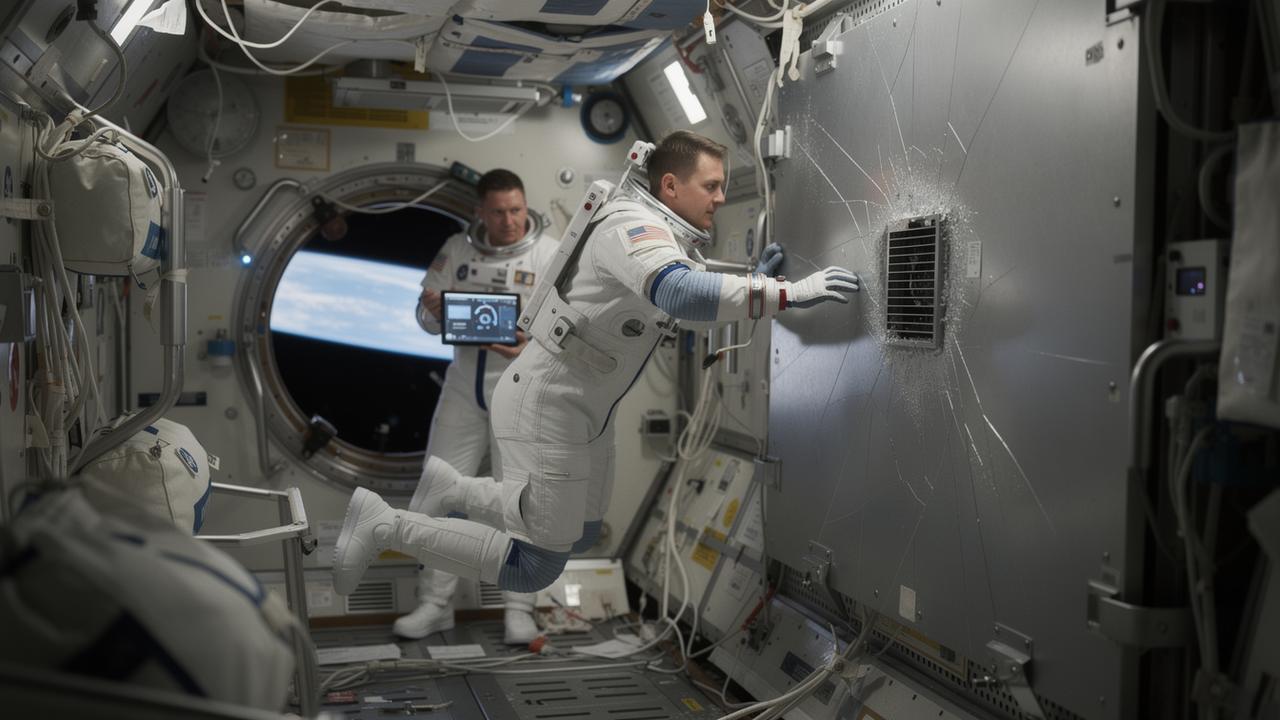

The International Space Station has once again recorded an air leak in a Russian module that has been causing headaches for engineers for years. NASA confirmed that the problem was detected on May 1st and occurs in an area that had already accumulated cracks and pressure loss since 2019.
According to dailymail.com, the leak is releasing about 1 pound of air per day into space, roughly the weight of a loaf of bread. The situation raises an alert because the station currently houses seven people, and the problem has already been internally treated as one of the most serious risks to the operation of the orbital laboratory.
Despite the concern, the agency states that there is no immediate risk to the crew and that the station’s operations have not been affected so far. Even so, the case brings back to the table a problem that seemed under control after months of repairs and tighter monitoring.
-
Man Transforms Childhood Building in Detroit into Community Bookstore, Draws 400 to Opening

-
Two Brothers Leave City Life to Build Mud House in the Himalayas with Help from Over 100 Volunteers from 18 Countries, Including Brazil

-
At 9, Hailey Builds Mini Shelters for the Homeless Using Recycled Materials in Her Backyard
-
Seven-Year-Old Nicknamed Hulk Wins Gold in Brazilian Jiu-Jitsu After Defeating South American Competitors




The leak reappeared in the same module that had been a concern since 2019

The affected point is in a Russian module that has been showing similar failures for years. The first small but persistent leak was identified in September 2019, and the investigation eventually pointed to a series of microfissures in the aging structure.
Since then, ground teams and astronauts have gone through several attempts at inspection and sealing. The problem gradually grew until, in 2024, the air loss rate had practically doubled, prompting NASA to elevate the case to the list of major safety concerns for the station.
Crew continues operating while pressure is maintained at a lower level
NASA reported that the affected area is being maintained with reduced pressure, with small recompressions made when necessary. This allows operations to continue for now, but does not eliminate the need for constant vigilance.
Currently, on board are three NASA astronauts, one European Space Agency astronaut, and three Russian cosmonauts. All coordinate the next steps while technical teams assess the best way to deal with the air leak without compromising the station’s routine.
Emergency protocols remain ready for use. If sensors indicate a rapid pressure loss, alarms sound throughout the station and the crew moves to a safe area. After that, astronauts check the docked capsules, such as Soyuz and Crew Dragon, and can isolate modules by closing hatches between segments.
NASA has already discussed catastrophic failure scenario in internal meetings
Although the agency says there is no immediate danger, the problem is being treated with increasing seriousness. According to reports cited by the original material, the leak has entered the list of the station’s highest-risk challenges, with internal discussions even about the possibility of a catastrophic failure in case of rapid worsening.
If the pressure drops to a dangerous level, the plan provides for temporary repairs, isolation of the damaged area, and, in the worst-case scenario, evacuation of the crew to Earth in the capsules already docked to the orbital laboratory.
The case reignites pressure on the future of the space station
The episode also brings to light the age of the International Space Station, which is already in the final stretch of its planned useful life. Retirement is scheduled for 2030, with controlled re-entry over the South Pacific using a SpaceX disposal vehicle.
Even so, NASA and the United States Congress are still discussing the possibility of extending operations until 2032 or beyond, while commercial replacements are not ready. In this scenario, any structural failure gains extra weight because it affects not only the crew’s safety but also the station’s transition schedule.
For now, the agency is trying to buy time with monitoring, reduced pressure, and spot repairs. But the new leak shows that the problem is far from being a thing of the past. If you follow space missions, it’s worth keeping a close eye on the next steps of this investigation.