Portuguese
  Spanish


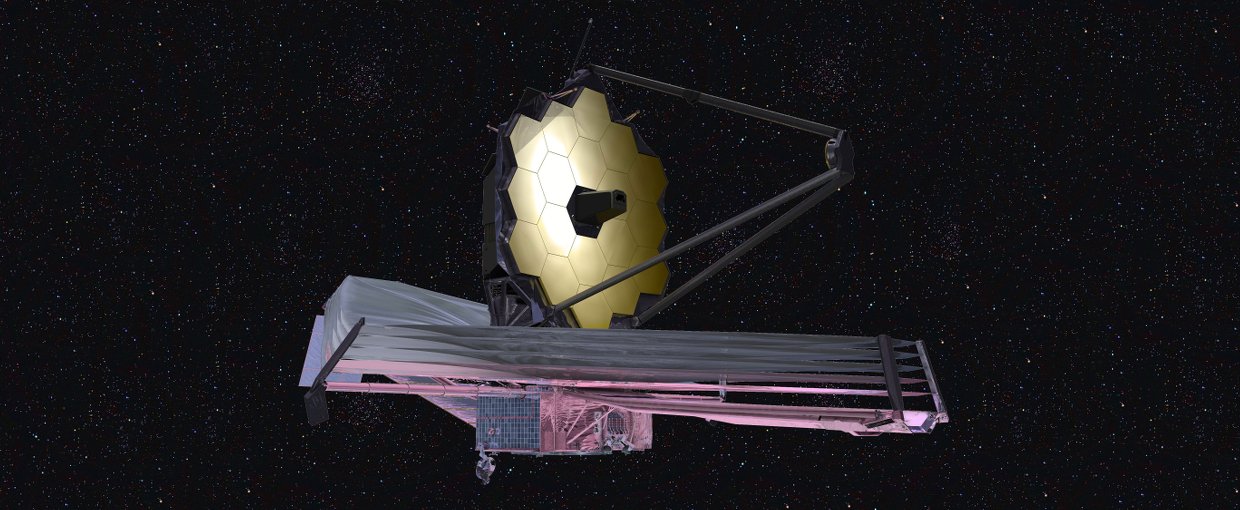

NASA Faces Potential 20% Budget Cut of the James Webb Telescope, Threatening the Continuity of Revolutionary Astronomical Discoveries Just Four Years After Its Launch
The James Webb Space Telescope (JWST), one of NASA’s most ambitious projects, may suffer cuts of up to 20% in its budget. The reduction would affect all aspects of the observatory’s operations, managed by the Space Telescope Science Institute (STScI) in Maryland.
The decision worries scientists, as the telescope still has half of its mission ahead and is more requested than ever.
NASA has been facing budget constraints on various fronts. The budget request for 2025 proposes US$ 317 million for Webb, the Hubble Space Telescope, and the Chandra X-ray Observatory.
-
Netherlands Reports First Child Euthanasia Case Since Rule Expansion for Minors

-
Brazilian Innovator Survives Homemade Submarine Dive in Paraty Despite Hatch Leak and False Oxygen Alarm

-
China Develops Custom 140-Ton Electric Mining Truck with 770 kWh Swappable Battery, Deploys 290 Units in Xinjiang’s Largest Zinc Mine
-
Meta to Launch Arena, a New Prediction App Targeting 3.56 Billion Users, Competing with Polymarket and Kalshi




However, both Hubble and Chandra are also facing cuts, with the latter potentially ending its operations in 2029. The difference is that Webb, launched in 2021, is at the peak of its performance.
Impacts of the Cuts on James Webb
Budget cuts may affect essential areas of the mission, such as the review of scientific proposals, data analysis, and observatory monitoring. Tom Brown, head of the Webb mission office at STScI, stated that reducing resources could seriously compromise the mission.
During the 245th meeting of the American Astronomical Society (AAS), he warned that the cuts could impact the entire operation of the telescope.
Since its launch, Webb has exceeded expectations. Its infrared images have provided significant discoveries about galaxy formation, exoplanets, and the evolution of the universe.
However, the operational costs of the telescope were set as “ideally low” in 2011, when the project escaped cancellation. Now, with inflation and a lack of budget flexibility at NASA, mission forecasts are threatened.
The impacts of the cuts are expected to be felt starting in October, with the beginning of the next fiscal year. Brown explained that the budget reduction will directly affect the amount of science that Webb can produce. “It’s a huge cut. It’s not like trying to nibble around the edges; it impacts everything overall, even how many modes we are offering to observers,” he said in an interview with Space.com.
The Turbulent History of James Webb
The development of the James Webb Space Telescope has been marked by challenges. The project faced delays, budget overruns, and even threats of cancellation.
In 2011, the U.S. House Appropriations Committee proposed to terminate the mission, but the decision was reversed after pressure from the scientific community and influential politicians.
Despite the challenges, Webb was launched in December 2021 and quickly demonstrated its value. Its infrared observation capability allows it to see extremely distant objects, providing unprecedented details about the early universe.
Scientists emphasize that the telescope is delivering cutting-edge science in all fields for which it was designed.
With its main mission expected to last ten years, the expectation is that Webb’s lifespan will extend for at least two decades.
Other Telescopes Affected
Besides James Webb, other NASA space telescopes are in a delicate situation. The Hubble Space Telescope, which turns 35 in 2024, may lose 20% of its budget.
Despite its advanced age, Hubble continues to provide valuable data for astronomy. Meanwhile, the Chandra X-ray Observatory has faced an even more drastic reduction. The budget for 2025 plans for a gradual discontinuation of the mission, with a progressive cut in resources until 2029.
The scenario is concerning, as these observatories are part of NASA’s “Great Observatories,” a group of missions dedicated to studying the cosmos across different electromagnetic spectra. If the cuts are confirmed, the agency’s research capacity will be significantly reduced.
Political Context and Uncertainties
The budget situation at NASA is situated within a broader political context. After the inauguration of President Donald Trump, the Department of Government Efficiency (DOGE) was created, led by SpaceX CEO Elon Musk.
The initiative aims to reduce federal spending, including cuts to agencies like USAID, which provides international humanitarian assistance.
The changes may directly impact NASA. It is estimated that up to a thousand jobs at the agency are at risk, although large-scale layoffs have been avoided so far.
In addition, Trump appointed Jared Isaacman, a billionaire entrepreneur and private astronaut, to take over NASA’s administration. However, his appointment still needs to be confirmed.
As NASA faces uncertainties regarding its budget and leadership, the scientific community is seeking alternatives to minimize the impacts. Scientists and astronomers advocate for the importance of the James Webb Space Telescope and warn of the consequences of a possible reduction in resources.
With information from Live Science.