Portuguese
  Spanish


The Fraternity Campaign 2026, by CNBB, has the theme of dignified housing and proposes a housing effort: each parish organizes to build or renovate a house. The target is the gigantic housing deficit in Brazil, where 26 million families live in precarious housing.
The number is staggering: about 26 million Brazilian families currently live in precarious or inadequate houses, in risk areas, without infrastructure, or in vulnerable situations. Faced with this mountain, the Catholic Church decided to propose a concrete gesture, house by house. The idea is simple and bold: that each parish in the country erects or renovates at least one house, in a joint effort, for a family in their own neighborhood.
The proposal is the heart of the Fraternity Campaign 2026, launched by the National Conference of Bishops of Brazil, CNBB, according to the CNBB’s own portal. With the theme “Fraternity and Housing” and the motto “He came to dwell among us,” the project named “Each parish, a joint effort for housing” transforms the indignation with the housing deficit into manual labor and solidarity. Instead of just denouncing the problem, the campaign wants to get hands-on.
The shocking number: 26 million families in precarious housing
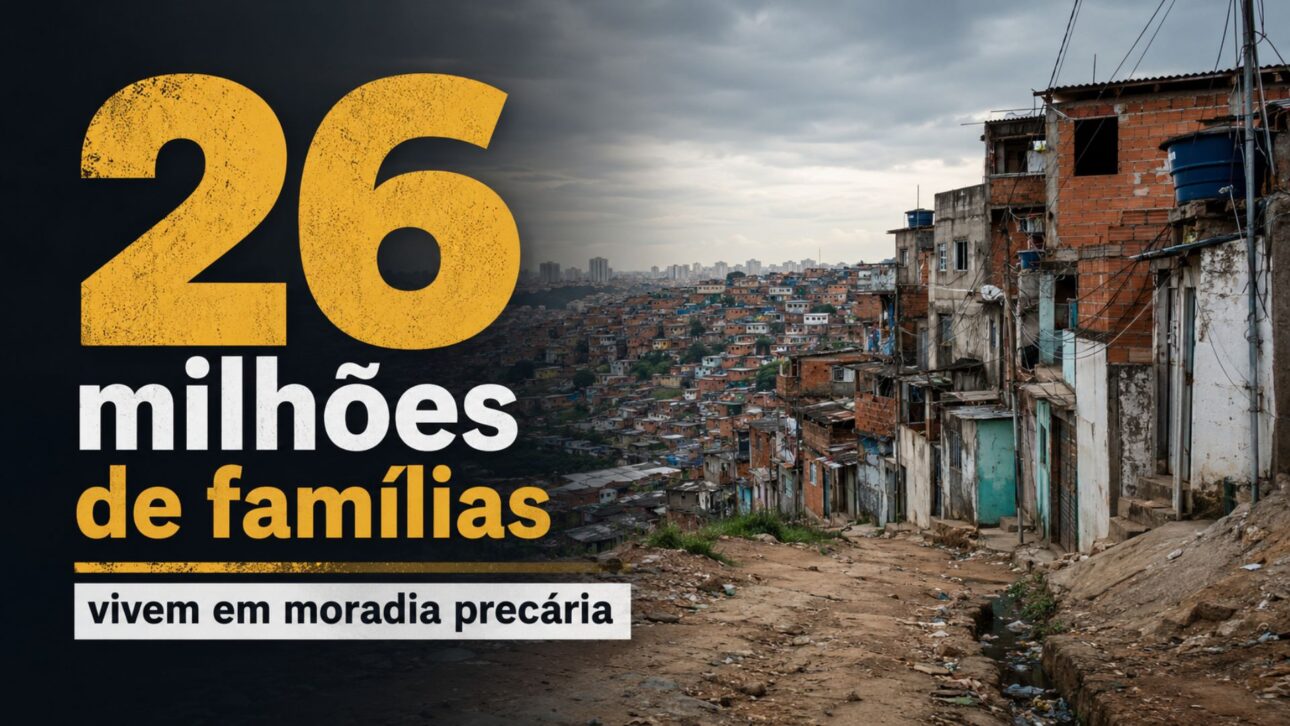
According to the data from the Fraternity Campaign 2026, more than 6.2 million families simply do not have a house, the so-called housing deficit, which represents about 8% of the occupied dwellings in the country. These are people who lack a roof, pure and simple.
-
Wood-Look Aluminum Emerges as a High-Tech Alternative for Facades and Gates, Offering Sophisticated Aesthetics and Low Maintenance

-
Couple Transforms 1964 Concrete Water Tower into Four-Bedroom Home with Views of London Over Four Years

-
U.S. City Builds Tiny Home Village on Water Company Land to House 136 Homeless People: Inside the Social Housing Units
-
Woman Turns Shipping Container into Home, Embraces Rural Life to Cut Monthly Expenses to Just Over $330



But the hole is deeper. Besides these 6.2 million without housing, another 26 million families live in precarious or inadequate housing, in risk areas, without sanitation, far from public services, or under pressure from evictions and floods. Adding it all up, Brazil has tens of millions of people living without the basics of decent housing.
And there is still the most visible face of the crisis. More than 327 thousand people are homeless, a number that has skyrocketed in the last decade. These three data together, the housing deficit, precarious housing, and the homeless population, depict a country where the right to a decent home is still a privilege for few. It is against this backdrop that the housing task force was conceived.
“Each parish, a housing task force”: the concrete challenge
The great idea of the campaign is to turn a giant problem into small and feasible actions. Instead of waiting for a top-down national solution, the proposal is for each of the thousands of parish communities in Brazil to adopt a family and solve one case at a time. One house per parish seems little, but multiplied by thousands of parishes it becomes a nationwide movement.
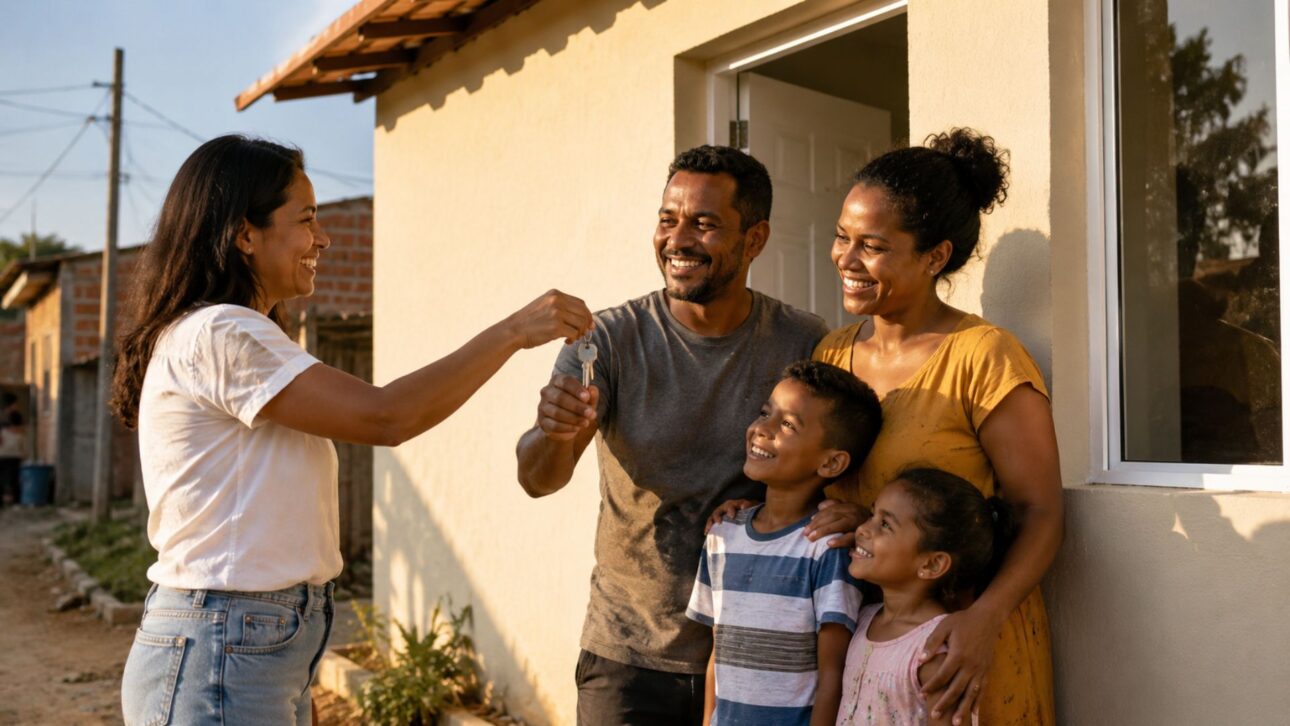
The housing task force is not just about building walls. The script proposed by the CNBB includes identifying the family in need, mobilizing the community, raising resources, conducting the construction or renovation task force, and then accompanying that family’s life. The assisted family is not treated as an object of charity, but as the protagonist of their own restart, participating in the process from start to finish.
Not by chance, the concrete gesture was initiated around March 19, the date of Saint Joseph, considered the patron of homes and families. The symbolism reinforces the message: giving a house is an act of faith as concrete as it is spiritual. The housing task force thus unites the Brazilian tradition of collective work with the Church’s reach, which extends to practically every municipality in the country.
What is the Fraternity Campaign and the theme of 2026
The Fraternity Campaign is an annual initiative of the CNBB that, each year, chooses an urgent social theme to mobilize the faithful during Lent. It is one of the largest social awareness campaigns in Brazil, with a reach that goes far beyond churches.
In 2026, the chosen theme was “Fraternity and Housing,” with the motto “He came to dwell among us,” a biblical reference that links the idea of habitation to human dignity itself. The campaign was officially launched in February 2026 and places the right to dignified housing at the center of the national debate. The choice of theme is not random: the growth of slums and housing precariousness has raised the Church’s alert.
The Fraternity Campaign has historically had the power to set the country’s agenda. By choosing dignified housing as the banner for 2026, the CNBB sheds light on a problem that often remains invisible, and the housing mutirão is the way to move from discourse to practice. Raising awareness and building at the same time is what differentiates this campaign from a simple Lent reflection.
Why the mutirão can succeed
The bet on the mutirão has deep roots in Brazilian culture. Raising a neighbor’s house through mutual aid is an old tradition in the countryside and peripheries of the country, and the campaign merely provides organization and scale to something the people already know how to do. The housing mutirão speaks a language that Brazilians understand: that of collective work.
The strength of the initiative lies in the Church’s capillarity. There are thousands of parishes spread across every corner, each closely knowing the most vulnerable families in their territory. No one needs a national map to know who lives poorly on their own street, and it is this proximity that makes the housing mutirão viable where distant policies fail.
There is also the multiplier and contagious effect. When a community builds a house and sees the family change their life, the example inspires the neighbor to do the same, creating a chain of solidarity. A good mutirão story leads to the next, and this is how a local gesture can, when combined, truly impact the housing deficit.
From home to politics: the fight for dignified housing
However, it would be naive to think that the mutirão alone solves everything. The Fraternity Campaign 2026 itself makes it clear that building houses is only part of the path, and that the fight for dignified housing also involves demanding public housing policies. Brick and political pressure need to go hand in hand.
That’s why the campaign’s roadmap includes what is called public policy advocacy, meaning pressuring governments to treat dignified housing as the right guaranteed by the Constitution. The idea is that the housing mutirão inspires and pressures the public authorities, showing with concrete examples that tackling the housing deficit is possible when there is a will.
This dual movement connects local action to structural change. On one hand, the house built today, which changes a life now. On the other, the pressure for the State to do its part on a larger scale. Resolving the precarious housing of 26 million families requires both, and the campaign attempts to weave immediate action with long-term transformation.
A movement, not a miracle
It takes honesty not to turn the campaign into an empty promise. One house per parish is a beautiful gesture, but faced with 26 million families in precarious housing, no chain of joint efforts solves the problem alone. The value of the initiative lies more in mobilizing awareness and proving paths than in eliminating the housing deficit.
Seen this way, the housing effort is a seed, not a ready-made solution. It builds real houses, yes, but its greatest impact might be keeping the topic alive, shaming inertia, and showing that society can act. The CNBB knows it will not build 26 million houses, and that is precisely why it insists on political advocacy along with the bricks.
In the end, it’s a bet on the sum of small gestures. Each parish that embraces a family practically reduces a particular tragedy, and the collection of these gestures becomes a powerful message to the country. It’s not a miracle, it’s mobilization, and perhaps this is exactly the most realistic contribution a faith campaign can make to a problem as large as Brazil’s.
In the end, the Fraternity Campaign 2026 proposes a simple and powerful exchange: turning the indignation with 26 million poorly housed families into action, one house at a time. The housing effort alone will not end the housing deficit, but it restores dignity to those served and demands a greater response from the country. It’s faith that turns into bricks, and bricks that turn into homes.
And you, do you think the solidarity chain of the housing effort can make a real difference, or do you believe that only substantial public policies can solve precarious housing in Brazil? Share here in the comments if your community would take on this challenge.