






 Portuguese
  Spanish


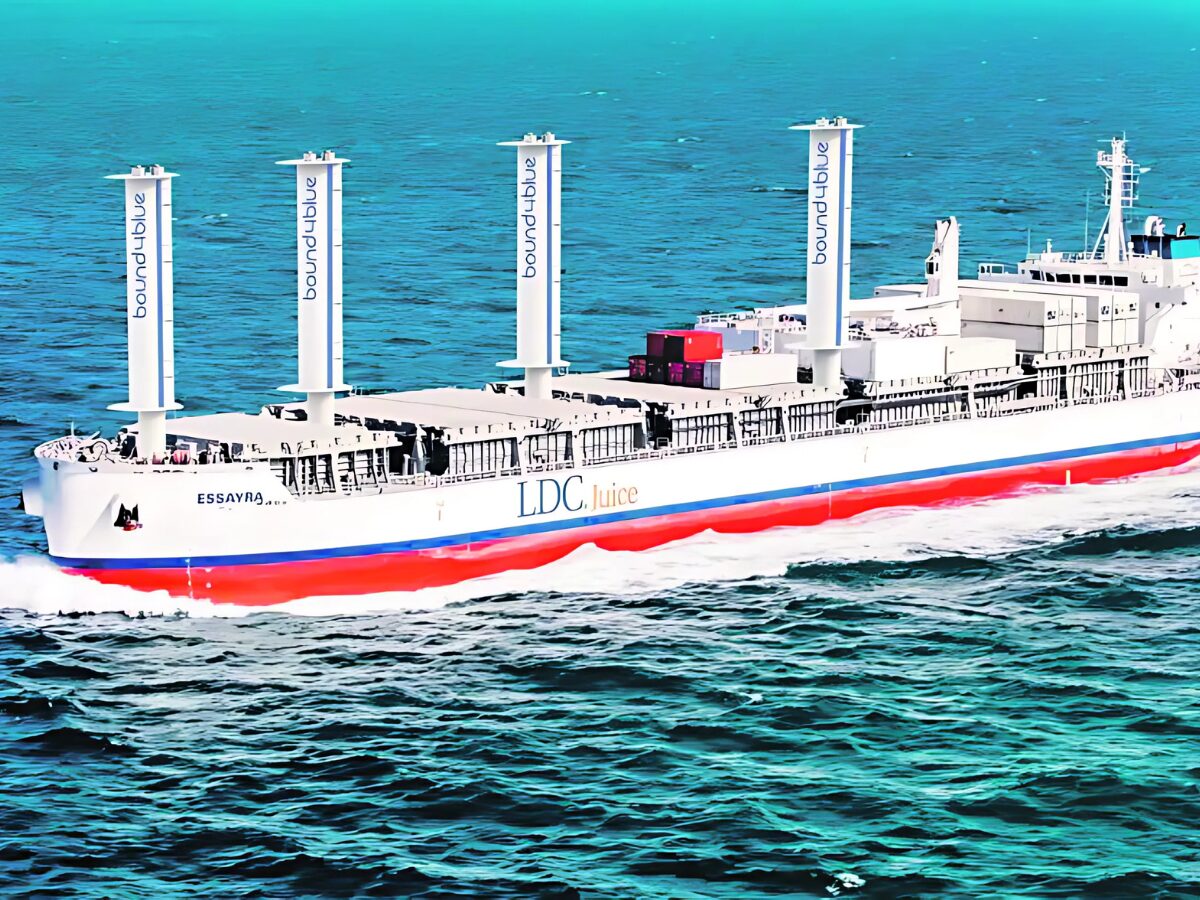

The Sailing Ship MV Atlantic Orchard Arrives at the Port of Santos for Loading, Highlighting Itself as the First Juice Tanker to Operate with Wind Propulsion, Reducing Emissions and Fuel Consumption.
This week, the sailing ship MV Atlantic Orchard, chartered by Louis Dreyfus Company, docked at the company’s terminal in the Port of Santos to load juice. What stands out is not just its cargo, but its innovative technology: it is the first sailing ship for juice transport in the world to operate with wind propulsion.
The Sailing Ship MV Atlantic Orchard Has Sustainable Technology
Built in 2014 and registered under the flag of Liberia, the MV Atlantic Orchard was equipped last year with four rigid sails measuring 26 meters in height.
This technology uses the wind as an auxiliary propulsion force, significantly reducing fossil fuel consumption.
-
North Korean Fiasco: Launch of the Largest Warship Ends in Sinking

-
While giant ships still burn heavy fuel and the maritime sector races against climate targets, Maersk and Vale are starting to bet on ethanol as a new route to reduce emissions at sea.

-
China begins construction of the world’s largest LNG ship, a 344-meter giant capable of supplying 4.7 million homes for a month, carrying 271,000 m³ of gas, and placing QatarEnergy in the largest naval order ever recorded in world history.
-
China is designing a container ship with a thorium nuclear reactor that will operate for 40 years without refueling, and the 25,000-container giant from Jiangnan Shipyard will cross oceans without emitting carbon in an industry that burns 300 million tons of fuel per year.




According to Louis Dreyfus, the application of the sails can provide a reduction of up to 10% in CO₂ emissions and annual fuel consumption, depending on the route.
This represents a significant advance toward the decarbonization of maritime transport, especially in the liquid cargo segment such as fruit juices.
“Testing this technology aboard the MV Atlantic Orchard represents an important step in our decarbonization journey – both for juice operations and maritime freight – as we strive to contribute to a low-carbon economy and advance global energy transition goals,” the company stated on social media.
Port of Santos as a Protagonist in the Green Transition
The Port Authority of Santos celebrated the arrival of the ship as a milestone for logistical sustainability in Brazil. The Port of Santos reaffirms its commitment to the future of maritime transport.
“For the Port of Santos, the arrival of the wind-powered ship represents a strategic advance in its trajectory of leadership in the sustainable logistics chain. The goal is to be at the forefront of decarbonized maritime transport, supporting global emission reduction initiatives and promoting a greener economy,” it highlighted in an official statement.
In the coming days, the MV Atlantic Orchard will continue its journey to the United States, carrying not only juice but also an example of environmental innovation that can transform the shipping industry.
With this initiative, the Port of Santos strengthens its role as a logistics hub, and the MV Atlantic Orchard inaugurates a new era for modern sailing ships, proving that innovation and environmental responsibility can sail side by side.









Onde que vamos parar com tanto avanço tecnológico? Nossos melhores engenheiros e cientistas nos brindaram com essa excelente nova invenção: um modeno barco a vela!
Puro marketing e demagogia!
10% de economia na emissão de CO2…. Só rindo!
Uma viagem dessa gasta em torno de 400mil dólares de combustível.
Uma economia de 10% são 40 mil dolares por viagem.
Se você contar 20 viagens por ano. Deve dar payback de 4 a no maximo 6 anos.
Nenhuma empresa gasta dinheiro pra ficar bonito na matéria do Jornal.
Sem dúvida, um marco importante no setor naval e um evento significativo para o porto de Santos!