Portuguese
  Spanish


Japanese Warship Sunk in 1942 Found with Intact Explosives at the Bottom of the Pacific. Discover What Scientists Have Revealed About the Teruzuki.
More than 80 years after disappearing into the depths of the Pacific Ocean, a Japanese warship from World War II has been rediscovered — and with a surprise that has impressed even experts: the explosives are still there, intact and potentially active. This is the destroyer Teruzuki, of the Akizuki class, which was sunk by American torpedoes in 1942 and now lies silently in the feared section known as Iron Bottom Sound, near the Solomon Islands, with artillery towers still pointing to the sky.
The vessel, which participated in the intense battles around Guadalcanal — one of the bloodiest contests in the Pacific theater — was located at a depth of 820 meters by the team from Ocean Exploration Trust, an organization specialized in mapping and underwater exploration. The discovery was made with the aid of an ROV (remotely operated vehicle), revealing one of the best-preserved wrecks of World War II ever found.
Active Explosives After 80 Years: A Minefield Under the Sea
The most surprising aspect was the arsenal found aboard the Teruzuki: depth charges, ammunition, and even the artillery towers are still present and in a state of preservation that required extreme caution from the team.
-
15-Year-Old Entrepreneur Malu Lira Publishes 20 Children’s Books on Financial Education, Earns $500,000, and Expands Her Project to the Amazon Rainforest

-
Entrepreneur Turns Rio Cemetery Canteen into a Successful Snack Chain Generating $4.9 Million Annually and Expanding to Metro Stations

-
Rare fox feared “extinct” found alive on Caribbean island after over two decades without official sightings

-
21-Year-Old Brazilian Student Turns Homemade Popsicle Hobby into $100,000-a-Month Business





Unlike the old hypothesis that the weaponry itself had caused the destruction of the vessel, it is now confirmed that the torpedoes launched by American patrol boats were solely responsible for the sinking.
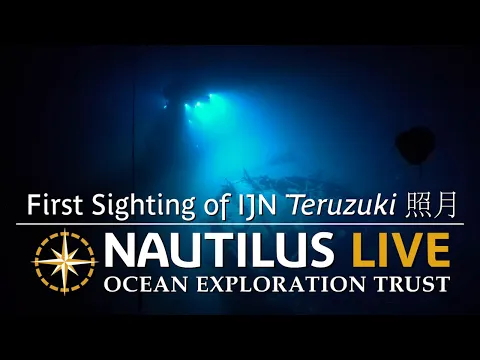

Captured images show that the stern is separated from the rest of the hull by about 208 meters, but much of the main deck is intact — as if the ship had frozen in time. The damaged rudder, which prevented any maneuver to escape after the attacks, was also found in its original position.
The ‘Graveyard’ of Ships in the Pacific
The area where the Teruzuki was found is one of the deadliest in naval history. Nicknamed Iron Bottom Sound — literally, “Sound of Iron Depths” — the region accumulated dozens of warships, submarines, and planes during the confrontations between Japan and the Allies, particularly between August and December 1942.
Guadalcanal Island, the epicenter of the fighting, was vital for controlling maritime routes in the South Pacific. Therefore, naval battles in that area involved maximum force from both sides, with confrontations that cost thousands of lives and resulted in an underwater landscape filled with historical wrecks.
Cutting-Edge Technology Rescuing War Memory
The mission that found the Teruzuki used high-resolution sensors and cameras to map in detail the condition of the ship. The videos published by the Ocean Exploration Trust team reveal weaponry still attached, preserved internal corridors, and metal structures protected by cold, lack of oxygen, and darkness of the depths — a true submerged military museum.
In addition to its archaeological and historical value, experts emphasize the risk involved in approaching: some of the Japanese explosives from that era are so unstable that they can be detonated by simple vibrations or accidental touch. The operation required high-level expertise and heightened caution.
Living Memory of World War II
The destroyer Teruzuki now joins other naval icons of World War II that have been rediscovered in recent decades, such as the USS Indianapolis or the aircraft carrier Akagi. But, unlike many corroded and lifeless wrecks, the Teruzuki appears to be merely dormant, as if still awaiting orders.
The rediscovery not only corrects historical records but also reignites the debate over the environmental and military risks of munitions forgotten at the bottom of the sea. And more than that: it allows humanity to revisit, with respect and attention, the scars left by one of the most destructive conflicts in history.