Portuguese
  Spanish


Google builds the world’s largest iron-air battery in Minnesota with 300 MW and 30 GWh to store energy for 100 consecutive hours
On February 28, 2026, Google signed a definitive agreement with Xcel Energy to deploy in Pine Island, Minnesota, the world’s largest iron-air battery: 300 megawatts of power and 30 gigawatt-hours of capacity, according to Fortune. The iron-air battery can continuously discharge energy for 100 hours — unlike lithium, which typically lasts 4 hours.
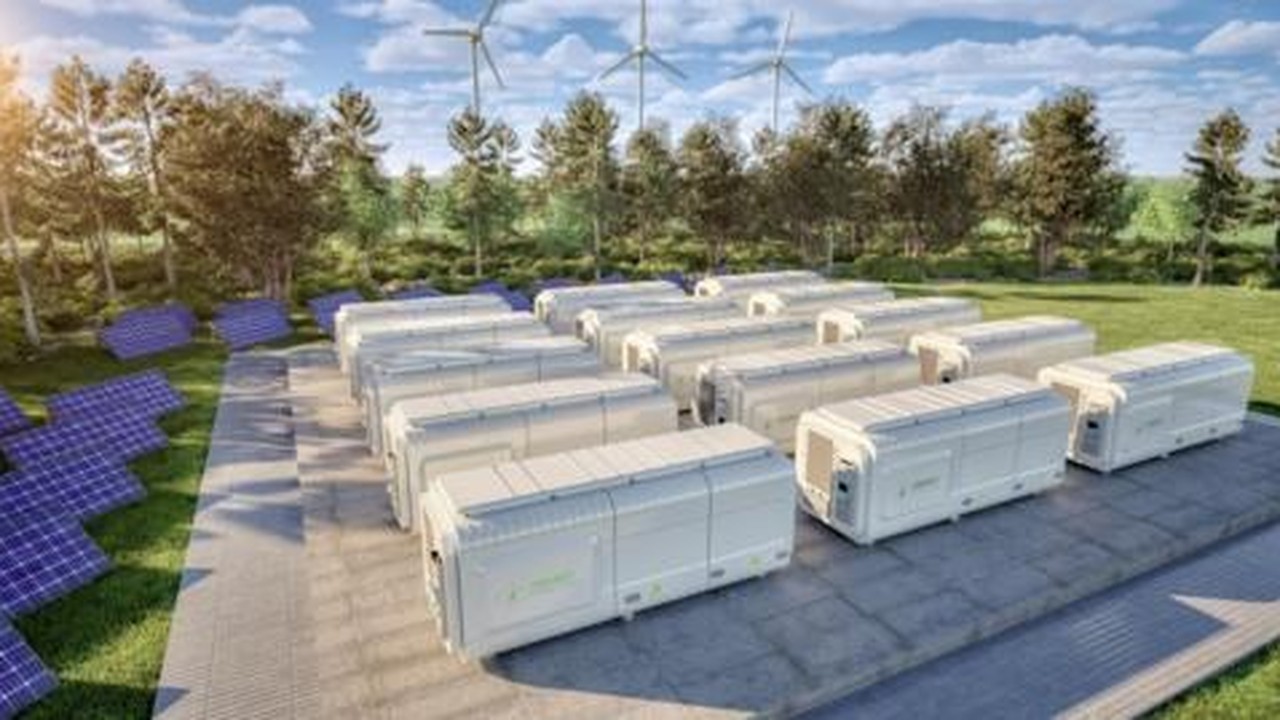
According to the announcement, the iron-air battery will be paired with 1,400 MW of wind energy and 200 MW solar. In parallel, the system will ensure firm energy for Google’s data centers in the region. According to the schedule, the first delivery of the battery will occur in 2028, with full installation completed between 2028 and 2031.
The project represents a significant advancement in long-duration energy storage technology — a category known as LDES (Long Duration Energy Storage). In other words, the battery can store energy generated on windy days for use on calm days, or solar energy from summer for winter. Therefore, it is seen as a key component for decarbonizing the power grid.
-
Brazil Aims to Become a Global Exporter of Green Hydrogen, the Clean Fuel Set to Generate Billions

-
Brazil to Hold First Offshore Wind Energy Auction, Aiming to Become the Country’s New Hydropower
-
Brazil to Hold First Auction for Batteries to Store Solar and Wind Energy from the Northeast
-
Brazilian scientists are simultaneously advancing two research projects on clean hydrogen and driving solutions that could transform the energy matrix, enhance industrial competitiveness, and accelerate large-scale emission reduction targets.



How the iron-air battery works and why it lasts 100 hours
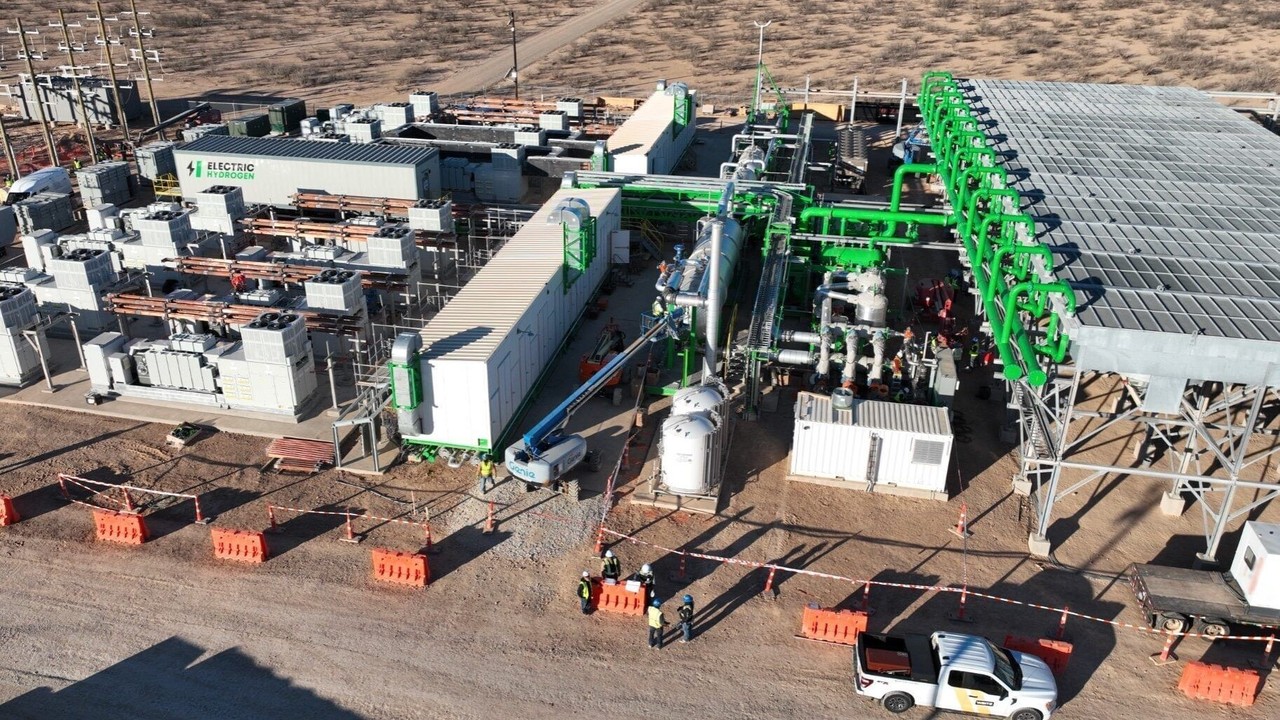
The iron-air battery uses a simple chemical principle: iron reacts with oxygen from the air to form rust, releasing energy. First, during charging, electricity reverses the reaction, turning rust back into iron. Second, the cycle is repeatable tens of thousands of times without significant loss of capacity.
According to Form Energy, the technology’s manufacturer, each battery is about 0.5 meters wide by 1.5 meters high and contains thousands of iron pellets. Similarly, the electrolyte is a potassium-based alkaline solution. In comparison, lithium batteries rely on cobalt and nickel — expensive and geopolitically sensitive minerals.
To understand the scale, 30 GWh of iron-air battery in Pine Island can power 3 million homes for 100 hours, that is, more than 4 full days without recharging. In parallel, the estimated cost of the technology is $20 per kWh — about 10 times cheaper than lithium in LDES.

Google and Xcel Energy: the corporate bet on clean energy
Google is currently the largest corporate buyer of renewable energy in the world. First, the company contracted more than 14 GW of renewable energy globally by 2025. Second, the goal is to operate 100% with clean energy “24/7” — that is, at any time of the day — by 2030.
According to Xcel Energy, the Pine Island project integrates with the operator’s grid serving Minnesota, Wisconsin, North and South Dakota. Similarly, the operator has committed to 80% emission reductions by 2030 in its electricity generation. Consequently, the iron-air battery is a central piece of the strategy.
In parallel, Google operates more than 15 large data centers in the U.S., consuming about 20 TWh/year of electricity — equivalent to the annual domestic consumption of 1.8 million Americans. Therefore, ensuring clean and stable supply is a priority. To give an idea, this is equivalent to half of Portugal’s annual electricity consumption.
Why 100 hours change the storage game
Lithium batteries dominate the current market with about 95% of installations. First, they are great for short-duration services — peaks of 1 to 4 hours. Second, they are expensive for LDES — storing energy for entire days became unfeasible with lithium.
According to the International Energy Agency (IEA), the iron-air battery addresses the LDES gap for 3 reasons: abundant raw material (iron), safe chemistry (no fire), and viable cost. Similarly, there are other competing LDES technologies: compressed air (CAES), gravity storage, redox flow, green hydrogen.
In parallel, LDES projects in the U.S. received more than $30 billion in federal incentives from the Inflation Reduction Act (IRA). Consequently, there are 14 LDES projects of more than 100 MW under construction or licensing by 2027. In comparison, Brazil has only 2 storage projects >100 MW (both lithium).
- 300 MW — power of the iron-air battery
- 30 GWh — stored energy capacity
- 100 hours — duration of continuous discharge
- 1,400 MW wind + 200 MW solar — pairing
- $20/kWh — estimated iron-air cost
- 2028-2031 — installation window
Form Energy: the startup that received $850 million
Form Energy is the American startup that developed the iron-air technology. First, it was founded in 2017 by Mateo Jaramillo (ex-Tesla) and Bill Joy (Sun Microsystems). Second, it received more than $850 million in investments from Bill Gates’ Breakthrough Energy Ventures, ArcelorMittal, and others.
According to official data, Form Energy’s factory in Weirton, West Virginia, was inaugurated in 2024 with a capacity to produce 500 MW/year. Similarly, expansion plans foresee a second factory by 2027 with an additional 1 GW/year capacity. Consequently, the company becomes the world’s largest producer of this technology.
According to Forbes, Form Energy’s valuation exceeds $1.2 billion in 2025. In parallel, supply contracts total more than 4 GWh in firm orders. Therefore, Google chose the technology for the world’s largest LDES project.

What Brazil can learn from Pine Island
Brazil has a predominantly renewable electricity matrix — 83% from clean sources, according to ONS data. First, hydropower still accounts for 60% of generation. Second, wind and solar are growing rapidly — surpassing 20 GW combined in 2025.
On the other hand, the system faces a storage bottleneck. During prolonged droughts, hydropower decreases and the country needs to activate expensive gas-fired plants. Similarly, during high solar production hours, there is wasted surplus. Consequently, LDES projects like iron-air would be ideal — but Brazil has not yet regulated storage as an auxiliary service.
In parallel, Aneel discussed in 2025 frameworks for LDES batteries. In comparison, California has 5 GW of stationary batteries — almost all lithium. Brazil would have enormous potential for iron-air with its domestic iron ore production (Vale, CSN).

Caveat on real performance at scale
Although iron-air technology is promising, it has not yet been tested at full industrial scale. First, the largest iron-air battery in operation today is 1 MW (10 times smaller than the projected 300 MW). Second, there are uncertainties about performance in extreme thermal cycles of Minnesota’s winter.
According to Wood Mackenzie analysis, risks include capacity loss in very cold environments and more frequent maintenance needs than lithium. Similarly, iron-air roundtrip efficiency is 50-60%, compared to 85-90% for lithium. In other words, more energy is lost in the process. Other energy transition coverage is available in the Click Petróleo e Gás archive. Will iron-air dethrone lithium in LDES in the next 5 years?