Portuguese
  Spanish


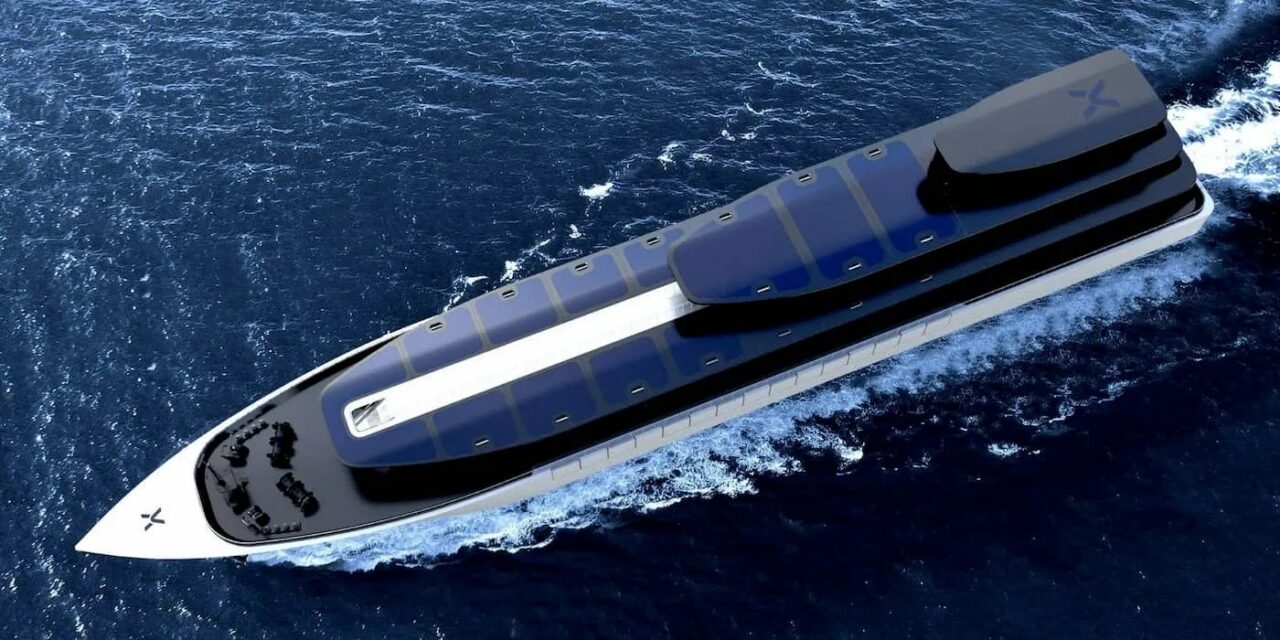

Developed by PowerX, the New Electric Ship Promises to Be the Start of a Journey That Will Connect Sustainable Maritime Navigation with Clean Energy.
The Future of Sustainable Maritime Navigation Is About to Become a Reality, Thanks to the Innovative Japanese Startup PowerX. Aiming to Solve the Challenges Faced by Geographically Disadvantaged Regions, PowerX Presents the Revolutionary Electric Ship “X”, a Giant Vessel Powered by Electric Propulsion and Supplied by Next-Generation Batteries. This Ship Is Designed to Operate as a Mobile Power Plant, Capable of Storing and Transporting Clean Energy Across the Sea, Without the Need for Fossil Fuels and Without Emitting Pollutants.
Connecting Regions with Clean Energy
The Electric Ship “X” Plays a Crucial Role in Connecting Wind Farms and, Mainly, Remote Islands.
In Some Areas, Installing Underground Cables Becomes Unfeasible Due to Seismic Activity and Water Depth.
-
1983 Chevrolet Runs Over 100,000 km Without Gasoline, Powered by Wood Chips, Reaches 125 km/h in Airport Test

-
Workshop Converts Giant Tractor Tire Tricycle into a Three-Wheel Drive Hybrid with 36,000-Watt Electric Motor Capable of Climbing Hills

-
Chery Offers Lifetime Battery Warranty and Car Replacement for Major Failures Under New Chinese Regulations
-
Sales of Brazil’s Cheapest Electric Car Halted Before First Deliveries: E-Motors Suspends Emova Easy Due to Import Tax Increase and Rising Freight Costs




As a Result, These Regions, Which Have an Abundance of Clean Energy, Can Now Share Part of Their Production with Less Favored Locations.

Features of the Electric Ship “X”
With an Impressive Length of 140 Meters, the Electric Ship “X” Has a Range of Up to 300 Kilometers, Which Is More Than Enough to Navigate Between Nearby Islands.
The Vessel Is Equipped with 96 LFP Batteries, Allowing for the Storage of Up to 241 MWh of Energy.
Moreover, PowerX Emphasizes That the Design of Its Maritime Batteries Is Highly Scalable, Meaning That in the Future the Ship Could Incorporate Even More Units.
While It Has Been Optimized for Short Trips, PowerX CEO Masahiro Ito States That, As Costs Decrease, the Company Could Add More Batteries to Enable Long-Distance Travel.
PowerX Plans to Complete Construction of the First Unit of the Ship by 2025, and the First Sea Tests Are Scheduled to Begin in 2026.
The Company Has Already Signed an Agreement in Yokohama, Japan, to Turn This Concept into Reality and Decarbonize the City’s Ports.
The Clean Ocean Energy Network
PowerX’s Vision Is to Create a Clean Ocean Energy Network, Driven by the Electric Ship “X”.
To Achieve This Ambitious Goal, the Startup Plans to Establish Its First Mega Battery Factory in Japan.
This Factory Will Have an Annual Production Capacity of 5 GWh and Will Be Dedicated to Manufacturing Maritime Batteries, Home Batteries, and Ultra-Fast Chargers of Up to 240 kW, All Powered by Renewable Energy.
With This Initiative, PowerX Hopes to Make This Vision a Reality and Promote the Transition to More Sustainable Maritime Navigation, with the Help of Its Electric Ship.