Portuguese
  Spanish


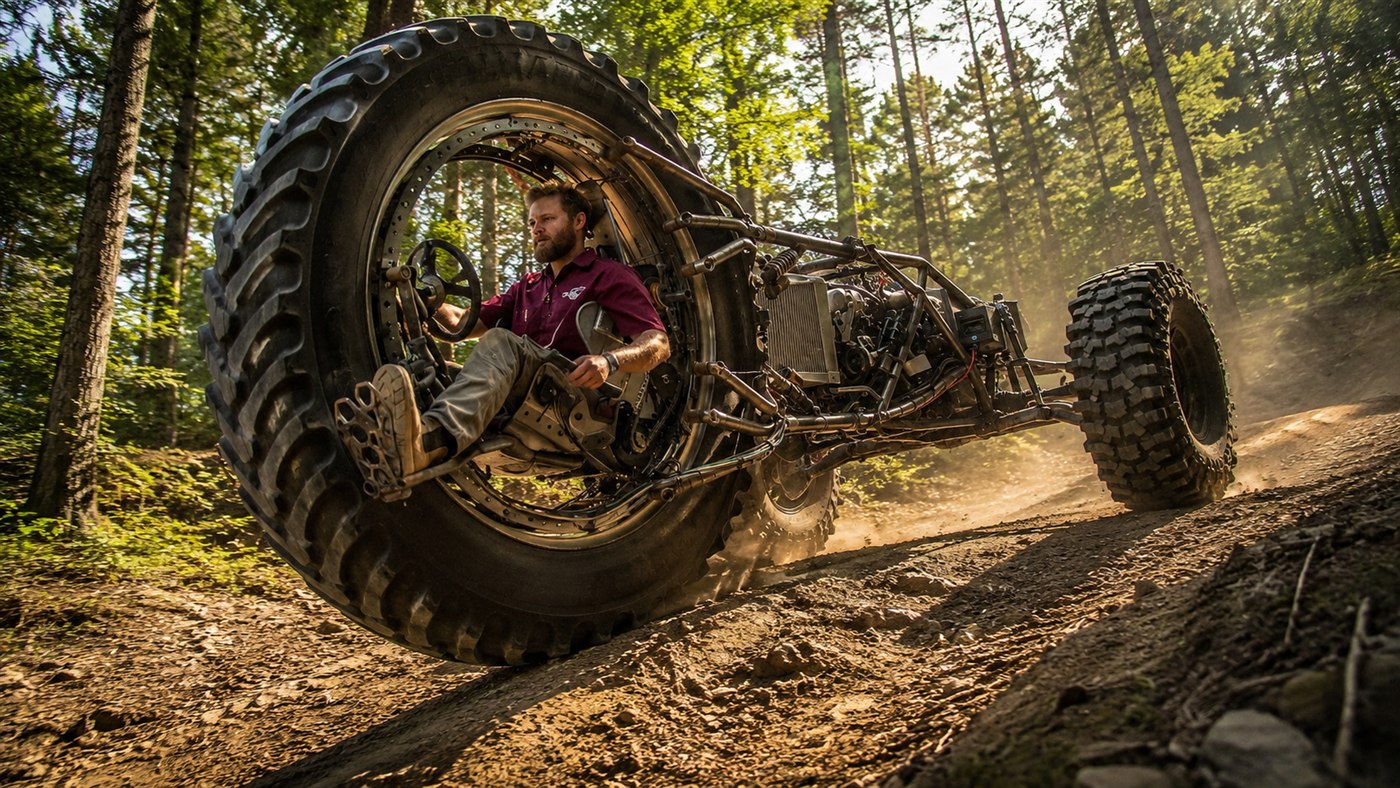

The Grind Hard Plumbing Co record shows the conversion of the monster trike, the reduction from 5.4 to 1 by chain, the repurposed snowmobile axle, and the test that climbed the steepest hill on the property
A car-sized tricycle, with tractor tires, gained a second power source and became a hybrid. According to the channel Grind Hard Plumbing Co, in a video published in June 2026, the workshop transformed the so-called monster trike into a 3-wheel drive vehicle by attaching a giant electric motor to drive the front wheel, which was previously only guided.
The number that defines the project is power. The electric motor installed at the front delivers 36,000 watts, about 36 kW, powered by two batteries that together provide the necessary current for the peak, transforming the combustion tricycle into a hybrid with electric front-wheel drive and mechanical rear-wheel drive, as Grind Hard Plumbing Co details. It’s the difference between a trike that only pushed from the rear and one that now climbs terrain with all three wheels pulling together.
The 36 kW electric motor that moves the front wheel
The choice of motor was deliberately oversized. According to the Grind Hard Plumbing Co channel on YouTube, instead of a small motor spinning at very high speed, the workshop used a physically large motor, capable of delivering the 36,000 watts with a lot of torque and in silence, which makes it easier to move a giant wheel at low speed.
-
Sales of Brazil’s Cheapest Electric Car Halted Before First Deliveries: E-Motors Suspends Emova Easy Due to Import Tax Increase and Rising Freight Costs

-
Nissan Discontinues Qashqai SUV Amid Cost-Cutting, Chinese Competition, and Product Line Review

-
BYD Patents Revolutionary System Using Computer Vision to Detect Animals Under Cars Before Starting, Preventing Tragedies

-
Study Reveals Why Cars Are More Expensive to Produce and Buy in Brazil Compared to Mexico, Highlighting Taxes, Logistics, and Industrial Costs as Key Factors.




The onboard electronics look like fiction. The set has a power controller with three power modes for forward, plus reverse gear, and two batteries mounted on the structure to handle the peak current, as Grind Hard Plumbing Co shows. The choice of two smaller batteries instead of one large one solved both the capacity and the mounting, in a vehicle where there is plenty of power and little space.
The challenge of the reduction: 5.4 to 1 was not enough
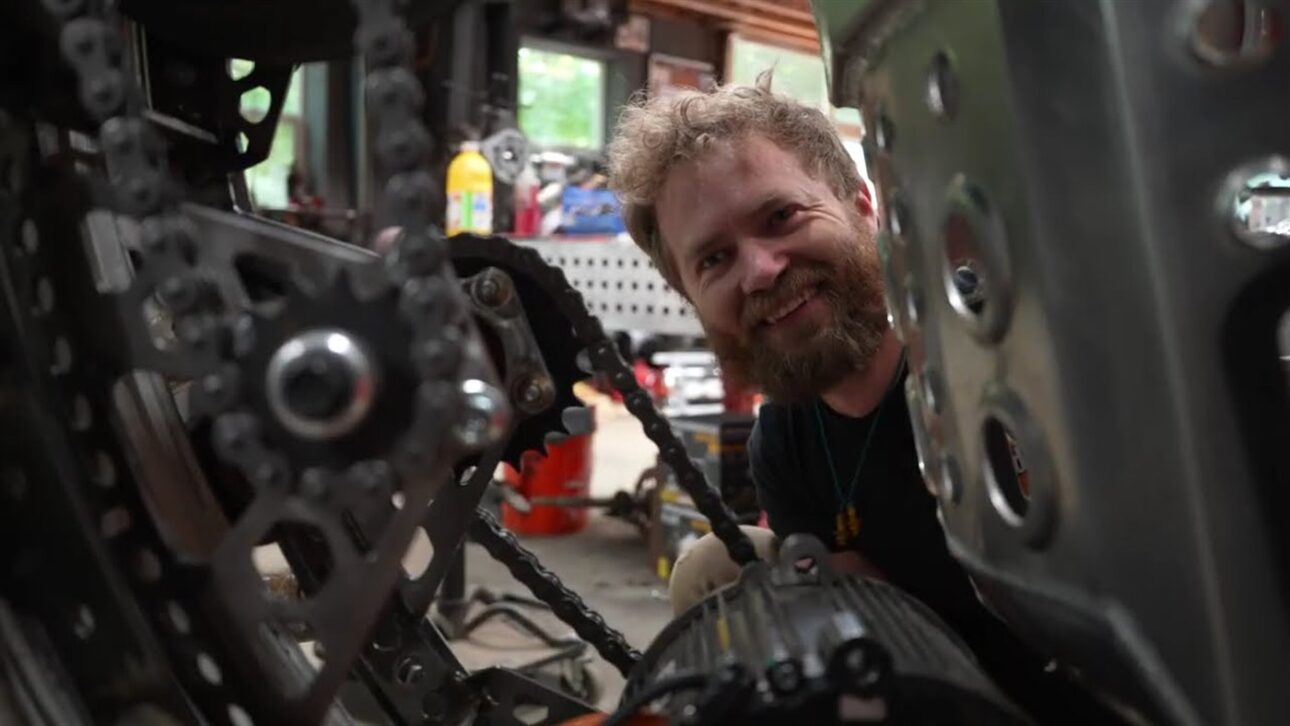
A strong engine alone doesn’t solve the problem: it needs reduction to turn a huge wheel. According to Grind Hard Plumbing Co, the direct ratio between the 54-inch wheel and the 10-inch sprocket was about 5.4 to 1, too little for an engine of this size to move such a large wheel with force on the ground.
The solution was to multiply the stages. The workshop set up an intermediate shaft, the jack shaft, which allows doubling the reduction with chains in two stages, providing almost unlimited ratio options without changing the size of the sprockets, as Grind Hard Plumbing Co explains. The final layout was engine, intermediate shaft, and wheel in sequence, with the speed controller fitted at the back, to avoid crossing chains or invading the seat space.
Junkyard Engineering: Reused Snowmobile Shaft
The conversion was an exercise in technical improvisation. According to Grind Hard Plumbing Co, the intermediate shaft was made from a cut and machined snowmobile shaft, with splines on one end and welding on the other, using bearings and sprockets that the workshop already had in stock.
Not everything worked out on the first try. The assembly required remaking the part more than once, correcting splines that were too close together, and adjusting the weld on the lathe, in a back-and-forth of trial and error typical of building a unique machine without a manual, as Grind Hard Plumbing Co records. In the end, a chain of the same pitch that the workshop already used fit on both sides by luck, completing the front wheel’s electric transmission.
The Hybrid that Synchronizes Front and Rear Wheels
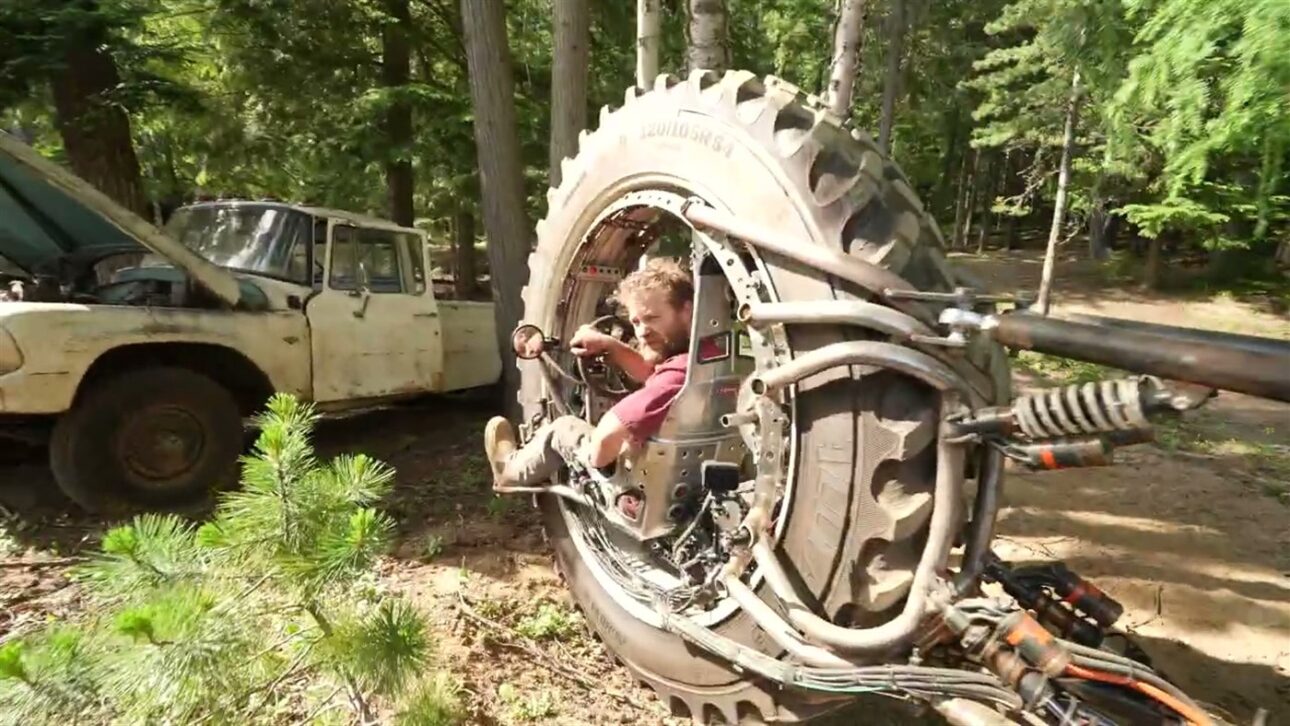
The first test proved the concept. According to Grind Hard Plumbing Co, when the front electric motor was activated, the front wheel started to pull even from a standstill, spinning slightly more than the rear on purpose, because there will never be perfect synchronization between electric and mechanical traction.
This slight slip is the magic of the system. The front wheel can slip slightly in relation to the rear without locking the steering, which in practice distributes the force across the three wheels and transforms the tricycle into a vehicle capable of climbing loose terrain, as Grind Hard Plumbing Co demonstrates. The duo began calling the project a hybrid, mixing the rear combustion with the front electric in an aesthetic they dubbed hybridpunk.
The Final Test: The Hill That Only Climbed with 3 Wheels
The trial by fire was the steepest hill on the property. According to Grind Hard Plumbing Co, the steepest and loosest climb of the terrain, so steep that you can’t even walk it, was tackled first with just the electric and then with all three wheels driving at the same time.
The result sealed the deal of the conversion. With traction on all 3 wheels, the tricycle climbed the hill that it would never have conquered with just the rear, and scaled the section even without the ideal gear ratio, as Grind Hard Plumbing Co celebrates. The creators themselves admit that many people see the vehicle and think it’s an image generated by artificial intelligence, it’s so unusual, but the machine is real and it works.
What the conversion teaches about electrification in Brazil


The garage project mirrors a serious trend. The conversion of combustion vehicles to electric or hybrid is gaining momentum in Brazil, from workshops electrifying old Beetles and Kombis to retrofit kits that add electric motors to collectible cars, with the same logic of adding electric torque to mechanical.
Homemade engineering anticipates what becomes industry. Electric traction on the front wheel combined with mechanical on the rear is the principle of all-wheel-drive hybrid vehicles already on the market, proving that the concept tested in a workshop tricycle is the same that drives factory cars, a notable parallel for the automotive sector in electrification. From the monster trike to the hybrid SUV, the idea is identical: use the electric motor where the mechanical doesn’t reach.
The video shows the installation of the electric motor, the assembly of the intermediate axle, the wiring of the batteries, and the hill climb tests with traction on all three wheels.
The monster trike with traction on all three wheels proves that workshop ingenuity anticipates factory technology. Tell us in the comments: would you believe this tricycle is real or would you think it’s an AI image?