






 Portuguese
  Spanish


In Georgia, 300 meters from a $750 million Meta artificial intelligence data center, is the case of how a data center dries up a resident’s water: Beverly Morris’s well filled with sediment, and the data center’s water consumption dried up her tap.
Mrs. Beverly Morris bought her dream home in 2016 to grow old peacefully in rural Georgia, USA. She paid $265,000 for a little corner surrounded by woods, far from the noise. Today she is afraid to drink the water from her own tap. Just a few steps from her porch, only 300 meters away, a Meta artificial intelligence data center costing $750 million was built, and it was from there that her life turned upside down.
The story was revealed by the newspaper The New York Times in July 2025 and became the human face of a global debate. It is the concrete case of how a data center dries up a common resident’s water, turning the billion-dollar race of artificial intelligence into a domestic nightmare. “It feels like we’re fighting an impossible battle to win, one we didn’t even sign up for,” Beverly lamented to the Times. This is the side of the technological revolution that no one puts in the advertisement.
The dream house that became an endless problem
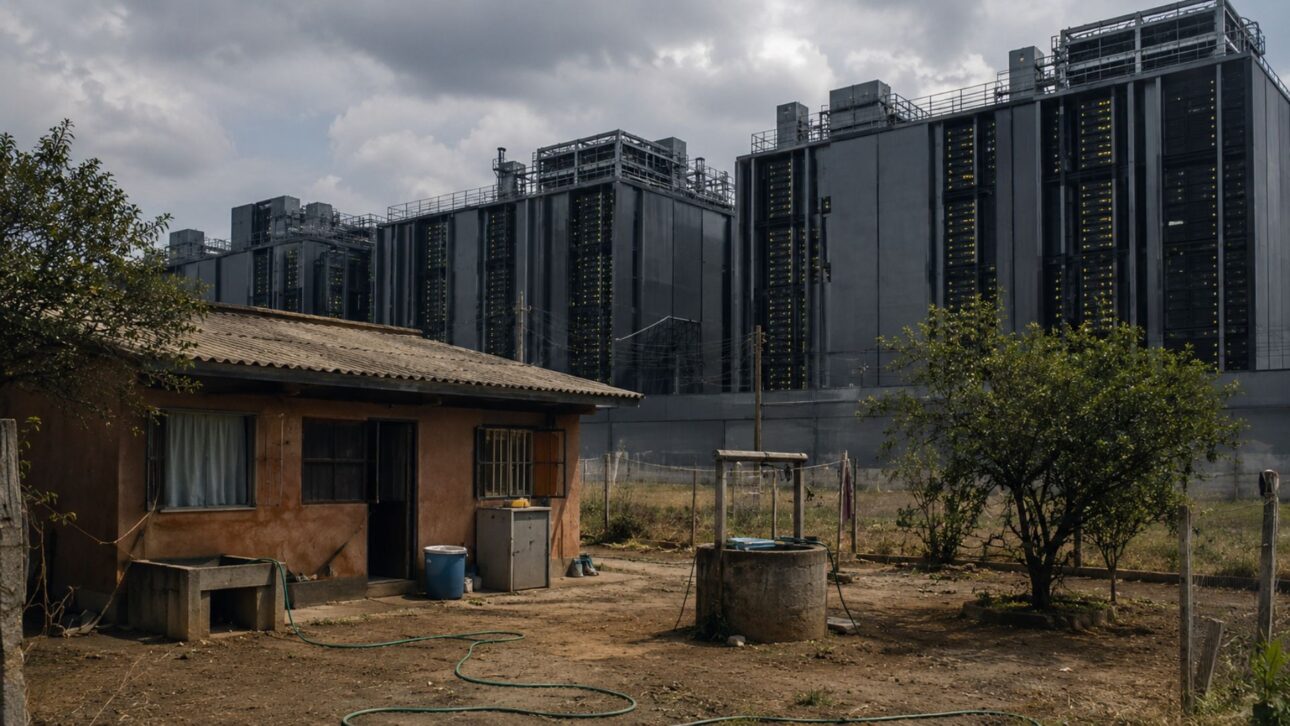
When Beverly and her husband, Jeff Morris, 67, bought the property in 2016, the land next door was an oak forest. They imagined silence and nature through the window. In 2018, Meta began constructing one of its largest data centers there, and by 2019 the forest had turned into a construction site. The peace was gone, but the worst was yet to come.
-
16-Year-Old from Brazil’s Sertão Wins Young Scientist Award for AI Predicting Rainfall with 94.5% Accuracy to Aid Farmers

-
Netherlands Reports First Child Euthanasia Case Since Rule Expansion for Minors

-
Brazilian Innovator Survives Homemade Submarine Dive in Paraty Despite Hatch Leak and False Oxygen Alarm
-
China Develops Custom 140-Ton Electric Mining Truck with 770 kWh Swappable Battery, Deploys 290 Units in Xinjiang’s Largest Zinc Mine



A few months after construction began, the house’s taps started to dry up. The water that came out was increasingly weak and dirty. What was meant to be a retirement refuge turned into a daily struggle for something basic: turning on the tap and having clean water. It is the rawest portrait of how a data center dries up a resident’s water who just wanted to live in peace.
The location tells the story by itself. The house is about 300 meters, or a thousand feet, from the wall of the Meta data center. When a construction of this scale is literally installed in the neighbor’s backyard, any change in the water table first knocks on the door of those closest. And the one closest was Mrs. Beverly.
Water turned to mud: what happened inside the well
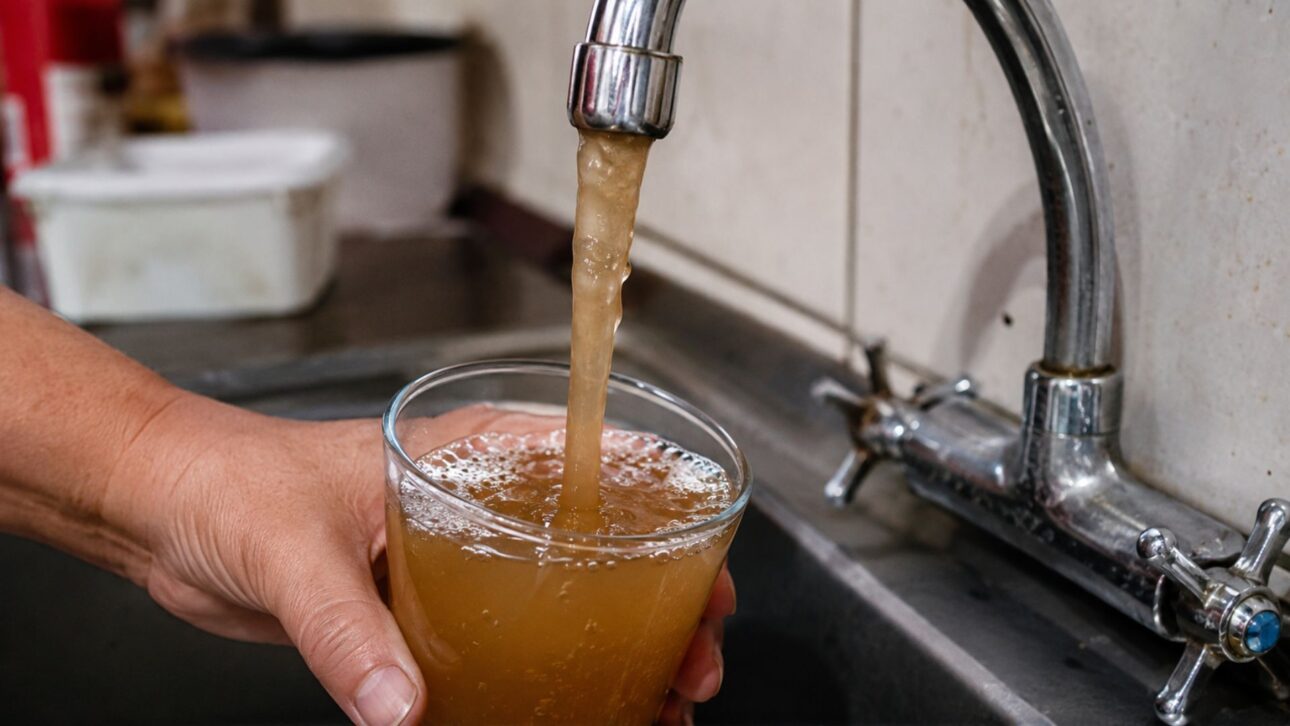
The Morris house’s water supply comes from a well, as is the case with many rural properties. It was in this well that the problem appeared. The water filled with sediment, and the pressure dropped until it became a trickle. The residue clogged everything: the dishwasher, the ice maker, the washing machine, and even the toilet stopped working properly.
The numbers of domestic damage are impressive. The couple had to replace appliances in 2019, 2021, and 2024, as the water destroyed one device after another. The taps in one of the two bathrooms have not worked again, and a dark residue accumulates at the bottom of the backyard pool. “I’m afraid to drink our own water,” Beverly Morris told the New York Times.
The cost to resolve it is the final blow. The Morris family has already spent about $5,000, around R$ 28,000, trying to fix the water problem. And the budget to replace the entire well reaches $25,000, something around R$ 140,000, money that the retired couple simply does not have. That’s where the drama of how a data center dries up a resident’s water stops being abstract: it becomes an elderly woman without money to have water in the tap.
500 thousand gallons per day: the water consumption of a data center
To understand why this happens, it’s necessary to talk about a number that few people know: the water consumption of a data center. These facilities heat up a lot because thousands of servers running day and night generate extreme heat, and many of them use water to cool the equipment. The larger the data center, the more water it consumes.
In the case of Newton County, Georgia, the scale is frightening. According to a detailed survey by the portal PPC Land, the Meta data center consumes about 500,000 gallons of water per day, equivalent to approximately 10% of the entire county’s water consumption. In other words, a single facility drinks a tenth of the water of an entire region, every day.
This is the point that turns data center water consumption into a collective problem, not just Beverly’s. When a structure draws 10% of the available water in an area already living on the edge, there is less left for everyone, and the aquifer feels it. The data center water consumption of this magnitude is exactly the type of pressure that helps explain why a neighboring well dries up.
Meta’s response and the unresolved doubt
Meta did not remain silent, and honesty demands hearing the other side. The company commissioned a study of the well on the Morris property and stated it was unlikely that its data center affected the area’s underground water supply. The company also offered well studies and adjustments on other issues but did not take responsibility for the damages the couple points out.
The crux of the story is that no one measured the well beforehand. There was no study of the neighborhood’s underground waters before the construction began, making it almost impossible to definitively prove what changed and why. The cause officially remains open. On one side, the timing coincidence and proximity of 300 meters weigh against the Meta data center. On the other, the company maintains that the connection is unlikely.
What is not in doubt is the suffering of those who live there. Regardless of the report, Beverly’s house water worsened right after the construction began, and she is the one paying the price. For the resident, the sequence of events is clear, and the feeling that a data center dries up a resident’s water without anyone taking responsibility is what is most upsetting. A realtor even told the couple: “There is only one party that would be interested in buying this land, and that party is Facebook.”
Newton County and the specter of water scarcity in 2030
Beverly’s case is the tip of a larger problem. Newton County is already projected to enter water deficit by 2030 if nothing changes in the infrastructure, and the arrival of the Meta data center and other giants only accelerates this account. Water scarcity has ceased to be a distant scenario to become a local government spreadsheet.
The logic is simple and concerning. Each new installation of artificial intelligence in a region draws water, energy, and space from a system that is often already strained. When water scarcity knocks on the door, it is the common residents, not the tech giants, who first feel the lack at the tap. Water scarcity thus becomes the most silent side effect of the AI boom.
It is a difficult paradox to swallow. The same technology that promises to solve the world’s complex problems is, in places like Newton County, creating one of humanity’s oldest problems: people without water. And the water scarcity caused or aggravated by this consumption tends to spread as more data centers sprout across the planet.
Why this is the “but now” of artificial intelligence
Stories like this stick in the mind because they expose the other side of a revolution sold as only advantageous. Artificial intelligence has become the hottest race of 2026, with companies pouring billions into data centers around the world. But now the cruel consequences of this expansion are beginning to appear, and they have a face, name, and age: Beverly Morris.
The contrast is brutal. On one side, a $750 million artificial intelligence data center, a symbol of the future and the power of one of the largest companies in the world. On the other, a retiree who cannot bathe properly or trust the water coming from the tap. The grandeur of the machine and the misery of the side effect fit on the same ground, separated by 300 meters.
It is this proximity that makes the case so powerful. It is not a distant statistic about data center water consumption, it is the closest neighbor to the construction going without water at home. When a data center dries up the water of a resident living next door, the abstraction of technology gains a human cost impossible to ignore.
The debate that has already reached Brazil
This type of tension is not exclusive to America, and Brazil has already entered the conversation. The country has become a destination for large data center projects, including the so-called AI city planned for Rio Grande do Sul, and the discussion about how much water and energy these structures will consume on Brazilian soil is growing. The question that Beverly’s story raises is the same that is starting to be asked here.
Brazilian studies are trying to measure the impact, and some point out that data center water consumption is still small compared to the country’s industrial use. The problem is local: even small consumption in the national total can weigh heavily in a specific city, just as it happened in Newton County. Water scarcity is not felt on the national average, it is felt at the tap of every house.
That is why the case of Georgia is of such interest to those who live far from it. It shows what can happen when an artificial intelligence data center arrives too quickly, without anyone studying the effect on the neighborhood’s water beforehand. It is a warning to plan first, so as not to discover the problem only when someone’s tap has already run dry.
A future that needs to fit in everyone’s glass
The race for artificial intelligence will not stop, and perhaps it shouldn’t. What the case of Beverly Morris demands is balance: that the population’s water is considered before the first beam is raised, and not after an elderly person’s tap has already run dry. Cutting-edge technology and people with water in their sinks should not be things that compete with each other.
In the end, the image that remains is of a lady looking at Meta’s data center, one of the most powerful in the world, 300 meters from her home, with $5,000 already spent, $25,000 she doesn’t have, and no certainty of when she will trust her own water again. It is the perfect and painful portrait of how a data center dries up a resident’s water at the exact moment when humanity celebrates the era of intelligent machines.
And you, do you think it’s fair for a billion-dollar artificial intelligence data center to leave the nearest neighbor without water, or does the blame for water scarcity need to be proven with a study before pointing fingers? Tell us in the comments: would you accept having such a structure 300 meters from your home?





