Portuguese
  Spanish


Those who pass by the Barmouth waterfront, a small beach town in the west of Wales, now see a charming one-bedroom house facing the Irish Sea. What almost no one imagines is that this address used to be a closed public bathroom reeking of abandonment for almost two decades. The transformation is the work of Elaine and Alan Taylor, the couple who took a chance on a public bathroom turned into a house when everyone else only saw a problem on the corner.
The story was told by North Wales Live at the beginning of 2025, when the property was put up for sale for more than 295,000 pounds. What makes the case irresistible is not just the before and after. It’s the extent of the stubbornness: ten years of work, expenses exceeding 260,000 pounds, and a purchase made blindly, without even being able to enter the place before bidding. It wasn’t luck. It was sweat, and a lot of it.
A blind bid for 33 thousand pounds
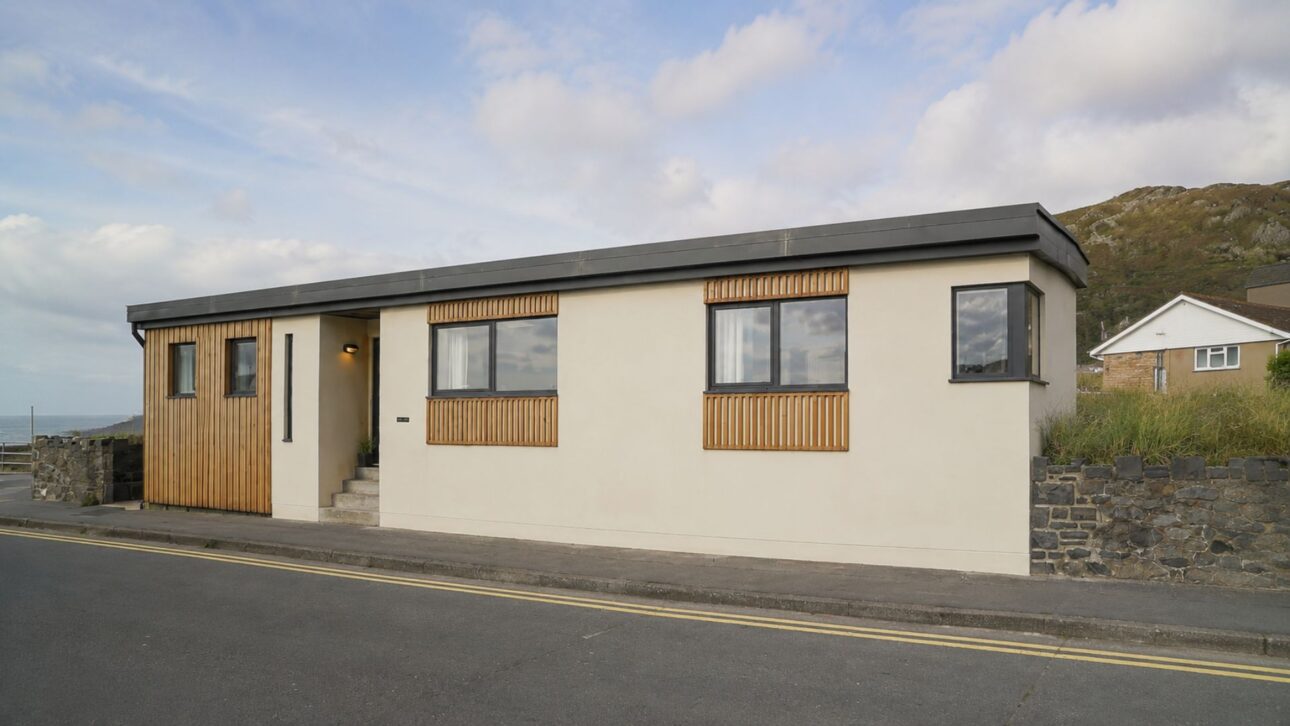
The couple was on vacation in Barmouth when they saw a “for sale” sign posted on an old block of public bathrooms on Marine Parade, just a few meters from the sand. The property was going to blind auction, the type of sale where the buyer bids without being able to visit the interior. They risked 33,000 pounds, around R$ 230,000 at the 2026 exchange rate, and the bid was accepted in July 2015.
-
With 26 Million Brazilian Families in Substandard Housing, Churches to Launch 2026 Challenge: Each Parish to Build or Renovate a Home for a Local Family

-
Wood-Look Aluminum Emerges as a High-Tech Alternative for Facades and Gates, Offering Sophisticated Aesthetics and Low Maintenance

-
Couple Transforms 1964 Concrete Water Tower into Four-Bedroom Home with Views of London Over Four Years
-
U.S. City Builds Tiny Home Village on Water Company Land to House 136 Homeless People: Inside the Social Housing Units


Buying at a blind auction is a shot in the dark, and Elaine knew it. “When it was for sale, we couldn’t enter the property, so it was a blind bid, and we just assumed it would have electricity because it had been a public bathroom, and water too,” Elaine Taylor told North Wales Live. It was a guess based on logic: if it was a bathroom, in theory, it has plumbing and electricity. The rest was unknown.
This is the detail that captivates anyone who has ever dreamed of buying cheap to renovate. A blind auction can be the gateway to an unusual property at a bargain price, or to an endless headache. In the case of the Taylors, it was a bit of both. The entry price was friendly, but what came after was costly and tested the couple’s patience year after year.
Nineteen years of abandonment and smell of nature
To understand the size of the challenge, it’s worth looking at the state of the structure. The public restrooms at Marine Parade had been closed in 1997 and were left abandoned for almost 19 years, according to the planning record of the Gwynedd Council, which approved the conversion of the building into a residence. Almost two decades of abandonment in a beachfront building leave a mark: humidity, mold, rust, and that smell that doesn’t easily go away.
The Gwynedd Council sold the block in 2015, and the permission to transform the public restroom into a residence was granted at the end of 2016, with the work starting in earnest in the European summer of 2017. That’s when the couple discovered they had bought much more work than they imagined. The idea of a public restroom transformed into a house seemed simple on paper. In practice, it turned into almost a reconstruction from scratch.
The Taylors always argued that they were not taking housing away from anyone in the market. On the contrary: they were reviving a dead building and improving the corner. Transforming an unusual and degraded property into something habitable is, in the end, bringing life back to a forgotten part of the city. This argument even helped in the project’s approval.
A decade of work and almost 290 thousand pounds
The property renovation didn’t take months, it took a decade. Ten years transforming the abandoned restroom into a house, dealing with old structures, building regulations, and the hassles that everyone who has ever renovated knows, multiplied by the oddity of starting from a block of latrines.
And it was expensive. The couple estimated they spent about 260 thousand pounds just on the work, and, adding everything up, the project came close to 290 thousand pounds, roughly around 2 million reais in the 2026 conversion. In other words, apart from the 33 thousand pounds paid in the blind auction, almost ten times that amount was sunk into the property renovation over ten years. It’s not the kind of work you do on a weekend with paint and goodwill.
It is precisely this contrast that gives weight to the story. Turning a public bathroom into a home was not a shortcut to getting rich, it was a project of patience and stubbornness. Those who only look at the round numbers, 33 thousand at the start and 295 thousand at the end, think of easy profit. Those who read between the lines see a decade of money and nerve invested in a property renovation that few would have the courage to face.
How the house by the sea turned out
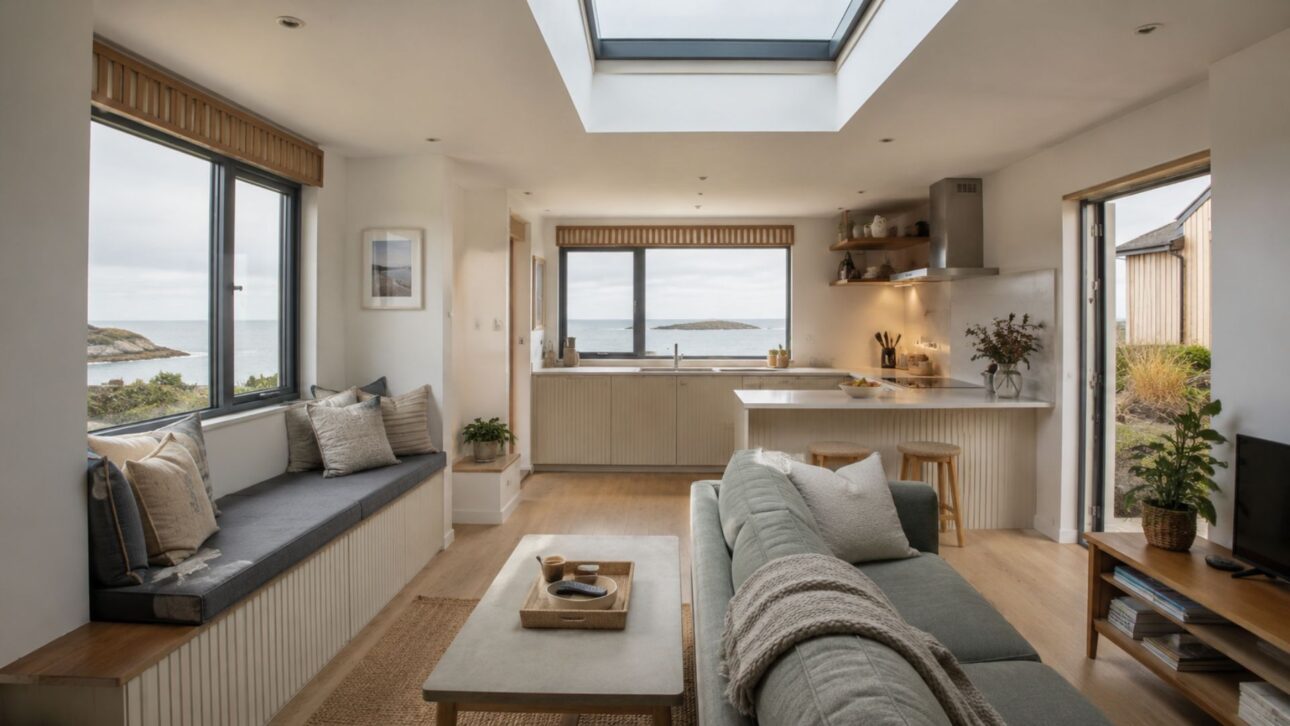
The result silenced the skeptics. The public bathroom turned into a house became a one-bedroom residence, with a living room and kitchen integrated into one space, and a bedroom with an en-suite bathroom. Nothing resembles the original function. Instead of the bad smell and grimy tiles, there is now a neat finish and natural light.
The charming touches are what impress the most in a house by the sea of this size. The bedroom gained a skylight for the couple to watch the stars from bed, and a corner window with a granite sill frames the landscape. The location does the rest: the house by the sea faces Barmouth beach and the Irish Sea, with the water practically across the street.
It was this combination of a curious story and postcard view that placed the house by the sea at a price of over 295 thousand pounds when it was listed. The property stopped being a joke about an abandoned bathroom to become the type of house by the sea that many people dream of having, with the advantage of having one of the most unusual origin stories on the Welsh coast.
The account that doesn’t add up as a business, but adds up as a dream
It’s worth being honest about the numbers because they tell a truth that the title doesn’t fit. The Taylors spent more to create the house than it is worth selling. Adding the 33 thousand pounds of the purchase with almost 290 thousand of the work, the couple put close to 320 thousand pounds into the project, and the listing price was over 295 thousand. On a cold spreadsheet, it wasn’t a good deal.
But not everything fits on a spreadsheet. For ten years, they had a life project, a house by the sea made their way, with every detail thought out. The reason for selling is also prosaic: Elaine’s work routine was no longer in Wales, and keeping the unusual property idle no longer made sense. It was life moving on, not regret.
The lesson for those who are excited about property renovation from auction is twofold. The low entry price is misleading, because the real cost appears in the work, not the purchase. And the value of a public bathroom turned into a house is not always in what it yields on resale, but in what it meant while being built. For the Taylors, the balance was of experience, not profit.
Why this type of unusual property enchants so many people
Stories of unusual properties become a craze because they tap into a collective desire: to transform the impossible into a home. We’ve seen buses, containers, and even water tanks turned into houses, but a beachfront public restroom is a different kind of audacity. It takes the most mundane and smelly thing there is and converts it into a refuge with a sea view.
There’s also the fascination with the extreme before and after. The more degraded and improbable the starting point, the more impressive the result. An unusual property like this proves that an old structure and a shameful function are not a death sentence for a building. With design, money, and stubbornness, almost anything can be reinvented, even a block of latrines closed for 19 years.
And there’s the aspirational side of the wallet. At a time when buying a beachfront house seems like something for the rich, seeing a couple enter through a back door, via blind auction and a lot of property renovation, fuels the fantasy that there might be an alternative path. The honest caveat is that this path is long, expensive, and risky. But it is inspiring, that’s for sure.
What this corner of Barmouth teaches
In the end, the public restroom turned into a house in Barmouth is less of an investment tip and more of a story about seeing potential where others turn up their noses. Elaine and Alan Taylor looked at a building the town had given up on and saw a home. It took them ten years and almost 290,000 pounds to prove they were right.
Perhaps the greatest value of this unusual property is not in the 295,000 pounds of the listing, but in the idea it plants in the mind of the reader: that no place is definitively lost. A smelly seaside restroom became one of the most charming houses on the coast, and that, let’s face it, is the kind of turnaround that sticks in the memory.
And you, would you have the courage to place a bid in a blind auction for a property you can’t even visit beforehand, knowing that the property renovation might cost ten times the purchase price? Or do you think that turning an abandoned public restroom into a beachfront house is madness that only works out at the end of the story? Tell us in the comments about the most unusual property you’ve ever seen turned into a home.