






 Portuguese
  Spanish


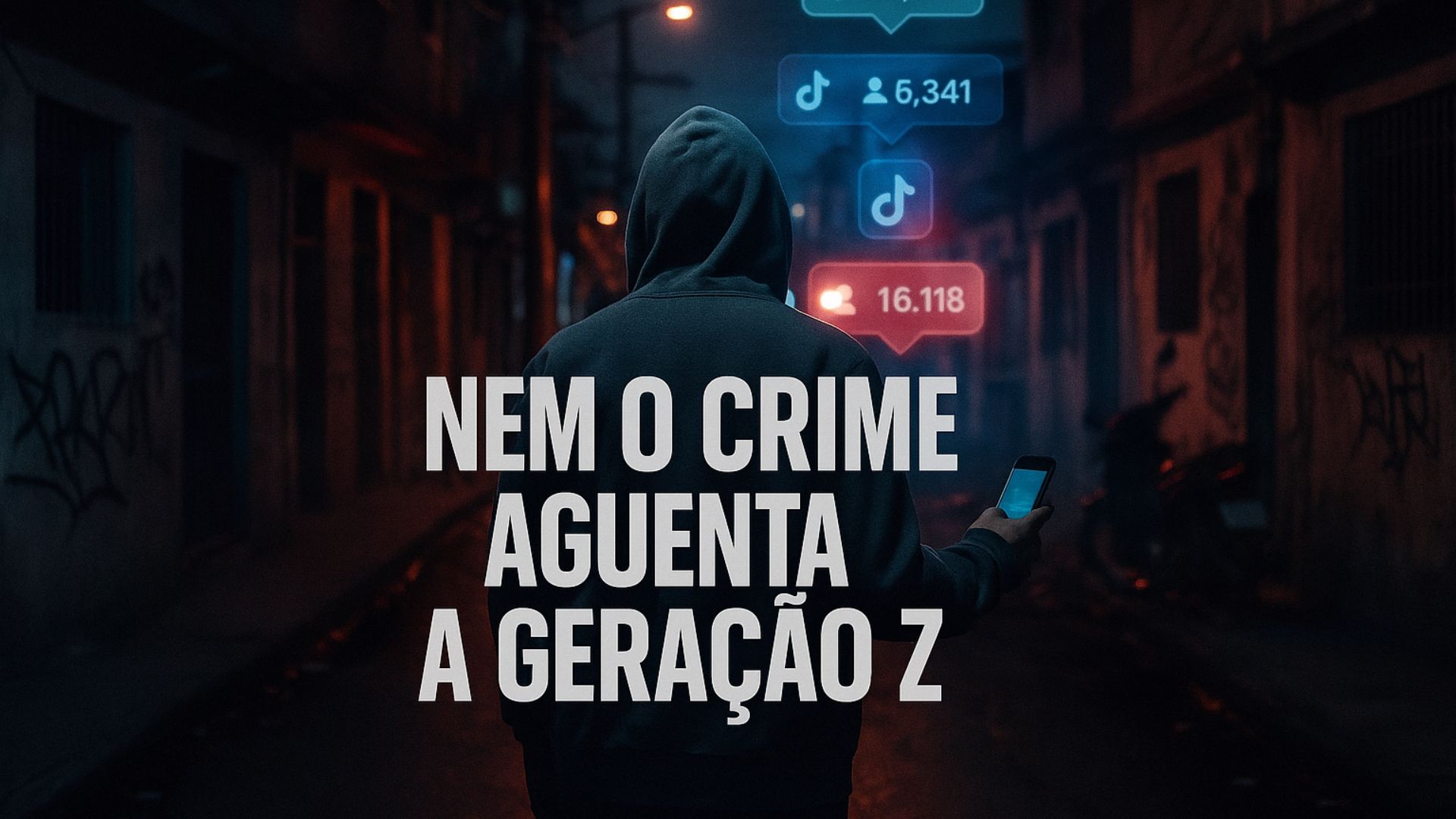
Young People of Generation Z Are Transforming Crime in Brazil with Social Media-Typical Behaviors, Challenging Old Rules and Showing Weapons and Criminal Routines as Digital Influencers.
The new generation of crime in Brazil has raised concerns even among the heads of factions.
Young people of the so-called Generation Z, born between the late 1990s and the early 2000s, are bringing typical social media behaviors into criminal organizations — such as exhibitionism and the pursuit of instant fame.
This assessment comes from public safety expert Joel Paviotti, in an interview with the Edson Castro Show Podcast.
-
Couple Sold Everything to Restore a 300-Year-Old Abandoned Mansion, Uncovering Ancient Books and Untouched Rooms

-
Couple Builds Sustainable Home from Straw Bales, Wood, and Clay in Brazil
-
At 64, Grandma Sônia Turned Homemade Recipes into a Family Business, Growing Casa de Bolos to Over 600 Locations and Expanding to Portugal

-
Brazilian Couple Builds Underground Bunker in Santa Catarina Amid Fears of Crises and Shortages, Spending $10,000 and Learning Construction from Scratch, Videos Go Viral


According to Paviotti, the phenomenon represents a unprecedented generational shift in organized crime in Brazil.
He explains that while criminals from previous decades valued hierarchy and secrecy, younger ones act impulsively, document everything on their phones, and share videos and photos armed on platforms like TikTok and Instagram.
“Even the oldest leaders are exhausted by this youth,” reported the expert.
The Disorder in Crime and the Break with the Old Code
According to Paviotti, faction leaders themselves have complained about the behavior of the newcomers.
He cited the account of a former criminal who lives in a periphery and reported being robbed at his doorstep by two armed teenagers.
When the man sought the local leader to complain, he heard a phrase that summarizes the current moment: “Even the PCC can’t handle this generation anymore”.
The expert highlighted that, in the past, crime was more structured and disciplined, with clear rules of coexistence and respect for residents of the communities.
Today, he says, disorganization prevails.
“This youth treats factions like football teams. If they don’t like one, they switch to another,” he stated, referring to the ease with which young people change organizations — something unthinkable in previous decades.


Social Media and the Culture of the Crime Influencer
Among the most emblematic examples, Paviotti cited the case of “Gotinha”, a young member of a faction in Rio de Janeiro who had amassed hundreds of thousands of followers on Instagram.
According to the expert, he posted videos showing high-caliber weapons and even did “unboxing” of rifles, a practice similar to that of digital influencers who showcase products to the audience.
“He did with rifles what many people do with sneakers,” commented Paviotti, explaining that the criminal even disclosed illegal bets while posing with luxury cars and gold chains.
Gotinha was shot dead, but according to the expert, posts continued to be made on his profile, possibly by close individuals who maintained advertising contracts.
The Banality of Violence and Digital Status
The media behavior of these young people, Paviotti observes, reflects the quest for immediate recognition and digital status, values typical of Generation Z.
He reported that many criminals conduct live broadcasts after violent actions, celebrating invasions and confrontations as if they were sports achievements.
“They make videos after shootings and publish them as if they were trophies. It’s the logic of social media applied to crime,” he explained.
This public exposure contrasts with the old culture of discretion among criminals.
Paviotti stated that while older leaders maintained secrecy as a form of self-preservation, new members prefer to stand out.
“In the past, respect came from silence. Now, it comes from likes and followers,” he summed up.
Uncontrolled Factions and Increase in Meaningless Violence
Another point raised by the expert is the weakening of internal authority within the factions.
He notes that with many leaders imprisoned or migrating to more profitable activities, such as international drug trafficking, the foundation of crime has fallen into the hands of teenagers.
“These kids act impulsively and with little awareness of consequences. They kill for trivial reasons, for an offense, a glance, or even for clothing,” he warned.
Recent cases reinforce this assessment.
Paviotti cited reports of young people executed for trivial reasons, such as stepping on someone’s foot at a dance or wearing clothing associated with rival symbols.
In some episodes, even pets have been killed in local conflicts, demonstrating the level of uncontrollability.
The New Criminal Identity
According to the expert, there is also a symbolic shift in how these young people identify with crime.
Previously, being “from the hill” or “from the neighborhood” was part of a community building linked to territory.
Today, affiliation is more about aesthetics and group codes on social media, such as gestures, slang, emojis, and music.
“Being from the PCC or Comando Vermelho is no longer a sufficient identity for them,” explained Paviotti.
“They create their own symbols, prohibit specific clothing brands, define hairstyles, or ways of dressing. It’s a more visual and instant identity that changes all the time.”
This transformation, he says, has a direct impact on public safety.
“When crime becomes a digital performance, violence gains a showcase. This attracts more young people and makes control more difficult,” he assessed.
Between Entertainment and Tragedy
During the conversation with host Edson Castro, Joel Paviotti noted that the topic, although serious, ends up being treated with a certain normality on social media and podcasts.
“It’s frightening how we can talk about urban war lightly. This shows how accustomed Brazilians have become to tragedy,” he commented.
He highlighted that humor, often present in these conversations, serves as a form of defense against a brutal reality.
“We joke about the absurd because if we take it seriously all the time, we go insane,” he said.
Disconnection with the Community and the Collapse of Order in the Peripheries
Paviotti also recalled that in the past, criminals maintained a certain “code of coexistence” with the residents of communities, avoiding thefts and internal conflicts.
This logic, he says, has disappeared with the advance of large factions and the entrance of Generation Z into leadership.
“In the past, if someone was robbed, they knew who to turn to. Today, not even local leaders have control over who is committing the crimes,” he reported.
This loss of reference creates a scenario of generalized insecurity in the peripheries and further distances the population from the police and public institutions.
A Portrait of a Country in Transformation
The public safety expert argues that understanding this new criminal generation is essential for thinking about effective public policies.
He argues that crime has adapted to the digital logic, and the government needs to do the same.
“It’s not possible to combat a network phenomenon with tools from the last century,” concluded Paviotti.
The expert’s statements on the Edson Castro Show Podcast expose an unsettling portrait of contemporary Brazil: a country where social media culture even shapes criminality and where violence has become entertainment content.
Amid this new reality, the question that remains is: how to confront a crime that, in addition to being armed, seeks likes?





-

1 person reacted to this.