






 Portuguese
  Spanish
  3 min of reading
  0 comments


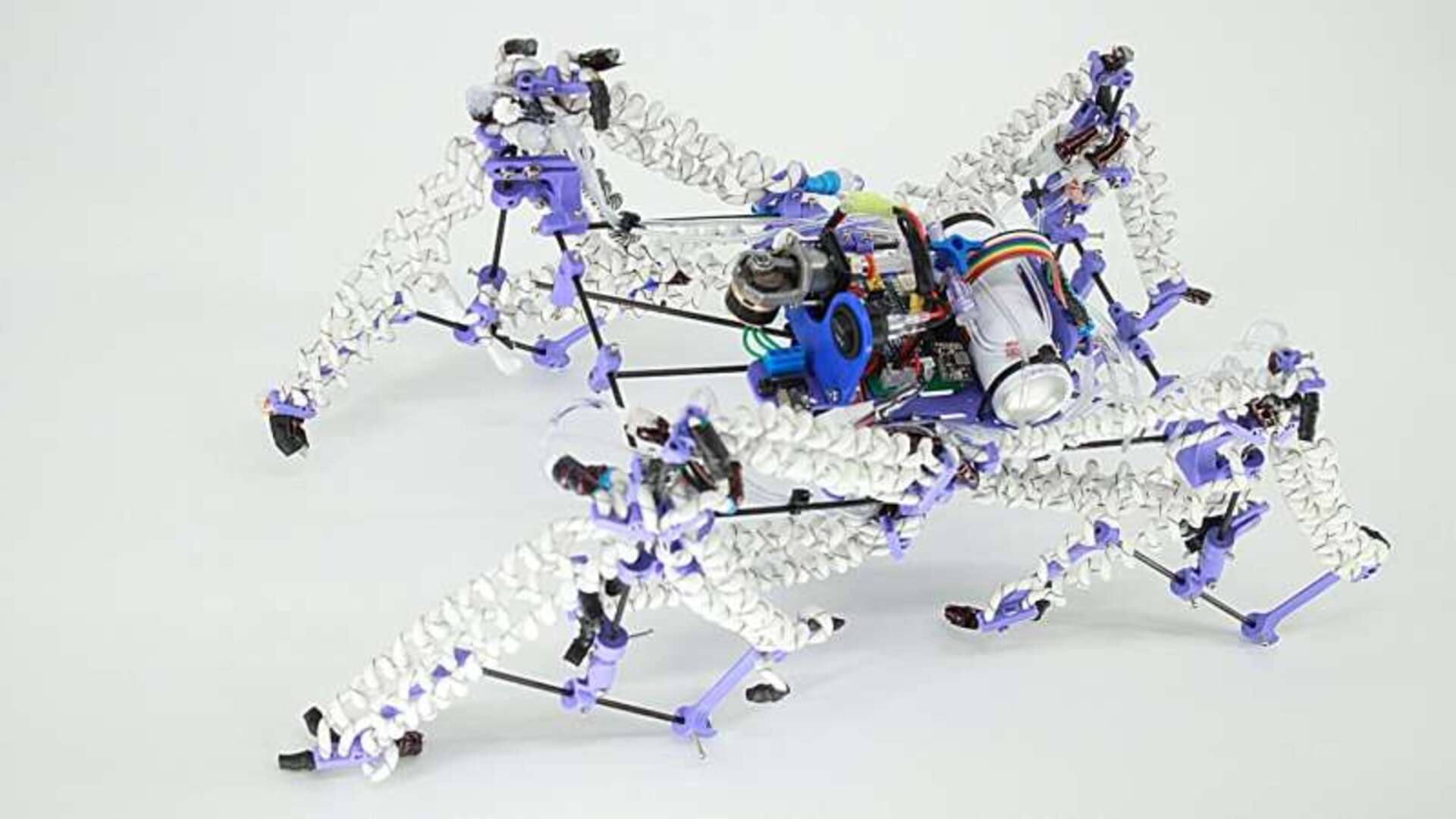
The high-performance pneumatic technology uses flexible polymers to simulate biological force and optimize industrial load capacity.
Scientists have developed an innovative technology of air-powered artificial muscles that enables robots to support loads equivalent to 100 times their own mass. The system uses compressed air to expand and contract flexible structures, simulating the behavior of biological muscles with unprecedented energy efficiency.
This discovery paves the way for the creation of lighter yet significantly more powerful robots capable of operating in industrial and rescue environments where brute strength and precision are essential.
The high-performance mechanics of the new actuators
The structure of these components is based on advanced polymers that react instantly to changes in internal pressure.
-
Helicopter Drops 180 Tons of Sand and Gravel on Swedish River to Revive Ecosystem Damaged by Decades of Exploitation

-
Brazilian Company Launches Retro Smartphone with 48 MP Camera, T9 Keyboard, and Privacy Features for Social Media-Free Use

-
Self-Taught Chinese Farmer Builds 5-Ton Submarine from Scrap, Launches It in Anhui River
-
Invisible Induction Technology Enables Wireless Power for Blenders, Coffee Makers, and Air Fryers, Reducing Countertop Cables




The air-powered artificial muscles operate through a contraction mechanism that, when inflated, generates a powerful traction sufficient to move heavy robotic limbs. Unlike conventional electric motors, which are rigid and heavy, these pneumatic actuators are lightweight and can be molded into different shapes. This flexibility allows machines to perform complex tasks with a smoothness that was previously exclusive to living beings.
The high load capacity is a result of the geometric optimization of the fibers that make up the synthetic muscle. When the air-powered artificial muscles are activated, the pressure distribution occurs evenly, avoiding stress points that could rupture less resistant materials.
In stress tests, the prototypes were able to lift dense metal objects while maintaining structural stability, a feat that demonstrates the durability of the new technology for continuous use in intense work cycles.
Advantages of flexible and safe robotics
One of the main contributions of this innovation is the increased safety in the interaction between humans and machines. Since the air-powered artificial muscles possess inherent elasticity, robots equipped with this technology are less likely to cause damage in accidental collisions, unlike machines powered by metal gears.
This feature is crucial for the new era of collaborative robotics, where robotic assistants share the same physical space with human workers on assembly lines.
In addition to safety, the production cost of these systems is considerably lower than that of traditional high-power solutions. The basic components of air-powered artificial muscles involve easily obtainable plastic materials and simple pneumatic valve systems. This suggests that in the future, the technology could be applied in affordable prosthetics, allowing people with physical disabilities to regain movement with a strength and naturalness that current technologies still cannot fully provide.
Perspectives for industry and rescue
The potential applications of these devices range from heavy manufacturing to space exploration missions. Rescue robots equipped with air-powered artificial muscles could lift debris in disaster zones without the need for massive electric generators, using only compressed air tanks.
The ability to operate quietly and efficiently makes these actuators ideal for environments where discretion or battery conservation are critical operational criteria.
Researchers are now working to miniaturize air compressors, aiming to make the system fully autonomous and portable. With the improvement of materials, it is expected that the strength of the air-powered artificial muscles will increase even further, possibly exceeding the mark of 100 times their own weight.
The integration with artificial intelligence systems will allow these muscles to automatically adapt to the load they are lifting, optimizing air consumption and prolonging the robot’s lifespan in long-duration missions.
Click here to access the study.





Be the first to react!