Portuguese
  Spanish



Created by a young man who grew up on a dairy farm in New Zealand, Halter technology uses artificial intelligence and solar collars to monitor cattle, automate farming tasks, and has already helped a rancher in Kansas save almost six hours of work per day
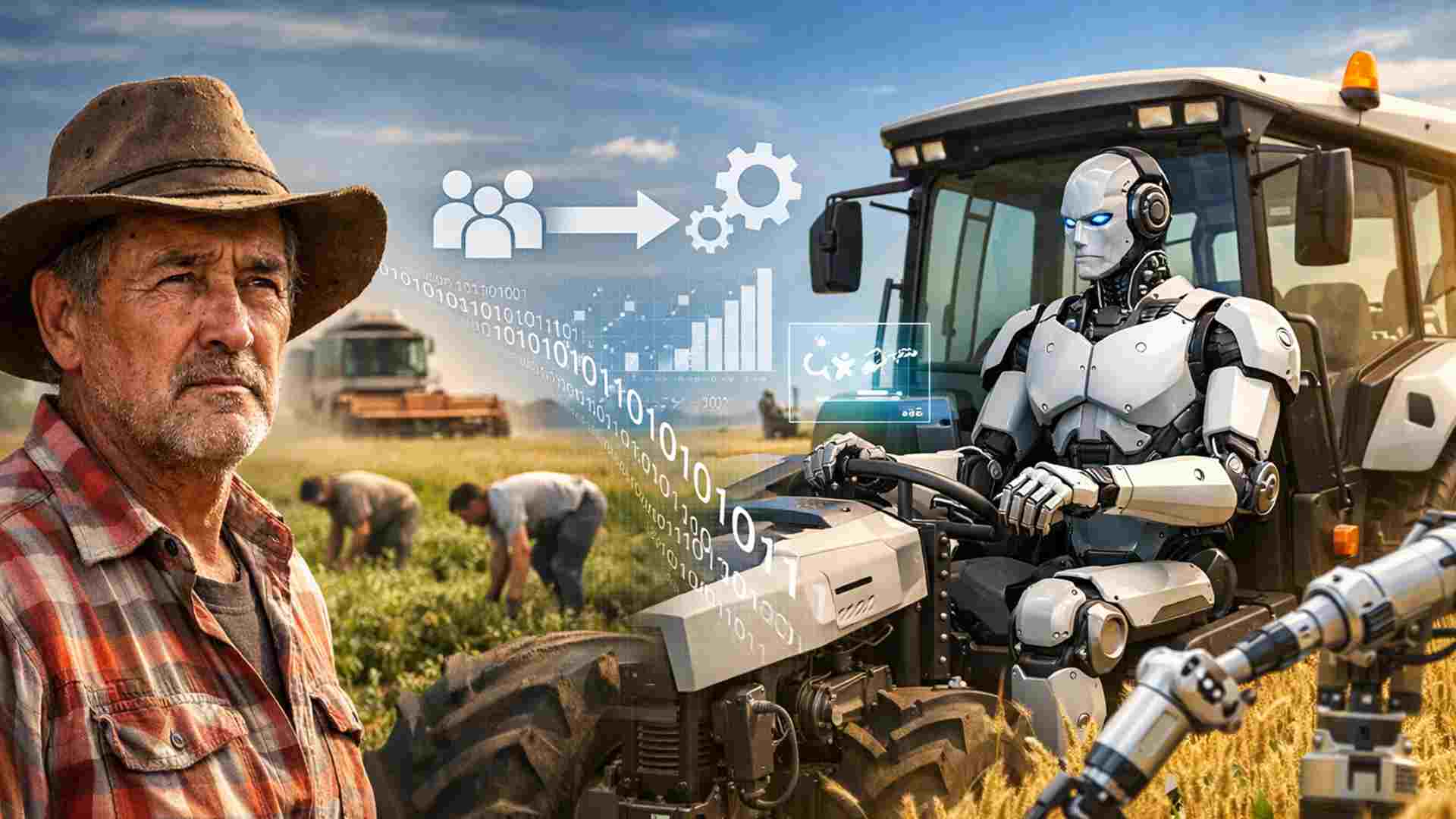
Artificial intelligence is advancing in livestock farming and other rural activities amid pressure for more efficiency in farming, high costs, and increasing difficulty in finding workers in the field. In this movement, Halter’s case has become one of the most striking examples: founded by New Zealander Craig Piggott, the company created smart collars with AI to monitor cattle, automate part of the management, and reached a valuation of $2 billion after raising $220 million in a round led by Peter Thiel’s Founders Fund.
Piggott grew up on a dairy farm in the Waikato region of New Zealand and turned that experience into the foundation for Halter, created in 2016.
The company developed a system nicknamed “cowgorithm,” which gathers biological data from the animals and connects it to solar collars capable of tracking feeding, movement, and recovery after calving.
-
At 35, Lawyer Leaves Corporate Career to Turn 1-Hectare Farm into Organic Supplier for Schools in Southern Brazil

-
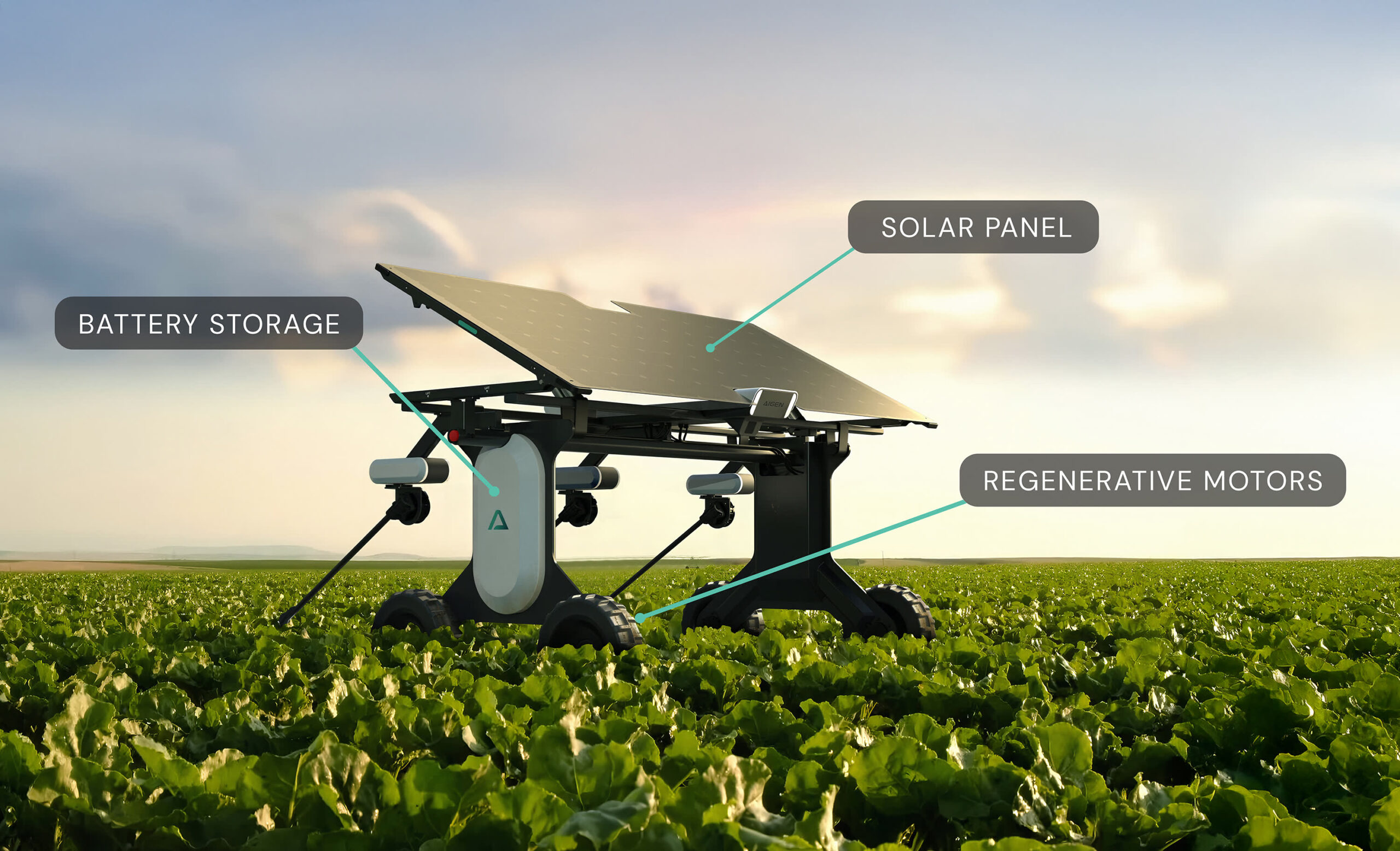
Solar-powered agricultural robots operate 24/7, remove weeds with 8mm precision, and aim to cut herbicide use without fuel consumption in the fields.

-
Brazilian Farmer Invents Low-Cost Tractor Using Motorcycle Parts, Efficiently Working 2 Acres on 1 Liter of Diesel

-
Regenerative Farmers Use Keyline Plow to Improve Pasture Hydration, Storing 1 Gallon of Water Every 30 Centimeters



The proposal gained traction at a time when agricultural technology is accelerating on various fronts. A report from Bank of America published in April 2026 indicates that, by 2024, more than half of farmers worldwide had already adopted or were willing to adopt at least one precision agriculture or AI-enabled technology, with a projected agtech market of $34 billion by 2034.
The Halter Case in Livestock Farming
In practice, Halter sells farmers the promise of transferring tasks that previously required constant physical presence in the pasture to an app.
In a report published by Fortune, American rancher Daniel Mushrush, one of the company’s first clients, stated that he uses the technology on a 16,000-acre ranch in Chase County, Kansas, to move the herd, monitor calvings, and better organize the use of pasture areas.
According to this report, cows can be moved with sound signals and, in some cases, low vibration stimuli, according to programming done on a mobile phone.
Mushrush said that the tool has reduced the time spent on tasks such as moving fences and walking the property to check the herd by almost six hours a day, in addition to allowing premium grass to be reserved for newborn calves, which can grow up to 40 pounds heavier compared to previous cycles.
The pricing model itself shows why the technology is seen as both an opportunity and a challenge. The initial price mentioned in the case is $9.90 per cow per month, a cost that weighs heavily on operations with hundreds or thousands of animals, even though the sales pitch is centered precisely on reducing manual labor, gaining efficiency, and better managing livestock farming.
Other Cases of AI and Automation in the Field
Livestock farming is not alone in this process. John Deere, one of the global giants in the sector, has been expanding its portfolio of autonomous machines and claims that its autonomy platform uses artificial intelligence, computer vision, and cameras to allow tractors to operate alone in certain agricultural activities.
The company’s message is straightforward: while the equipment works alone, producers and operators can be moved to other tasks.
This type of solution reinforces the trend of an increasingly connected field, where part of the operational work is performed by autonomous systems, sensors, and monitoring software.
Another example comes from specialty crops, an area where the dependence on manual labor tends to be greater.
The USDA and NIFA highlight that automation technologies are being developed to improve efficiency in planting, harvesting, and processing, including robotic arms for apple harvesting and solutions aimed at cotton, precisely in segments where labor is expensive, difficult to secure, and sensitive to periods of scarcity.
These cases show that agricultural automation is not limited to a single type of farm or herd.
It appears in both heavy equipment and in sensors, collars, cameras, mobile platforms, and decision systems that aim to reduce the burden of repetitive work, increase operational control, and keep production running even when available labor is scarce.
Labor Shortages Accelerate the Search for Technology
The lack of workers in the field is one of the central factors behind this technological race. The World Bank had already pointed out, in a study on the future of work in agriculture, that demographic dynamics and migration to activities outside the field raise the prospect of agricultural labor shortages, especially for wage workers, in different countries.
In the United States, the USDA reports that changes in the composition of the workforce and rising labor costs drive the adoption of mechanical aids and technologies in the sector. In areas more dependent on manual labor, such as fruits and horticulture, the pressure is even stronger, with machines and automated systems being treated as a practical response to hiring difficulties.
The USDA Agricultural Research Service itself states that automated harvesting technologies are urgently needed to address labor shortages and rising costs in the tree fruit industry.
Meanwhile, the CDC, in a review of emerging technologies in agriculture, points out that the shortage of workers is one of the drivers of robotics and automation development in the field, alongside economic, climatic, and social factors.
In early 2026, NIFA reiterated that the specialty crop industry is increasingly pressured by labor shortages, global competition, and demand for higher quality. In this scenario, automation appears less as a technological luxury and more as a tool to try to maintain productivity, reduce bottlenecks, and reorganize rural routines.
What This Change Reveals for Livestock Farming
In the case of livestock farming, AI is beginning to take over specific parts of the routine that previously depended exclusively on the farmer, such as observing movements, checking health, monitoring calvings, and reorganizing animal groups. This does not eliminate all human presence but alters the type of work required on the farm, shifting part of the physical and repetitive activity to remote control via an app and data reading.
Halter itself presents this logic by promising more time, better workflow, and a more attractive livestock farming for younger generations familiar with technology. At the same time, the cases already in use show that the advancement of AI in the field is being driven by an objective combination of factors: hiring difficulties, rising costs, pressure for productivity, and the search for more sustainable operational models.