Portuguese
  Spanish


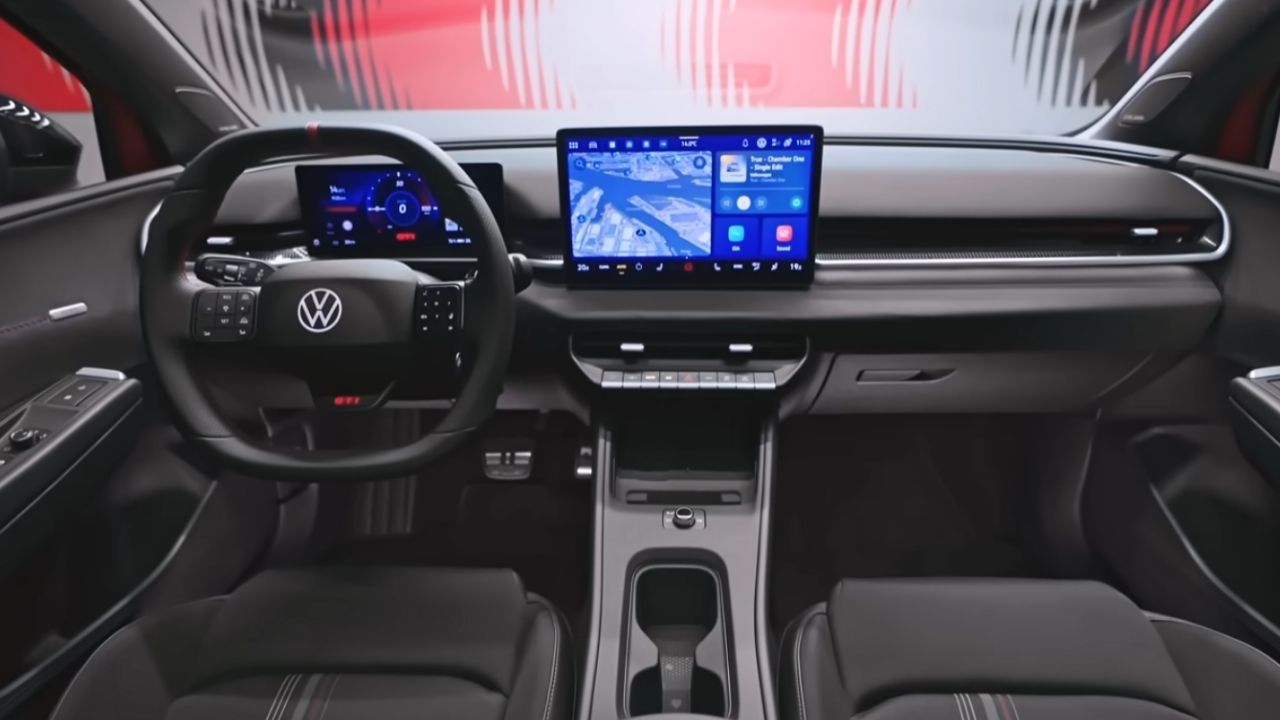

Volkswagen introduced the ID. Polo GTI as an electric car with a 226 hp electric motor, 52 kWh battery, and retro dashboard inspired by the Golf GTI. The model debuted at the 24 Hours of Nürburgring and marks the first application of the sporty badge on an electric car from the brand in Europe.
Volkswagen introduced the ID. Polo GTI during the 24 Hours of Nürburgring, in Germany, in 2026, as part of a new phase for its compact sports cars. The model marks the first time the GTI badge is associated with an electric car from the brand.
In a video published by the channel Acelerados, the launch also occurs in a symbolic year for the sports line. The GTI badge turns 50 years old in 2026, since the 1976 Golf GTI, while the Polo GTI reaches 20 years since its debut in 2006. Now, the automaker tries to unite this heritage with the electric universe.
Electric GTI marks a new strategy for Volkswagen

The arrival of the ID. Polo GTI shows an important shift in how Volkswagen intends to organize its electric and combustion models. Instead of keeping families completely separate, the brand is bringing familiar names, like Polo and GTI, closer to the ID line.
-
Discover the 2021 Fiat Cronos 1.3: Affordable Maintenance, Reliable Mechanics, and Fuel Efficiency of Up to 15.6 km/l

-
Cummins Unveils Hydrogen-Powered X15H Engine with Over 800 km Range and 15-Minute Refueling, Challenging Electric Truck Dominance

-
Chevrolet Onix 2026 Priced at R$ 86,790 with Discounts, Underpricing Citroën C3; Features 1.0 Engine, 6 Airbags, 8″ MyLink, Wi-Fi, and OnStar

-
Fiat Mobi Price Nears $18,000 in Brazil: Entry-Level Hatch with 1.0 Firefly Engine, Manual Transmission, and Stability Control Sees $400 Increase.


Previously, the strategy separated traditional models, like Golf and Polo, from electrics like ID.3 and ID.4. Now, the trend indicated by the new compact is to use names already recognized by the public also in electric versions. The idea is to preserve familiarity while the technology changes.
226 hp motor and 52 kWh battery draw attention
The ID. Polo GTI was presented with a 52 kWh battery and an electric motor of 226 hp. The set also delivers more than 29 kgfm of torque, according to the information highlighted in the presentation, positioning the model as a sporty version within the brand’s new electric generation.
Acceleration from 0 to 100 km/h is reported in 6.8 seconds in Sport Plus mode. The number is not the most extreme among sporty electric cars, but the car’s proposal seems to aim more at the combination of weight, drivability, and dynamic behavior than just straight-line acceleration.
Lower weight could be one of the new compact’s advantages

One of the most highlighted points in the model is the weight. The ID. Polo GTI was mentioned with 1,540 kg, a value considered relatively low for an electric car, especially when compared to larger or heavier models from Volkswagen itself.
This difference matters because weight affects acceleration, braking, consumption, tire wear, and cornering behavior. In a compact sports car, reducing mass can be as relevant as increasing power, especially when the proposal involves driving sensation and track use.
Suspension, steering, and differential reinforce sporty proposal
In addition to the engine, the ID. Polo GTI received adjustments aimed at dynamic behavior. The front suspension has a different setup to improve corner entry, while the rear received a stiffer set to handle the electric motor’s power.
Another cited feature is the Haldex limited-slip differential on the front axle. The model also features progressive steering, which varies the steering wheel’s response according to the situation. These elements show that Volkswagen tried to go beyond a simple visually sporty version.
Interior uses retro mode inspired by classic Golf

Inside the car, one of the most striking details is the retro mode of the digital dashboard. The screen recreates graphics inspired by old Volkswagen models, including elements associated with the first and second generation Golf and the boxy cars that also made history in Brazil.
The system displays gauges with a classic appearance, including a speedometer, power indicator, and visual elements reminiscent of old dashboards. It is a way to use digital technology to reinforce emotional memory, rather than just displaying information in a conventional way.
Physical buttons and Sport Plus mode appear on the steering wheel
The interior also retains physical buttons for important controls, such as air conditioning, windows, and mirrors. This choice stands out because many manufacturers have migrated functions to touch screens, something that does not always please drivers in daily use.
Another novelty is the GTI button on the steering wheel. When pressed, it activates driving modes and takes the car to Sport Plus, altering the power delivery of the electric motor. In practice, Volkswagen tries to transform the GTI badge into a driving experience, not just an emblem.
Price in Europe puts the ID. Polo GTI in a tough competition


According to the information presented, the ID. Polo GTI is expected to start at 39,000 euros in Europe, with its arrival scheduled for the first half of 2026. In direct conversion, this amount would be in the range of hundreds of thousands of reais, but the calculation does not necessarily represent a price for Brazil.
The reference serves more to understand the car’s positioning in the European market. The model was compared, in terms of price range, to well-known electric options, such as entry-level or mid-range versions of the Tesla Model 3 in some markets. This puts the sporty compact in a competition that goes beyond the GTI tradition.
What still needs to be confirmed in practice
Despite the positive presentation, the most important stage to evaluate the ID. Polo GTI is still missing: the real driving experience. The executives of Volkswagen highlighted the car’s behavior on the track, but this perception needs to be confirmed in independent tests, especially in curves, braking, and everyday use.
The launch, however, already raises a relevant question for the future of compact sports cars. The GTI acronym was born in combustion cars, gained status among enthusiasts, and now arrives in an electric with a retro dashboard, 226 hp engine, and a low-weight proposal. Do you think an electric GTI maintains the spirit of the classics or changes the identity of the line too much? Leave your opinion in the comments.