






 Portuguese
  Spanish


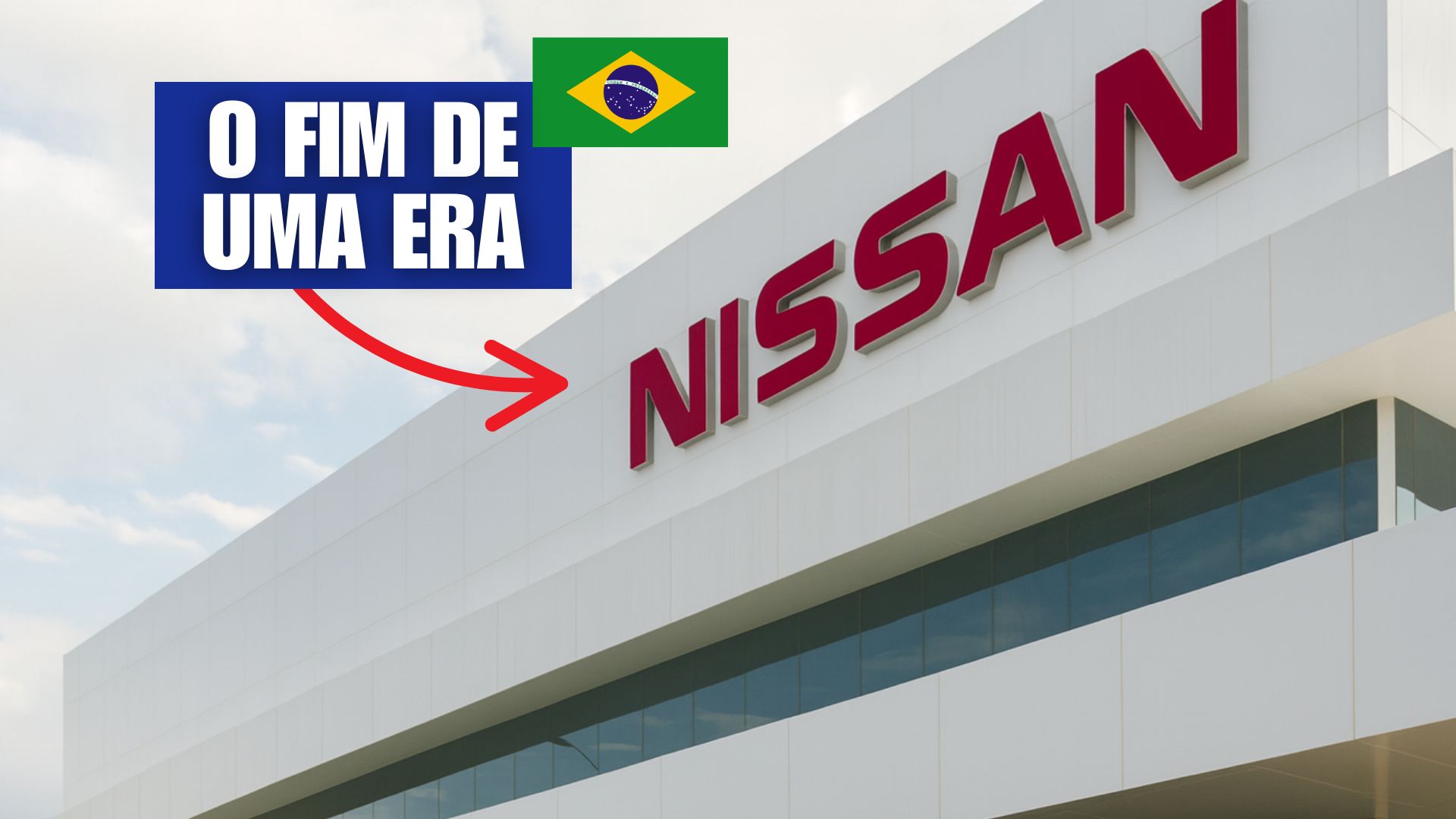

Nissan Announces Closure of Design Centers in Brazil and the United States, Transfers Activities to Five Strategic Poles and Reveals Global Plan That Foresees Reduction of Factories, Capacity Cut and Technological Integration in Creative Processes.
Nissan announced on Tuesday (16) that it will gradually close its design studios in São Paulo and California as part of a global realignment of the area.
The responsibilities of these teams will be absorbed by other company bases, with the promise of faster decisions, “deeper” creative collaboration, and more agile responses to market changes.
The restructuring is expected to be completed by the end of the fiscal year 2025, which ends in March 2026.
-
2027 Toyota Corolla Cross Unveiled: New Design, Enhanced Fuel Efficiency, Reduced Maintenance Costs, Advanced Technology, Connected Services, and Up to 10-Year Warranty

-
Fiat Cronos Precision 2018: Affordable Sedan with Spacious Trunk and Reliable Maintenance
-
Volkswagen to Cut Production by 1 Million Cars by 2030, Reducing Jobs and Platforms, Focusing on More Profitable Models

-
Toyota Launches First 100% Electric Car in Brazil: bZ4X with 343 HP, All-Wheel Drive, 361 km Range, Priced at $419,990 BRL, Limited to 99 Units



Global Reorganization of Nissan Design
The organizational structure will rely on five hubs. In the United States, the main hub will be Studio Six, in Los Angeles, which will concentrate the work in the region.
London will continue to serve as a base for Africa, the Middle East, India, Europe, and Oceania, in coordination with partner Renault.
In Asia, the company will maintain teams in Shanghai, Tokyo, and Atsugi, Japan.
With this, the automaker replaces a dispersed model with a more compact one, with centers coordinating projects from multiple regions.
According to the company, this measure seeks to “better align resources” and put technology at the center of the design process, integrating digital tools into the creative flow.
The focus, according to the statement, is to accelerate approval cycles, reduce rework between studios, and bring engineering and product teams closer from the early stages.
The Closure of the Brazilian Studio
In the country, the closure affects Nissan Design Latin America (NDLA), known as The Box, which was inaugurated in May 2019 in São Paulo.
Created as a laboratory to explore languages and solutions aimed at Latin America, the space served as a regional gateway for trends, user research, and concept prototyping.
Gradually, the activities of NDLA will be transferred to other studios within the global network.
The company did not detail intermediate deadlines or how many jobs will be affected in Brazil.
However, the decision does not change the guideline of maintaining development and testing bases connected to the hubs, which may preserve part of the technical interaction with suppliers and local R&D centers.
Closure in the United States
In the United States, the company confirmed the closure of Nissan Design America (NDA) in San Diego, which had been operating since the late 1970s and helped establish the visual identity of various global models.
With the reorganization, the responsibility for leading projects in the region will pass to the Los Angeles hub.
Meanwhile, operations in London and Japan will be reduced, with redistribution of tasks among the five strategic bases.
Strategy Re:Nissan
This measure is part of the Re:Nissan transformation plan, presented this year to restore profitability in the medium term.
In addition to reducing overlaps in design, the program foresees global capacity cuts, from 3.5 million to 2.5 million vehicles, and a decrease in the number of factories from 17 to 10 by the fiscal year 2027.
The internal perspective is that a leaner structure, with strong hubs and direct access to leadership, shortens the path between sketch and production line.
Although the announcement is focused on design discipline, the reconfiguration aligns with other fronts of the automaker, such as portfolio adjustments, platform simplification, and prioritization of investments in higher return projects.
The creation of five poles also helps to standardize tools and processes across continents, reducing integration costs and facilitating the reuse of stylistic components and engineering solutions.
Regional Impact in Brazil
The closure of NDLA touches a symbolic link for regional development.
Among the vehicles mentioned by Nissan itself with Brazilian participation is the Kicks, a compact utility vehicle introduced in the mid-2010s that became central to the brand’s strategy in Latin America.
The São Paulo studio served as an antenna to capture consumer preferences in the region and translate this material into surfaces, textures, colors, and interior layouts.
Without the laboratory in São Paulo, sector interlocutors believe that the relationship with material suppliers, independent studios, and universities will tend to reorganize via the global hubs.
On the other hand, the local automotive design network has been operating for years with remote collaboration, which may ease the transition.
Nissan stated that design content will be relocated and continued outside the country, preserving the chain of ongoing projects.
The New Technological Bet
In the official communication, the company defines the change as a bet on the technological integration of design, with promises of “faster decision-making” and “deeper creative collaboration.”
The centralization in five hubs is expected to consolidate data libraries, 3D models, and real-time visualization tools, shortening steps between concept and engineering validation.
At the same time, the hubs will take on a regional command role, coordinating field research, client testing, and refining proposals according to each market.
Studio Six, in Los Angeles, gains importance in this arrangement as the North American creative axis.
London, in turn, will remain connected to product directions for Europe and other regions of the AMIEO bloc, in alignment with the partnership with Renault.
In Asia, Tokyo and Atsugi will continue as nerve centers for brand language, while Shanghai sustains trend reading in the world’s largest automotive market.







